





Ormolu Glass Shade
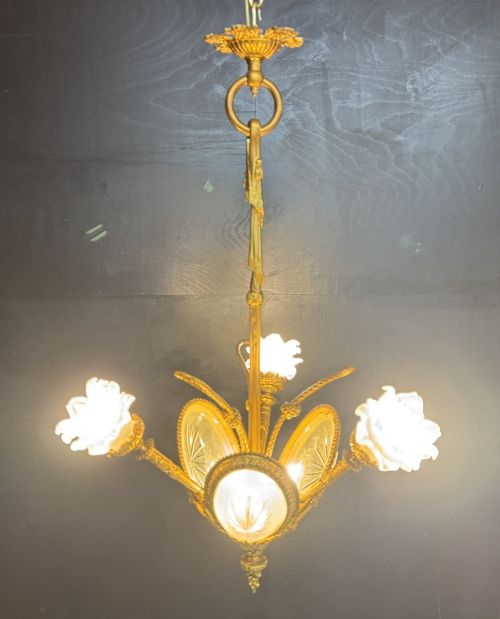
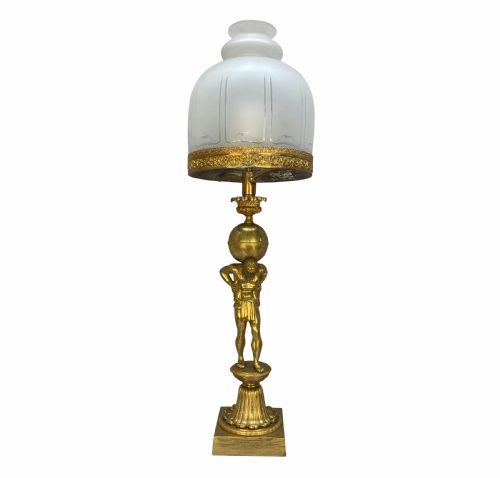
An ormolu glass shade brings heavy gilt mounts and bright glass together to catch the light in a room.
Ormolu Glass Shade
When you search for an ormolu glass shade, you find decorative lighting and fittings that combine cast metal mounts with glass bodies or shades. These pieces range from substantial chandeliers and wall lights to table lamps and mantel clocks, drawing on French Louis XVI, Art Deco, and English Regency styles.
The versions you are most likely to meet on this page date from the nineteenth century into the early twentieth century, reflecting Victorian and later tastes. They frequently take the form of table lamps, mantel clocks, and lanterns created in bronze, gilt bronze, and cut glass or crystal.
Makers and designers of these items often looked to grand architectural models, producing works like monumental table lamps or lanterns after Versailles. They serve both as functional illumination and as sculptural objects for the interior.
How they were made
The construction relies heavily on the pairing of cast metals with blown or cut glass elements, utilising materials such as ormolu, gilt bronze, brass, and crystal. Metal components are cast and chased to achieve crisp surface detail before being gilded or patinated.
Glass elements, whether in the form of shades, lamp bodies, or ewers, are shaped and sometimes cut or coloured to complement the surrounding metalwork. Additional materials like porcelain, rosewood, and marquetry occasionally appear in the housings of clock cases and supporting structures.
Ormolu Glass Shade Retail Price Guide 2026
Typical asking prices for ormolu glass shade among the pieces listed under this phrase on Sellingantiques today, from the lower quarter to the upper quarter. They describe what is for sale here now, not the wider market.
Listings feature items spanning the nineteenth century up to 1920, incorporating materials such as gilt bronze, crystal, porcelain, and rosewood.
What varies in quality
The standard of the casting dictates the sharpness of the ormolu and gilt bronze mounts, where deep chiselling and refined surface finish separate finer works from simpler production. Heavier gauge metalwork and thicker crystal or cut glass sections indicate a higher grade of manufacture.
Coherence of style also marks the better pieces, where French Neoclassical or Art Deco proportions are maintained across both the glass body and the metal mounts without awkward transitions.
The Ormolu Glass Shade Glossary
- Ormolu
- A technique of applying finely ground high-carat gold to a bronze base, or the finished gilded bronze object itself. It provides a bright, durable golden surface on decorative mounts.
- Gilt bronze
- Bronze that has been coated with a thin layer of gold, synonymous in many historical contexts with ormolu. It was widely used for furniture mounts, clock cases, and lamp bases.
- Cut glass
- Glass that has been shaped and patterned by cutting facets or grooves into the surface with a wheel. This technique enhances the sparkle of lamps and chandeliers.
- Portico clock
- A type of clock housed within a architectural frame supported by columns, often executed in wood with gilt bronze mounts during the nineteenth century.
Ormolu Glass Shade: Frequently Asked Questions
What periods do these pieces come from?
The pieces span the nineteenth and early twentieth centuries, including Regency, Victorian, and Art Deco eras.
They reflect stylistic revivals ranging from French Louis XVI to Napoleon III designs.
How were these items used originally?
They functioned as primary light sources or decorative timepieces in grand rooms, utilising oil, candles, or early electricity.
Chandeliers, wall lights, and table lamps lit domestic interiors while displaying status through rich materials.
What materials are most common?
Gilt bronze, ormolu, brass, and various forms of glass and crystal dominate the construction of these items.
Some pieces also incorporate porcelain, bronze, fabric, and rosewood.
How do you style them in a modern home?
Their strong architectural forms and gilt surfaces allow them to act as focal points on tables, walls, or ceilings.
They pair effectively with both traditional interiors and minimalist spaces that benefit from metallic contrast.