


Ormolu Column Table Lamps
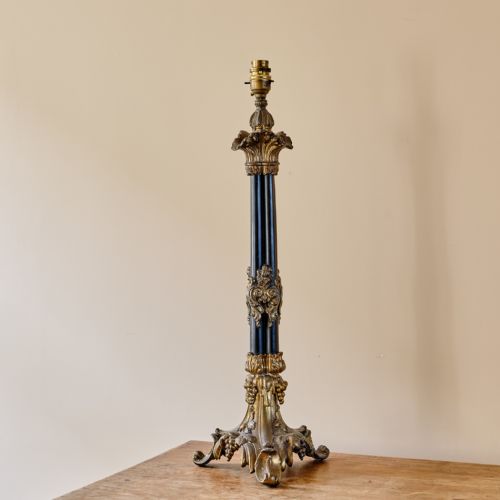
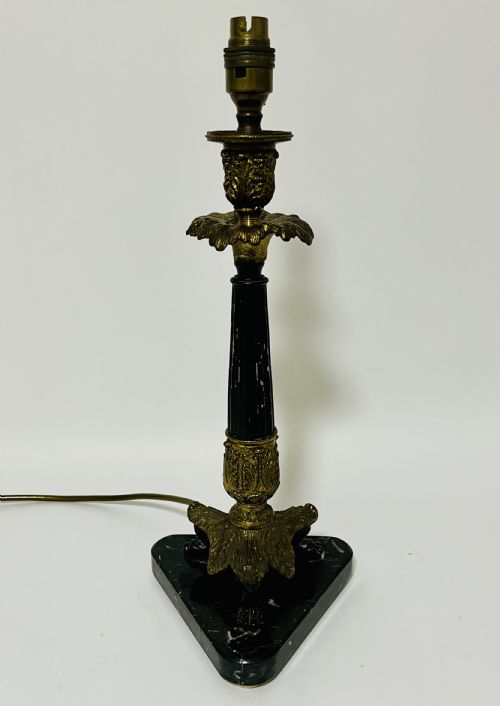
These ormolu column table lamps bring a heavy classical presence to a room, combining cast metalwork with stone or glass columns.
Ormolu Column Table Lamps
When you search for ormolu column table lamps, you encounter lighting fixtures built around vertical pillars of marble, crystal, glass, or metal. The selection on this page leans heavily towards nineteenth-century French and English pieces, drawing on Regency, Empire, and Victorian Classical Revival designs.
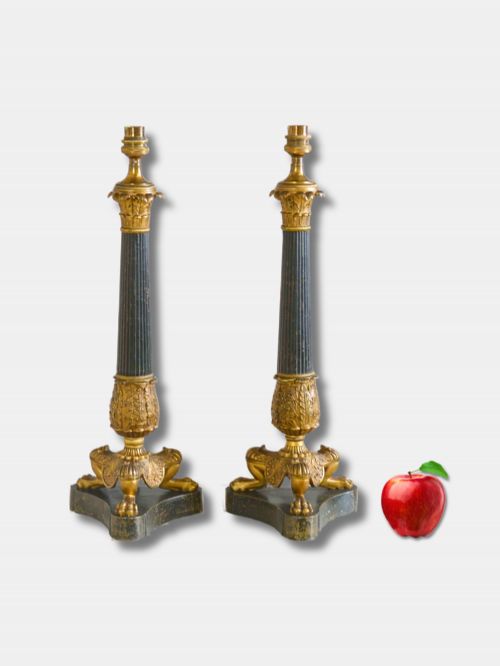
Most examples take the form of classical columns, including Corinthian orders, paired with cast ormolu mounts and bases. You will find both single lamps and matched pairs, with some pieces adapted from earlier oil lamps or candlesticks.
How they were made
The construction relies on mercury-gilded or electrogilt bronze, known as ormolu, combined with cast brass, patinated bronze, and structural elements of marble, onyx, or cut glass. Metal components are cast in sections, chased by hand to sharpen the detail, and then assembled around central threaded rods or wiring channels.
Stonework and crystal columns are turned and polished separately before being fitted into decorative brass or gilt bronze capitals and plinths. Many lamps incorporate sculptural feet, such as lions' paws, secured to heavy plinth bases to support the weight of the stone and metal.
Materials paired with the gilt metal across these offerings include marble, onyx, rock crystal, glass, and patinated bronze.
What varies in quality
The distinction between ordinary and exceptional pieces lies in the crispness of the bronze chasing and the quality of the fire-gilding. Superior metalwork retains sharp relief in the acanthus leaves and fluting, whereas lesser castings appear soft and muddy.
The choice of materials also separates the grades, with solid marble, heavy rock crystal, and thick patinated bronze indicating higher ambition than lighter gilt metals and moulded glass. Original proportions and heavy cast bronze bases demonstrate superior manufacture.
The Ormolu Column Table Lamps Glossary
- Ormolu
- A term for gilded bronze, produced by applying an amalgam of gold and mercury to a bronze base and heating it to drive off the mercury. This historical fire-gilding technique creates a deep, durable golden lustre.
- Patinated bronze
- Bronze that has been chemically treated to achieve a dark brown, green, or near-black surface colour. It provides a sombre contrast to the bright highlights of the surrounding ormolu mounts.
- Corinthian column
- A classical architectural column style featuring an ornate capital decorated with rows of acanthus leaves. It is frequently imitated in nineteenth-century lamp bases.
- William IV
- A British design period spanning the 1830s, characterised by heavy, robust classical revival forms and substantial proportions. Pieces from this era often incorporate dark patinated bronze and rich gilt mounts.
- French Empire
- A style inspired by the classical art of Imperial Rome, dominant during the early nineteenth century. It favours symmetrical designs, military motifs, and rich combinations of ormolu and marble.
Ormolu Column Table Lamps: Frequently Asked Questions
Are these lamps converted from old candlesticks?
Many examples began life as oil lamps or tall candlesticks before receiving modern electrical fittings.
This conversion practice is standard for antique lighting and allows historic metalwork to continue functioning in contemporary interiors.
How do I identify a French Empire lamp?
French Empire pieces typically feature strict classical symmetry, architectural columns, and crisp ormolu mounts depicting martial or classical motifs.
They often incorporate contrasting dark patinated bronze shafts set against bright gilded bases and marble plinths.
What is the difference between ormolu and gilt brass?
Ormolu specifically denotes gilded bronze, possessing a heavier weight and a deeper, more complex golden tone due to historical mercury gilding methods.
Gilt brass is generally lighter, harder in alloy, and lacks the particular depth of colour found on high-period bronze work.
How should I clean the gilt metal?
Dust the surface gently with a soft brush and avoid all abrasive cleaners or chemical polishes that can strip away the remaining gold layer.
Gentle maintenance preserves the integrity of the original fire-gilding or historical surface finish.