

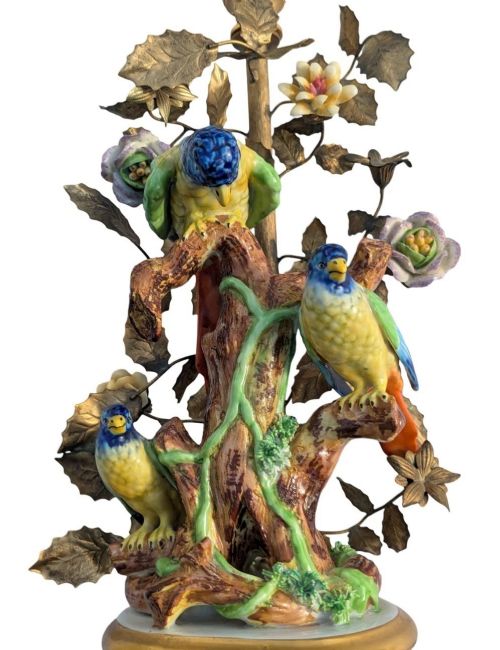
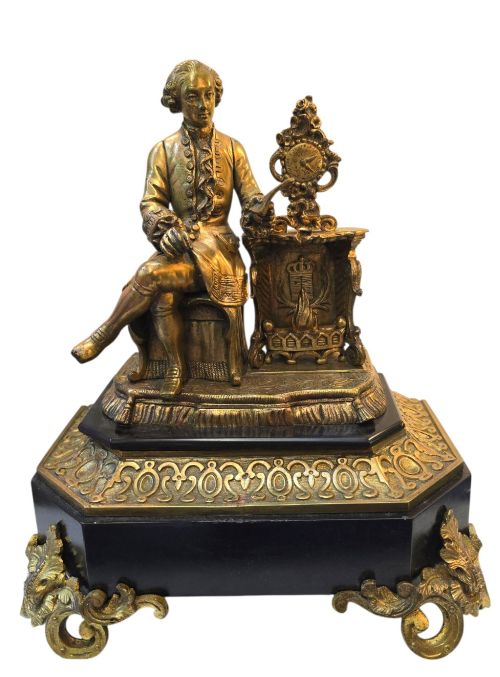
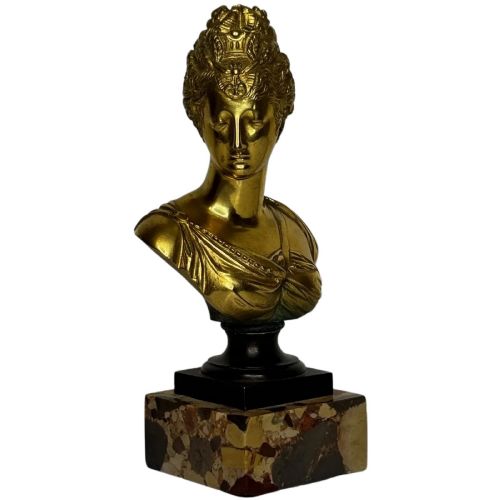


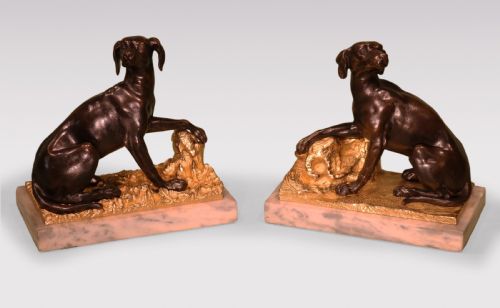

Ormolu Base Sculpture
These ormolu base sculpture pieces combine cast bronze and gilt metal mounts, offering classical figures and animals that command attention on any surface.
Ormolu Base Sculpture
An ormolu base sculpture brings together cast metal figures and decorative gilt mounts, taking the form of classical busts, mythological subjects, historical portraits, and animalier studies. When you search for ormolu base sculpture, you encounter works that merge sculptural casting with ornamental metalwork, often elevating a bronze figure upon an enriched foundation.
The pieces appearing here span the nineteenth century, including specific dates around eighteen seventy, eighteen eighty, and nineteen ten. Makers and ateliers of this era produced figures ranging from mythological deities like Apollo and Diana de Poitiers to equestrian rulers, sporting scenes with hounds and pheasants, and dancing maidens.
Continental European workshops, particularly French foundries, dominated production of these works in styles encompassing the Neoclassical, French Empire, French Renaissance Revival, and Art Nouveau. You are most likely to meet nineteenth-century French figural bronzes and animalier studies mounted with gilt bronze or ormolu elements.
How they were made
Many of these sculptures incorporate secondary materials such as marble plinths and polished malachite panels to support and frame the cast metalwork. The combination of patinated dark bronze with bright gilt ormolu highlights creates a strong visual contrast typical of nineteenth-century decorative arts.
Ormolu Base Sculpture Retail Price Guide 2026
Typical asking prices for ormolu base sculpture among the pieces listed under this phrase on Sellingantiques today, from the lower quarter to the upper quarter. They describe what is for sale here now, not the wider market.
Several hounds have successfully cornered their pheasants inside nineteenth-century studies without disturbing a single leaf of ormolu.
What varies in quality
The refinement of the chasing work on both the bronze figure and the ormolu mount distinguishes superior castings from simpler commercial production. Crisp definition in facial expressions, plumage, and drapery indicates skilled hand-finishing after the casting process.
The choice and integration of secondary materials, such as heavy veined marble plinths and inlaid malachite, affect the overall presence and weight of the piece. Superior examples maintain a harmonious proportion between the central sculptural subject and its decorative base.
Charlotte Monginot·Pierre-Augustin Caron de Beaumarchais
The Ormolu Base Sculpture Glossary
- Ormolu
- Gilded bronze, produced by applying a mercury and gold amalgam to a bronze base or through modern electroplating. This technique yields a bright, durable golden surface.
- Patinated Bronze
- Bronze that has been treated with chemical solutions to produce a controlled surface colour, usually ranging from deep brown to near black.
- Animalier
- A nineteenth-century artistic movement and style focused on realistic depictions of animals, particularly dogs, horses, and wildlife in naturalistic poses.
- Neoclassical
- A style inspired by the art and culture of ancient Greece and Rome, characterised by formal symmetry, classical figures, and restrained classical ornamentation.
Ormolu Base Sculpture: Frequently Asked Questions
What periods do these sculptures date from?
The pieces shown here date primarily from the nineteenth century, with specific examples recorded around eighteen seventy, eighteen eighty, and nineteen ten.
Most items reflect nineteenth-century French and Continental European manufacturing traditions rather than modern production.
How do ormolu and bronze differ?
Bronze is the copper alloy used to cast the main sculptural figure, while ormolu refers specifically to the gilded finish applied to bronze mounts.
Many works combine dark patinated bronze for the subject with bright ormolu for the base or decorative accents.
What subjects are common in these pieces?
Common subjects include classical figures, mythological deities like Apollo, historical portraits, and animalier studies of hounds and pheasants.
Figurative works also encompass putti, dancing maidens, and equestrian figures mounted on stone plinths.
How should I display these sculptures?
These works suit stable surfaces such as sideboards, mantelpieces, or desks where their weight and detailed casting can be appreciated.
Keep them away from direct heat sources and moisture to protect the marble, malachite, and gilded metal surfaces.