
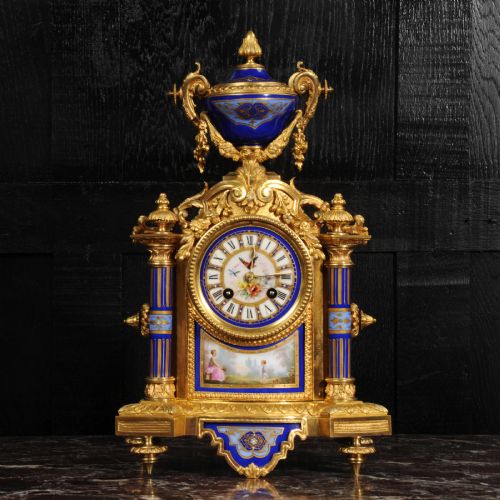
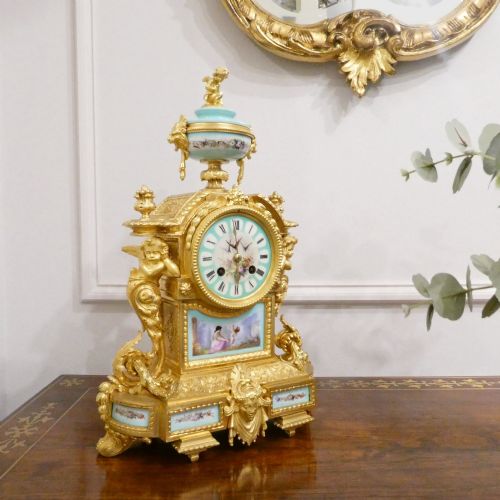
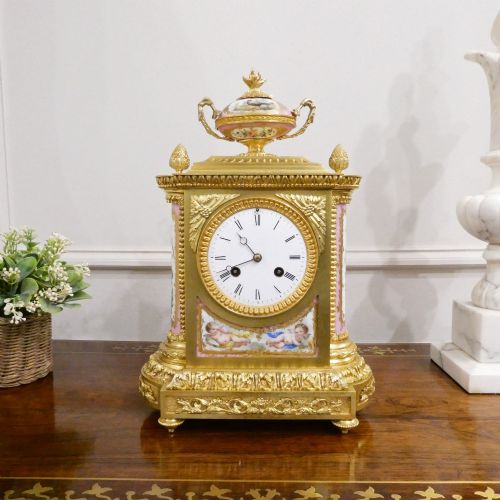
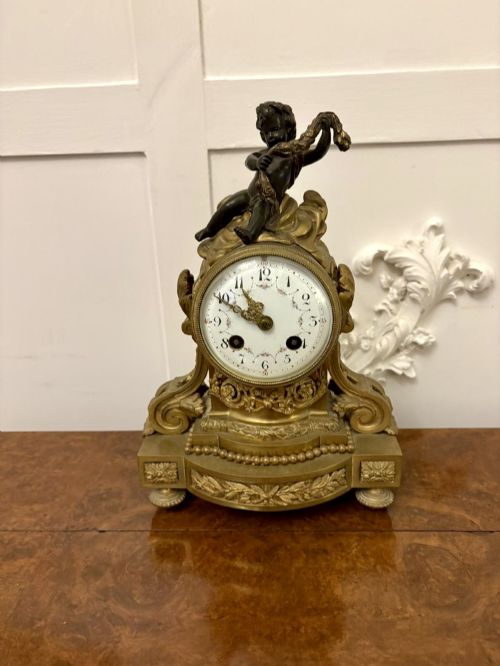
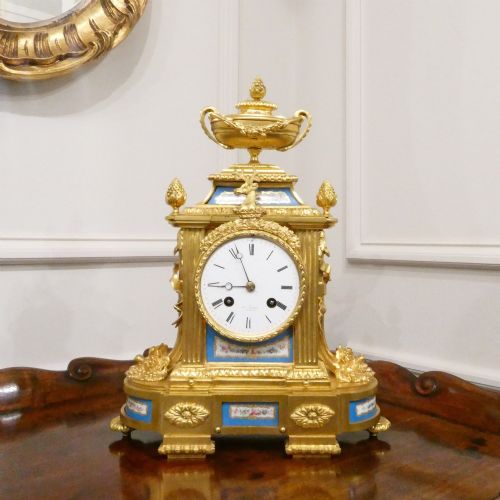
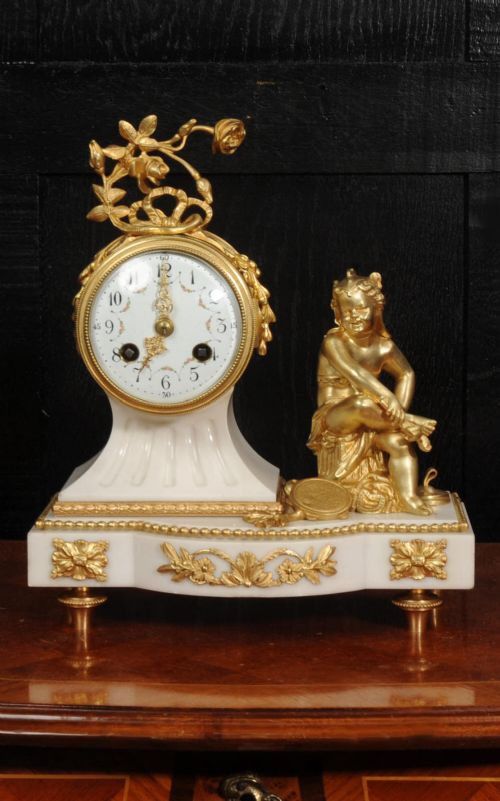
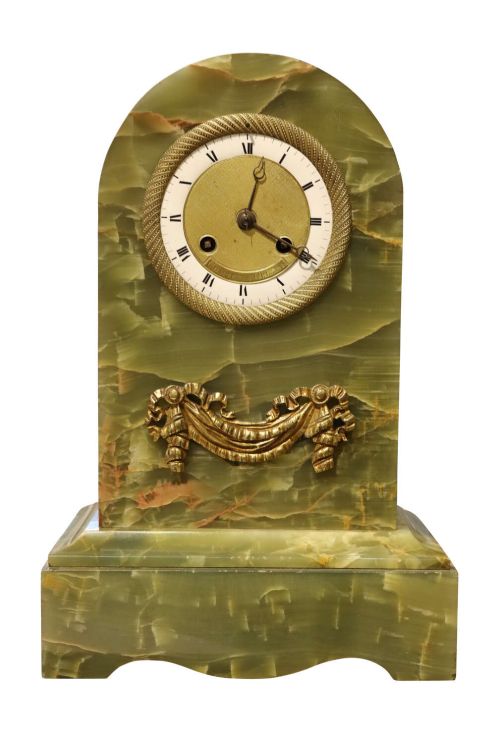
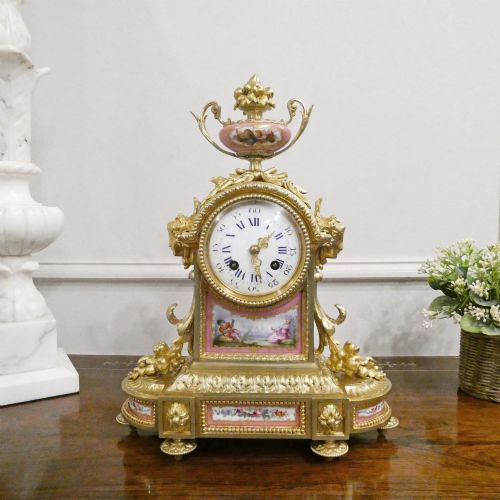
Ormolu and Bronze Clock
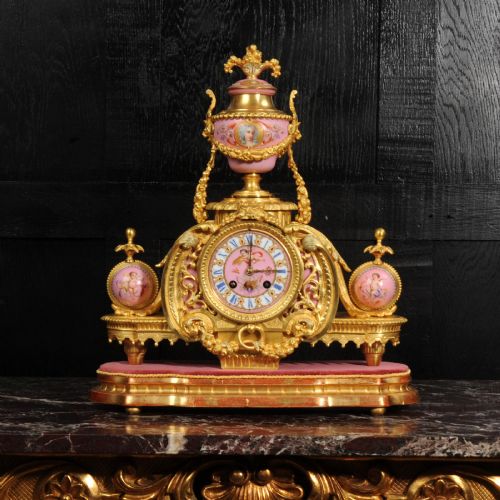
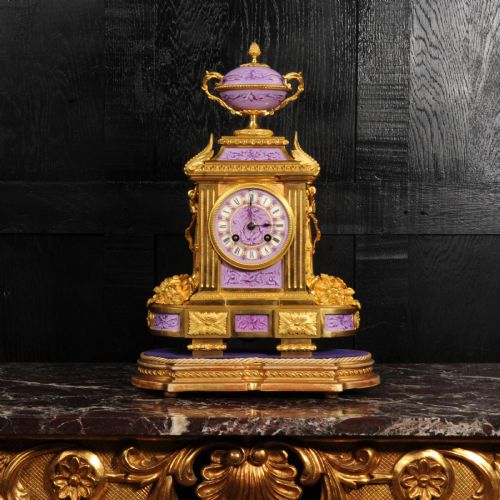
When you choose an ormolu and bronze clock, you bring home a French nineteenth-century mantel centrepiece that contrasts golden mercury gilding with dark patinated metal.
Ormolu and Bronze Clock
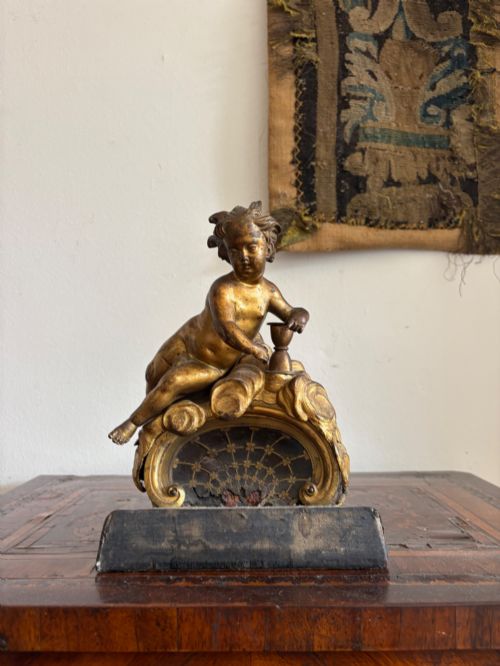
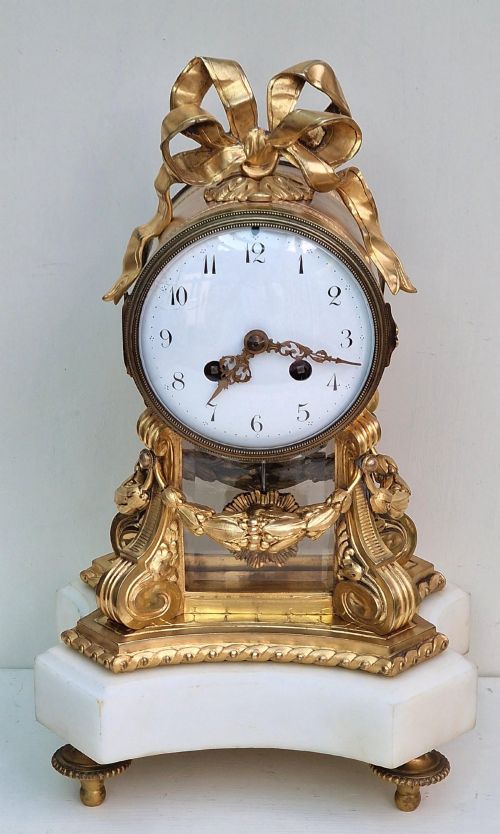
An ormolu and bronze clock combines cast patinated bronze figures with bright mercury-gilded brass mounts, predominantly originating from nineteenth-century French workshops.
Most examples take the form of mantel clocks or garnitures, frequently accompanied by matching side vases or candelabra executed in the same mixed metals.
The aesthetic draws heavily from classical mythology, Empire military triumphs, and Louis XVI revival styles, translating architectural and figural motifs into domestic timepieces.
How they were made
Foundry workers cast the structural components in bronze and brass, applying a dark chemical patina to selected figures while preparing other surfaces for gilding.
The characteristic golden finish relies on ormolu, a historic technique involving the application of a mercury and gold amalgam that was heated to bond the precious metal to the bronze base.
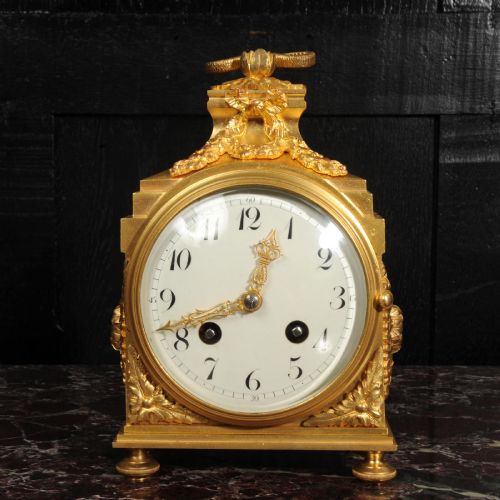
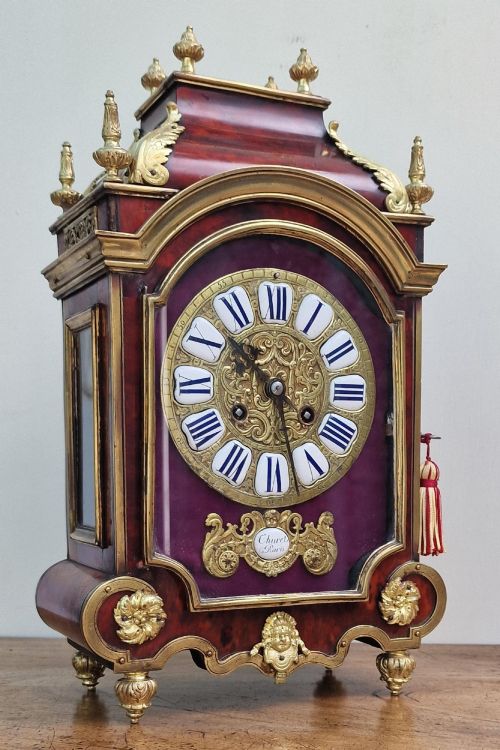
Enamel dials, often painted with Roman or Arabic numerals, combine with hand-fitted brass mechanical movements to complete the functional housing.
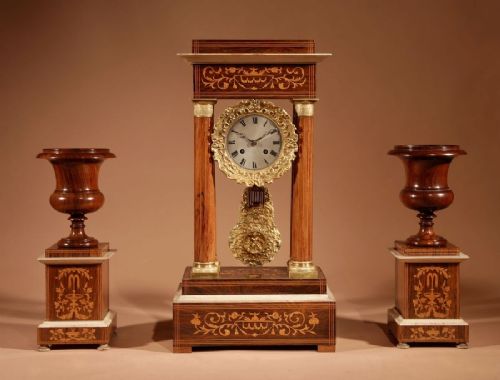
Form variations across the inventory span mantel clocks, portico designs, crystal regulators, and elaborate garniture sets.
What varies in quality
Chasing and hand-finishing differentiate superior castings, where the metalworker has meticulously refined the fur, drapery, and acanthus leaves after the piece leaves the sand mould.
The integrity and depth of the mercury gilding indicate the standard of the workshop, with higher grades maintaining a warm, satin luminescence rather than a flat, modern brass sheen.
The sophistication of the internal movement, signed by notable makers and paired with balanced marble or porcelain plinths, elevates the piece beyond standard commercial production.
Achille Brocot·Henry Marc·Japy Freres·Charles a Orleans·Vincenti·Siffel and Cartier·Henry Dasson·Canaillor of Paris·F Baetens·Charpentier of Paris·Meunier of Paris
The Ormolu and Bronze Clock Glossary
- Ormolu
- Finely ground gold amalgam fired onto a bronze base, creating a distinctive golden surface. This historic technique was largely superseded due to the toxicity of mercury vapours.
- Patinated bronze
- Dark chemical treatment applied to the surface of cast bronze figures. It provides a striking visual contrast against bright gilded mounts.
- Garniture
- A set consisting of a central clock flanked by matching ornamental pieces such as vases or candelabra. These matched suites were designed to decorate a mantelpiece.
- Portico clock
- An architectural clock style featuring four freestanding columns supporting the movement housing. They often incorporate decorative wood inlays and pendulum windows.
- Champlevé enamel
- Decorative technique where troughs are hollowed into the metal surface and filled with coloured glass paste before firing. It creates vibrant ornamental patterns around the dial.
Ormolu and Bronze Clock: Frequently Asked Questions
How do I wind the clock?
Use the appropriately sized winding key on the dial apertures, turning gently until you feel resistance from the mainspring.
Avoid overwinding the movement, as this can strain the internal brass teeth and springs.
What is a clock garniture?
A garniture comprises a central clock accompanied by matching decorative side pieces, such as candelabra or urns.
These coordinated sets were designed to create a balanced display across a fireplace mantel.
How do I identify the period?
Examine the casting style, dial construction, and marble plinth proportions to distinguish between Empire, Louis XVI revival, and Napoleon III production.
Maker signatures stamped on the backplate of the movement provide the most reliable chronological anchor.
Where should I place it?
Position the clock on a stable, level surface away from direct sunlight, dampness, and strong draughts that affect the delicate pendulum.
Mantelpieces and sturdy console tables offer traditional support for heavy bronze and marble weights.