


Original Yorkshire Watercolour Art
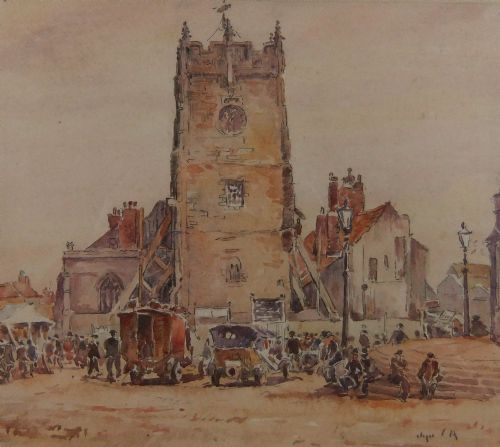
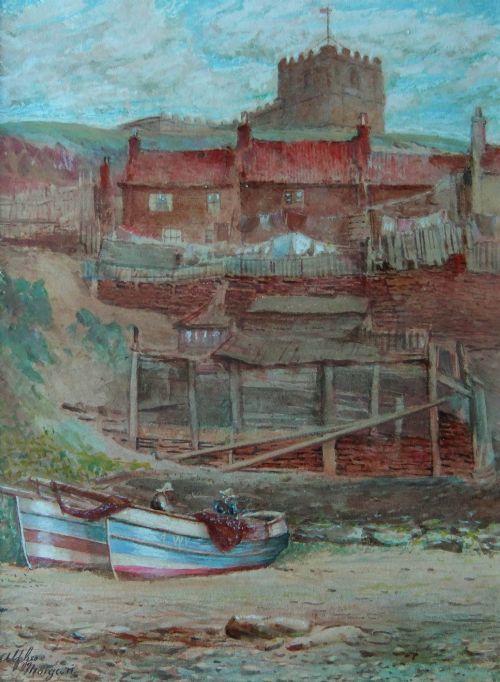
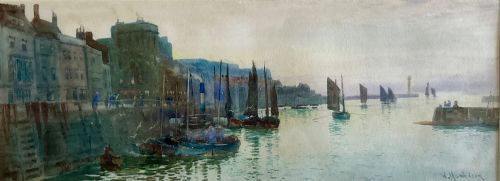
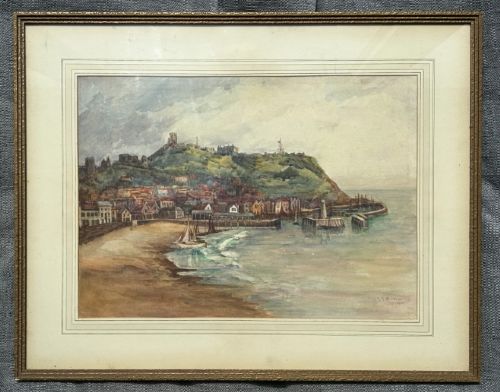
Original yorkshire watercolour art captures the county's varied topography through pigment on paper, offering collectors a direct record of regional scenery.
Original Yorkshire Watercolour Art
Original yorkshire watercolour art encompasses works executed on paper or works on paper, predominantly landscape paintings and fine art paintings depicting regional landmarks such as Whitby, Wensleydale, and Bolton Castle. These pieces span from the nineteenth century through the mid twentieth century, covering Victorian, Edwardian, and mid-century British periods.
The selections on this page feature regional scenes created by named painters, ranging from coastal views of Staithes and Runswick Bay to inland dales and rural cottages. Most examples emerge from the early decades of the twentieth century, alongside Victorian and nineteenth-century antecedents.
Buyers encounter framed works that function primarily as historical views and topographical records. The subject matter centres heavily on maritime scenes, fishing docks, abbey ruins, and agricultural valleys within Yorkshire.
Materials and Technique
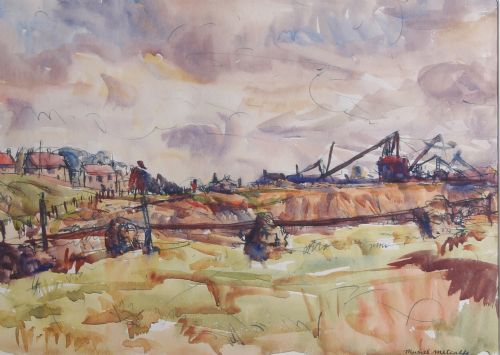
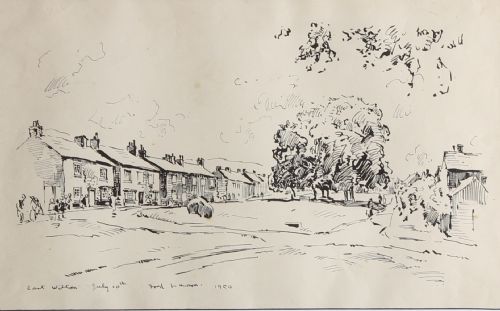
Watercolour pigment and watercolour paint applied to paper form the foundational medium of these works. Artists frequently integrated ink work for definition, creating ink watercolour drawings that combine linear precision with fluid washes of colour.
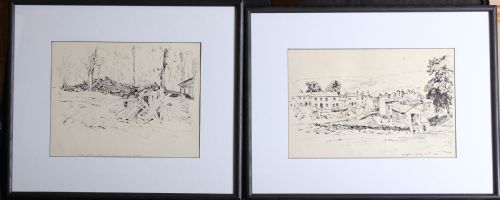
Framed presentation typically involves glass protection paired with wood frames, occasionally including gold leaf accents. The physical construction relies on works on paper mounted securely within traditional framing to preserve the delicate pigment layers from atmospheric damage.
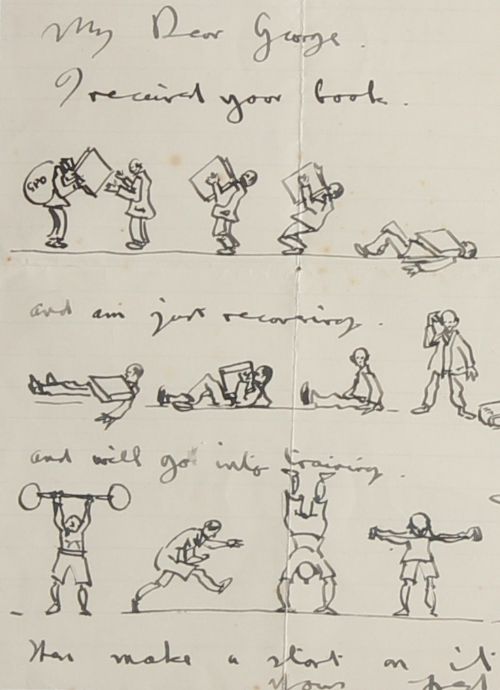
One determined terrier found its way into a sea of sweeping Yorkshire landscapes, holding its own among the fishing boats and abbeys.
Distinctions in Execution
Quality in these watercolours rests upon the surety of the brushwork and the artist's ability to capture atmospheric light on paper. Stronger pieces display confident control over washes and ink linework, whereas weaker examples rely on mechanical repetition without genuine observation.
Condition of the paper and vibrancy of the pigment determine the long-term integrity of the piece. Works that retain their original tonal depth without excessive fading or paper discolouration stand apart from those damaged by poor environmental exposure.
Fred Lawson·Muriel Metcalfe·John Smith Atherton·Alfred G. Morgan·William Matthison·F A Roylance·Robert Little·Arthur Reginald Smith·Cuthbert Crossley·George Graham·Arthur Tucker·Robert Leslie Howey·Tom Clough·James Watson·George Weatherill·Owen Bowen·Frank H. Mason·George Hamilton Constantine·William Joseph Boyes·James Thomas Watts·Frederick William Booty·Kate E Booth·Henry Barlow Carter·Frederick Williamson·Percy Brooke
The Original Yorkshire Watercolour Art Glossary
- Watercolour painting
- A work executed with water-soluble pigments on paper. This medium allows for transparent washes that create luminous effects.
- Works on paper
- A broad category encompassing drawings, watercolours, and prints created on a paper support. It serves as the primary classification for these regional pieces.
- Diptych
- A painting comprising two separate panels or sheets displayed as a single paired artwork. Artists occasionally utilised this format to capture wider coastal vistas.
- British Impressionism
- A painting style influenced by French movements that prioritised spontaneous brushwork and natural light. Several early twentieth-century regional works reflect these looser methods.
- Topographical art
- Artworks that accurately record specific geographical locations and buildings. These pieces serve as historical documents of Yorkshire landscapes.
Original Yorkshire Watercolour Art: Frequently Asked Questions
What subjects appear in these watercolours?
The works predominantly depict Yorkshire landscapes, coastal harbours, and historical architectural ruins such as abbeys and castles.
Scenes range from Whitby fishing docks and Runswick Bay to inland valleys like Wensleydale and Wharfedale.
How should these paper works be framed?
Conservation framing with glass and acid-free mounts protects the delicate paper and water-soluble pigments from moisture and light degradation.
Traditional wood frames, sometimes featuring gold leaf or Hogarth moulding, complement the historical period of the paintings.
How do I identify the date of a piece?
Dates are often indicated by the artist's active period, stylistic movements such as Victorian or Edwardian, or direct signatures and inscriptions.
Examining the type of paper and framing materials also provides contextual clues regarding the age of the artwork.
Are these works original paintings?
Every listed item is a unique hand-painted original work on paper rather than a mass-produced print or reproduction.
Artists applied watercolour pigment and ink directly to the paper support during their respective painting sessions.