



Original Woodland Oil Artwork
Original woodland oil artwork captures centuries of shaded paths and dense canopies through rich pigment laid directly onto canvas or board.
Original Woodland Oil Artwork
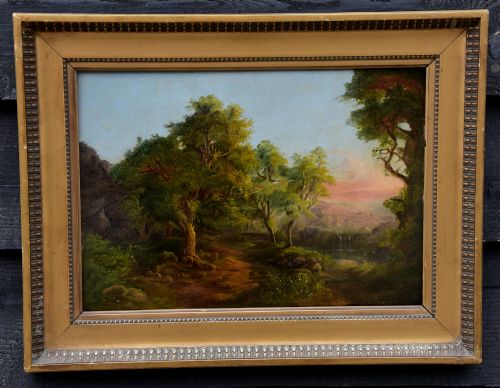
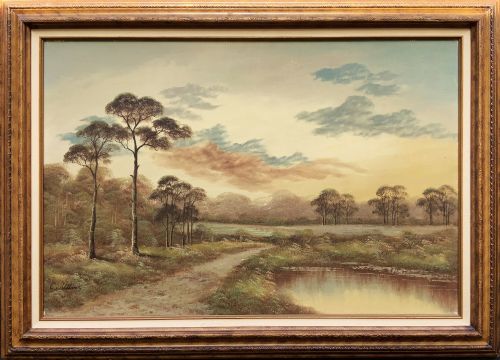
Original woodland oil artwork comprises hand-painted scenes of trees, forests, and leafy paths rendered in oil paint across the nineteenth and twentieth centuries. These pieces range from intimate Victorian studies on board to large impressionist canvases depicting sunlit glades and riversides.
Buyers meet works spanning Victorian naturalism and British impressionism, alongside French Barbizon influences and mid-century pastoral views. The most common survivals on this page date from the late nineteenth century through to the interwar period and post-war decades.
Materials and technique
Painters applied oil paint using brushes and palette knives onto stretched canvas or wooden board, frequently utilising gilded wood frames to finish the piece. The medium allowed artists to build up thick impasto textures for foliage or thin, translucent glazes for deep forest shadows and evening light.
Supports varied according to the period and scale of the composition, with sturdy canvas preferred for larger landscapes and wooden boards favoured by artists working swiftly outdoors in the open air.
Original Woodland Oil Artwork Retail Price Guide 2026
Typical asking prices for original woodland oil artwork among the pieces listed under this phrase on Sellingantiques today, from the lower quarter to the upper quarter. They describe what is for sale here now, not the wider market.
Listings feature works spanning the nineteenth century, Edwardian era, and mid-twentieth-century decades, executed in oil on canvas or wood board.
What separates the finest works
Quality rests upon the artist's command of light, atmosphere, and naturalistic detail within the woodland canopy. Superior compositions demonstrate a confident handling of pigment that creates genuine depth, atmosphere, and movement in the trees and undergrowth.
The strength of the painter's brushwork and the preservation of the original paint surface determine the distinction between a routine pastoral record and a masterly landscape.
Thomas W Lascelles·William Mellor·Ernest Higgins Rigg·Owen Bowen·John Wright Oakes·Charles Edmond Rene His
The Original Woodland Oil Artwork Glossary
- Canvas
- A heavy woven fabric stretched across a wooden frame to serve as a painting support. It provides a flexible yet durable surface for oil paint.
- Board
- A rigid wooden panel used as a base for oil paintings. Artists often favoured boards for smaller outdoor studies.
- Impressionism
- A style of painting focusing on the visual impression of the moment, particularly the shifting effects of light and colour. This approach appears frequently in early twentieth-century woodland scenes.
- Barbizon School
- A French movement dedicated to realistic landscape painting inspired by nature. Artists in this circle heavily influenced later woodland representations across Europe.
Original Woodland Oil Artwork: Frequently Asked Questions
How do I date a woodland oil painting?
Dating relies upon examining the canvas type, the style of the wooden stretcher, the framing methods, and the artist's recorded active period. Stylistic shifts from Victorian detail to twentieth-century impressionism also offer clear chronological markers.
Signatures, exhibition labels, and inscriptions on the reverse of the board or canvas frequently provide exact years or locations that anchor the work in time.
Where should I hang an oil painting?
Hang oil paintings away from direct sunlight and steady heat sources to protect the canvas and pigments from drying out or fading. Interior walls with stable humidity levels help preserve both the wooden stretcher and the oil paint layer.
Ensure the wall can safely support the weight of the framed artwork, particularly for larger nineteenth-century canvases housed in heavy gilded wood frames.
What is the difference between canvas and board?
Canvas consists of woven fabric stretched tightly over a wooden frame, offering slight give and a textured surface for brushstrokes. Board provides a completely rigid wooden panel that resists punctures and warping over decades.
Painters often chose boards for portable plein air sketches created outdoors, while canvas was standard for larger studio landscapes.