
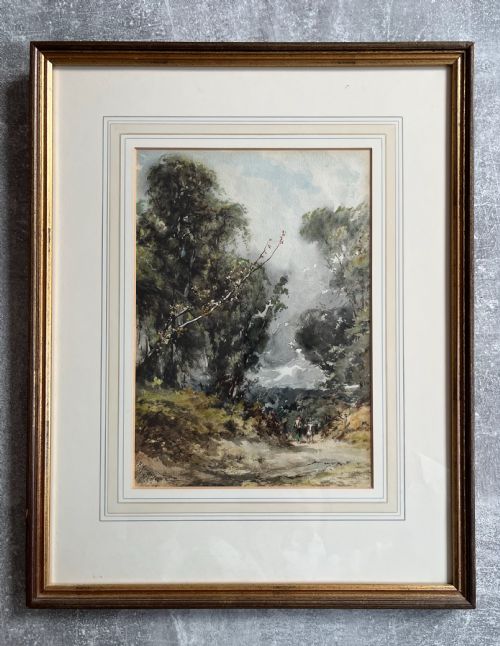
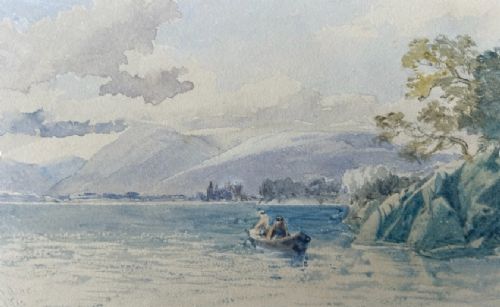

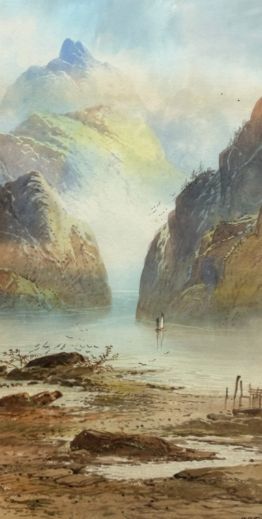
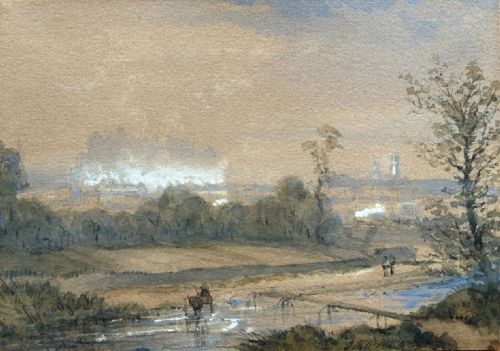


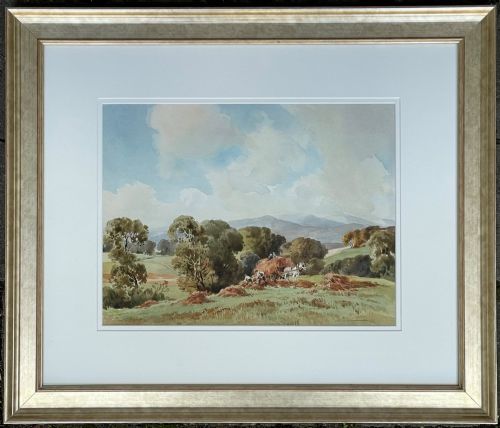
Original Watercolor Landscape
An original watercolor landscape brings the shifting light and atmosphere of the British countryside and coastal views directly into a room.
Original Watercolor Landscape
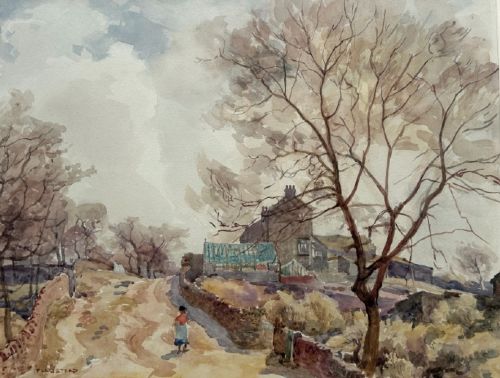
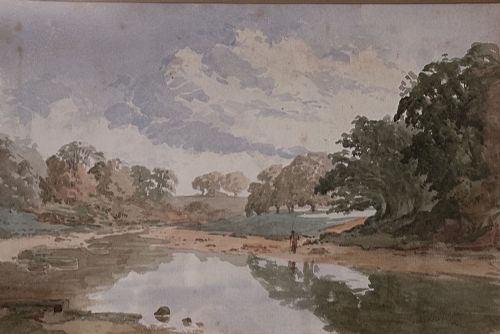
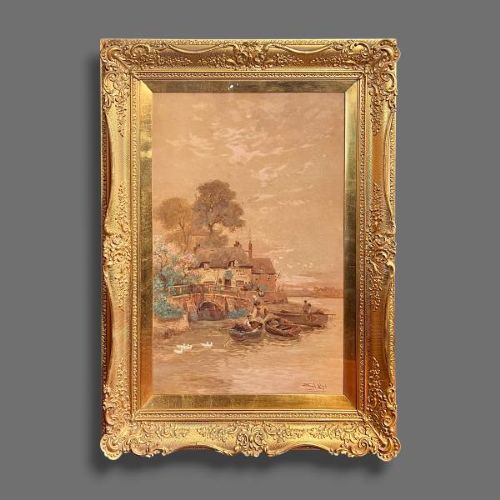
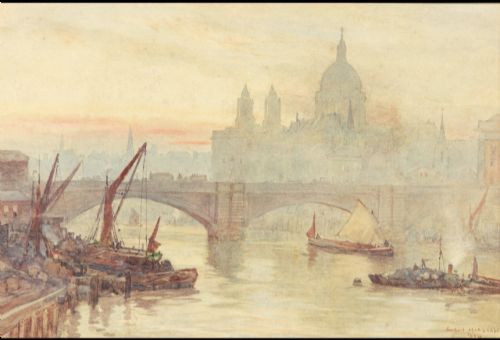
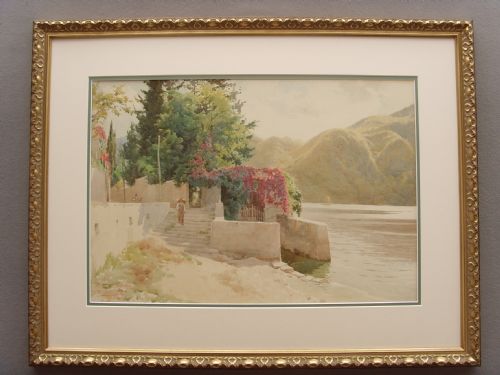
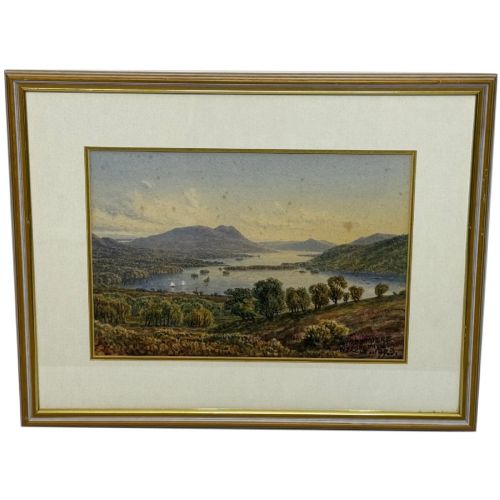
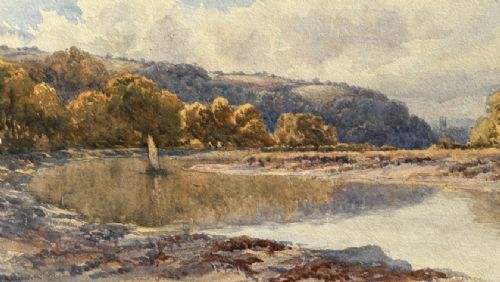
When searching for an original watercolor landscape, a buyer encounters paper works spanning the nineteenth century through the mid twentieth century. These paintings depict regional scenes including Scottish lochs, Welsh rivers, and pastoral fields across England.
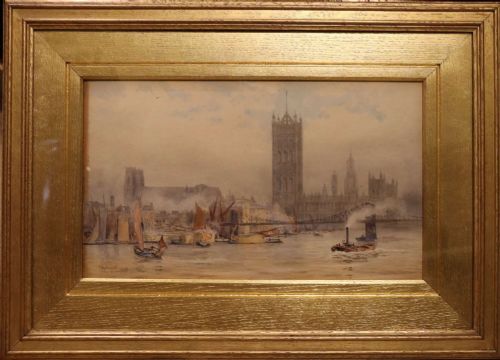
The versions most commonly met on this page originate from the Victorian and Edwardian periods, alongside early twentieth century and 1960s examples. Painters record specific locations from Cornwall to the Lake District, often working in a traditional British or impressionist style.
The selection includes framed artworks and fine art paintings that capture topography, coastal harbours, and rural villages. Each piece presents an individual hand-painted record rather than a mass-produced print.
Materials and technique
Artists apply watercolor pigment suspended in water directly onto paper, sometimes combining ink or gouache for definition and detail. Paper serves as the primary support, absorbing the washes and allowing light to reflect through translucent layers of colour.
Makers protect these delicate works behind glass within wood frames, which preserves the pigment from atmospheric moisture and handling. Ink lines occasionally structure the initial composition before colour washes establish the atmosphere and shadows.
Several artists preferred sketching sheep crowding country lanes to painting grand architecture.
Evaluating the standard
Quality rests upon the artist's handling of pigment transparency and the precision of the brushwork in capturing natural light and atmosphere. Strong compositions demonstrate confident control over water and wash, creating depth within skies, water, and terrain.
The condition of the paper and the retention of original colour vibrancy distinguish superior examples from faded or discolored sheets. Inclusion of original period framing and clear signatures or documentation adds historical context to the work.
Thomas Miles Richardson Jnr·James Orrock·William Henry Earp·Percy Lancaster·John McDougal·Robert Leslie Howey·James E Aitken·William Banks Fortescue·Thomas William Morley·Fred Lawson·George Oyston·Ernest Arthur Rowe
The Original Watercolor Landscape Glossary
- Watercolour pigment
- Finely ground colour particles mixed with a binder that dissolves in water. Artists dilute this medium to achieve translucent washes of tone.
- Impressionism
- A style emphasising the accurate depiction of light and its shifting qualities. Painters utilise visible brushstrokes to capture immediate visual impressions.
- Gouache
- An opaque water-based paint often used alongside watercolor. This medium allows artists to add solid highlights and opaque details.
- Provenance
- The documented history of a painting's ownership and origin. Records help verify the authenticity and attribution of the artwork.
- Support
- The physical material upon which the painting is created. Paper acts as the standard support for these works.
Original Watercolor Landscape: Frequently Asked Questions
How do I care for an original watercolor?
Keep the artwork away from direct sunlight to prevent the pigments from fading over time. Maintain stable humidity levels to protect both the paper support and the wood frame.
Ensure the glazing remains intact and sealed to guard the delicate surface against dust and atmospheric pollutants. Professional framing using acid-free materials safeguards the longevity of the paper.
Are these paintings signed by the artist?
Many of the works feature visible signatures, monograms, or dates applied by the artist's hand. Signatures frequently appear in the lower corners of the composition.
Unsigned pieces rely on stylistic attribution, period framing, or written inscriptions on the reverse to identify the creator or location.
How can I tell a watercolor from a print?
Examine the surface under magnification to observe the raised texture of the paper and the pooling of pigment at the edges of brushstrokes. Prints display a uniform dot pattern or smooth ink coverage under close inspection.
Original paintings reveal individual brush marks and the distinct absorption of water into the paper fibres.
What periods are represented?
The selection encompasses works from the nineteenth century, including Victorian and Edwardian eras. Later pieces extend through the 1920s, 1930s, and mid twentieth century up to the 1960s.
Each era brings distinct stylistic preferences, ranging from detailed topographical recording to looser impressionist interpretations of the landscape.