



Original Tree Watercolour
An original tree watercolour captures arboreal forms and leafy canopies directly on paper through fluid pigment washes.
Original Tree Watercolour
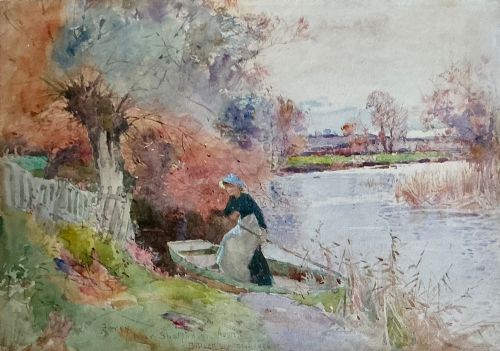
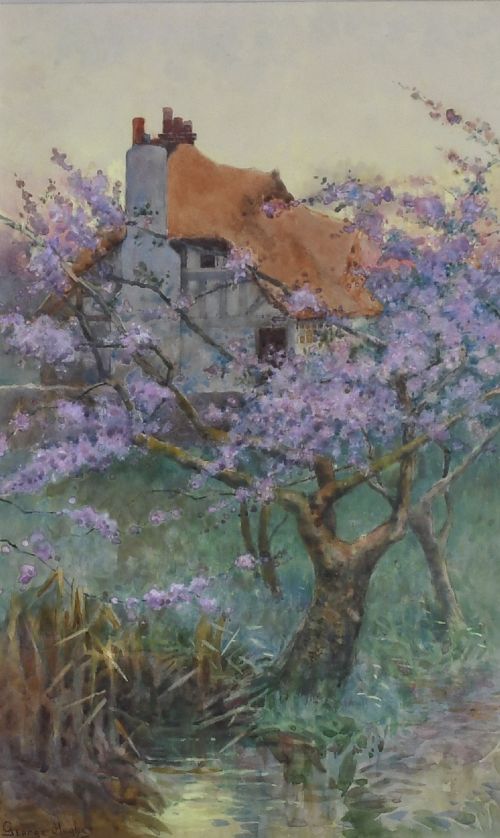
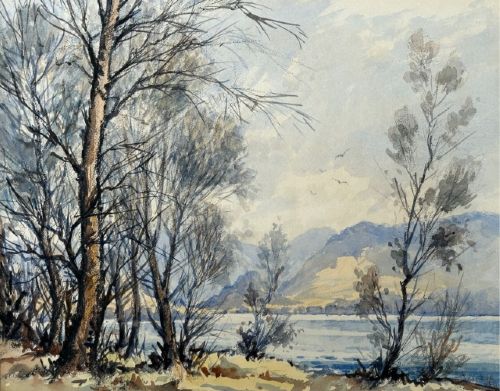
An original tree watercolour focuses on natural subjects, woodland paths, and rural landscapes rendered by hand. Collectors seeking an original tree watercolour encounter works ranging from Victorian studies to mid-century British impressions.
The selections span periods from the late nineteenth century through to the 1960s, encompassing British Impressionism, Modern British, and Art Deco movements. Subjects include specific locations such as Yorkshire landscapes, Welsh valleys, and Cumbrian lakes.
Most pieces portray trees within broader topographical scenes, capturing specific woodland paths, castle grounds, and rural homesteads. The support is consistently paper, frequently framed beneath glass within wooden surrounds.
Materials and execution
Artists applied watercolour pigment and sometimes gouache or ink directly onto paper supports using traditional wash techniques. The handling of the medium determines the transparency of foliage and the density of shadowed trunks.
Paper serves as the primary ground for these watercolours, often augmented by preliminary ink drawing or pencil sketches beneath the pigment layer. Wooden frames and protective glass house the completed paintings.
Original Tree Watercolour Retail Price Guide 2026
Typical asking prices for original tree watercolour among the pieces listed under this phrase on Sellingantiques today, from the lower quarter to the upper quarter. They describe what is for sale here now, not the wider market.
Several paintings record specific woodland trees sheltering wandering livestock, resting picnickers, and prowling jungle leopards.
Distinctions in quality
Quality rests upon the sureness of the brushwork and the artist's ability to render light and form through translucent washes. Stronger examples display confident handling of pigment, capturing the weight of branches and the play of sunlight through leaves.
The distinction between standard topographical records and superior artistic achievements lies in compositional depth and atmospheric resonance. A well-executed sheet demonstrates precise control over the medium, balancing the paper white against layered pigment.
Alfred Young Nutt·Robert Leslie Howey·Samuel Timmins·George Graham·William Hoggatt·Henri Joseph Harpignies·Rowland Henry Hill·Edmund George Warren·Fred Lawson·William Bradley·Charles James Adams·Frederick William Jackson·John J Hamer·Tom Dudley·Cuthbert Edmund Swan
The Original Tree Watercolour Glossary
- Watercolour
- A paint consisting of a pigment suspended in a water-soluble vehicle. It is applied to paper in transparent washes to create luminous effects.
- Gouache
- An opaque watercolour paint made by mixing pigment with a thickening agent. It provides solid highlights and denser colour areas alongside traditional washes.
- Wash
- A thin, fluid layer of diluted watercolour pigment spread evenly across paper. This technique creates skies, backgrounds, and broad expanses of foliage.
- Support
- The physical material upon which the painting is created. In these works, the support is exclusively paper.
- Impressionism
- A style of painting emphasising transient effects of light and spontaneous brushwork. British iterations adapt these principles to domestic landscapes.
Original Tree Watercolour: Frequently Asked Questions
What is an original tree watercolour?
An original tree watercolour is a unique hand-painted artwork on paper focusing on woodland scenes, forests, or individual trees. These pieces are created using water-soluble pigments rather than being printed reproductions.
Artists throughout the nineteenth and twentieth centuries used this medium to capture the changing light and seasonal character of British and international landscapes.
How should I frame and display my painting?
Watercolours require careful protection from direct sunlight to prevent the pigments from fading over time. Conservation framing using acid-free mounts and glass keeps the paper stable.
Hang your painting in a room with stable humidity levels away from direct heat sources to preserve the paper support and wooden frame.
How can I tell the period of a watercolour?
Dating relies on stylistic clues, framing materials, and the paper type used by the artist. Victorian works often feature heavier romantic or illustrative qualities, while mid-century pieces reflect modernist simplification.
Signatures, artist dates, and recorded exhibition titles also help anchor a painting within a specific decade.
What subjects appear alongside trees in these works?
Tree watercolours frequently incorporate rural architecture, rivers, valleys, and coastal settings. Scenes range from Cumbrian lakes and Yorkshire abbeys to woodland paths and farm buildings.
The integration of trees with landscape elements provides both structural framing and atmospheric depth to the composition.