



Original Boat Watercolour
An original boat watercolour captures the movement of coastal life and maritime trade across paper through fluid pigments.
Original Boat Watercolour
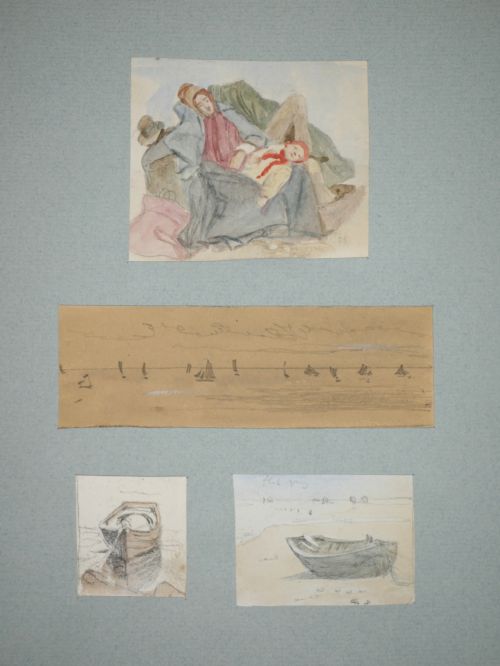
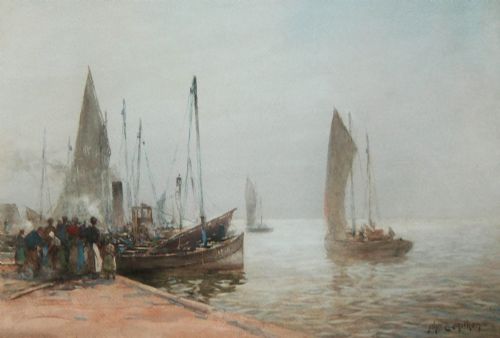
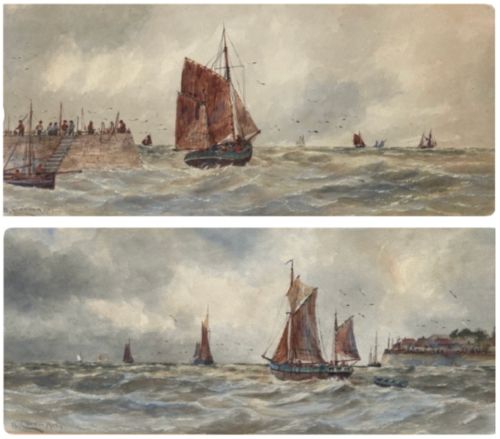
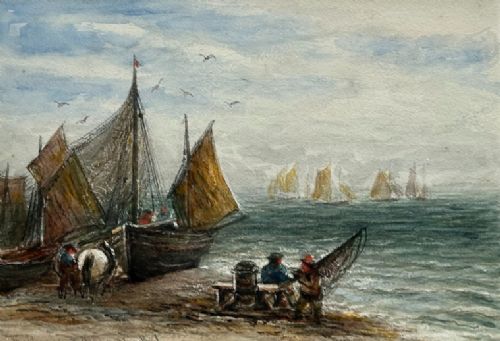
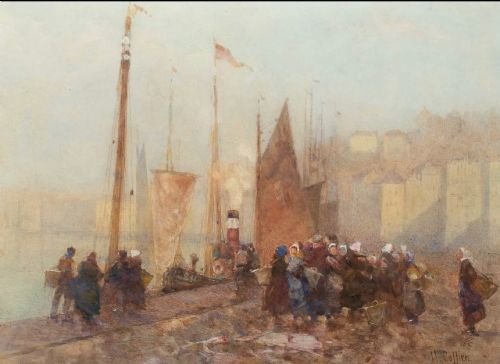
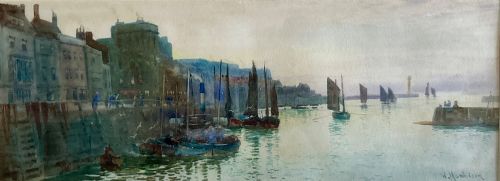
Original boat watercolour works document maritime scenes, fishing fleets, and harbour activities through works on paper created primarily during the nineteenth and twentieth centuries. These paintings range from Victorian marine art depicting choppy coastal waters to British Impressionism and Edwardian harbour views.
Most pieces encountered on this page originate from British and European coastal locations, capturing vessels from fishing cobles to steam and sail ships. Collectors find works spanning from the eighteen-eighties through the mid-twentieth century, framed in wood and glass to protect the delicate media.
How they were made
Artists applied watercolour pigments onto paper surfaces, often combining transparent washes with opaque gouache highlights to render water, sky, and vessel details. Works are typically framed behind glass within wood mouldings, protecting the absorbent paper from environmental moisture and atmospheric damage.
Techniques varied from rapid marine sketches executed on location to highly finished studio watercolours built up in successive washes of pigment. The interaction between the absorbent paper support and water-based colour creates the luminosity characteristic of these maritime paintings.
Original Boat Watercolour Retail Price Guide 2026
Typical asking prices for original boat watercolour among the pieces listed under this phrase on Sellingantiques today, from the lower quarter to the upper quarter. They describe what is for sale here now, not the wider market.
Several artists braved stormy northern tides just to capture the exact angle of a returning fishing boat.
What varies in quality
Quality rests upon the artist's handling of light, atmospheric perspective, and the fluid properties of watercolour pigment. Master practitioners achieve dynamic movement in choppy seas and subtle tonal shifts in coastal skies without overworking the paper.
Condition and preservation heavily influence the standing of a piece, specifically the retention of original pigment vibrancy and the absence of heavy foxing or fading from light exposure. The integration of period framing and the strength of the artist's compositional draughtsmanship further separate works.
James Orrock·William Cannon·James Smetham·James E. Aitken·Hector Caffieri·Alfred G. Morgan·William Matthison·William Lee Hankey·Thomas Bush Hardy·Edward Seago·Tom Clough·Frank H. Mason·Frederick William Hattersley·Clara Montalba·Walter Duncan·Frank Wasley·Fred Mayor·George Stanfield Walters·Thomas Clavering Alder·Ebenezer Wake Cook·Robert Anderson·Frank Rousse·Fred Lawson·Frances E. Nesbitt·William Stephen Coleman
The Original Boat Watercolour Glossary
- Watercolour
- A painting method in which the paints are made of pigments suspended in a water-based solution. This medium allows for luminous washes and delicate layering upon paper.
- Marine art
- Artistic works that depict or draw main inspiration from the sea, ships, and coastal views. These subjects dominated British painting traditions throughout the nineteenth and twentieth centuries.
- Coble
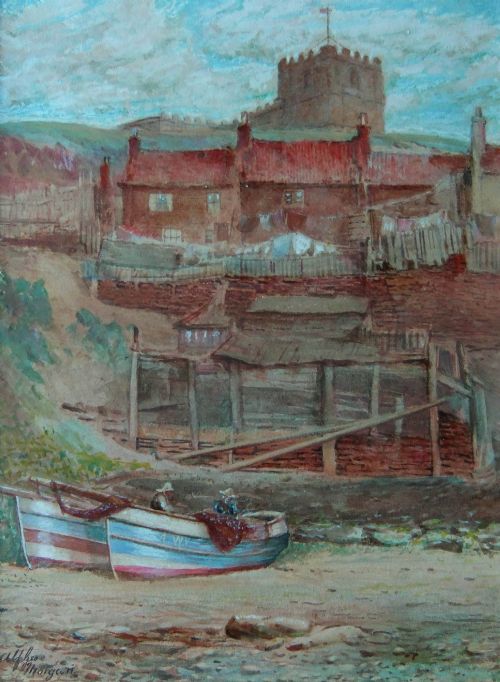
- A traditional type of open fishing boat with a flat bottom and high bow, commonly used along the northeast coast of England. Artists frequently recorded these vessels in Yorkshire harbour scenes.
- Gouache
- An opaque water-based paint consisting of pigment, water, and a binding agent such as gum arabic, often used alongside watercolour to add highlights.
- Foxing
- Brown spots or discolouration that develop on old paper due to chemical reactions over time. This condition frequently affects antique works on paper.
Original Boat Watercolour: Frequently Asked Questions
How do I care for an original boat watercolour?
Keep the artwork away from direct sunlight to prevent the watercolour pigments from fading over time. Ensure the framing remains sealed behind glass to protect the paper support from ambient moisture and dust.
Avoid hanging pieces in rooms with high humidity, such as kitchens or unventilated bathrooms. Professional conservation framing using acid-free materials helps preserve works on paper for decades.
Are these paintings genuine antiques?
Many works originate from the Victorian and Edwardian eras, executed during the nineteenth and early twentieth centuries. Artists utilised traditional paper supports and water-based pigments characteristic of those periods.
Signatures, framing styles, and historical subject matter help verify the age of each painting. Documentation often ties specific pieces to established British and European marine artists of the era.
What subjects appear in these marine watercolours?
Artists recorded active fishing fleets, coastal harbours, and shipping vessels along British and European waterways. Scenes frequently feature cobles in Yorkshire ports, Venetian canals, and shipping activity on the River Thames.
Compositions range from calm evening departures to dramatic depictions of vessels in choppy waters. The works serve as historical records of maritime trades and coastal architecture.
How are these watercolours usually framed?
Most antique watercolours are presented in period wood frames, sometimes featuring ebonised finishes or gilt details. These frames often include glass and protective mounts to safeguard the delicate paper surface.
While some pieces retain their original nineteenth or early twentieth-century framing, others have received conservation reframing to ensure stability. The frame style generally reflects the era in which the painting was created.