




Orientalist Wooden Stand
An orientalist wooden stand brings intricate geometry and rich surface pattern into a room through tables, lamps, and columns.
Orientalist Wooden Stand
An orientalist wooden stand encompasses side tables, occasional tables, coffee tables, floor lamps, and decorative columns gathered under this phrase. These pieces draw on Moorish Revival, Anglo-Indian, Syrian, Persian, and Aesthetic Movement traditions from the nineteenth century up to nineteen thirty.
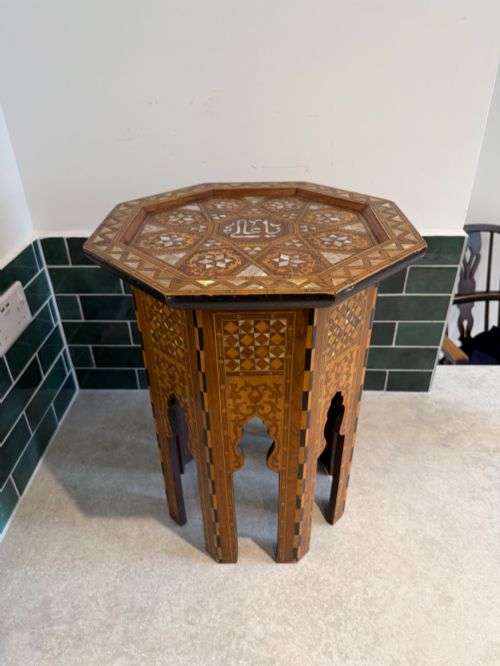
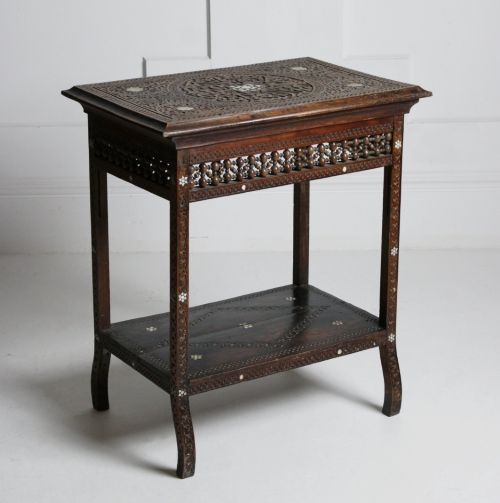
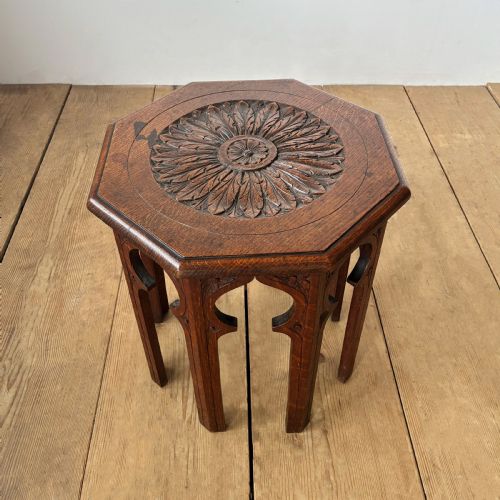
The version most likely to be met on this page is the nineteenth century octagonal occasional table or side table, frequently featuring folding elements and intricate surface decoration. Forms range from Moroccan and North African centre tables to figural lamps and painted columns.
How they were made
Maker workshops utilised hardwoods, walnut, oak, and ebonised wood to build the foundational structure of these stands and tables. Carved wood forms the core framework for many examples.
Surface ornamentation relies heavily on intricate inlay work using mother-of-pearl, bone, and brass elements. Painting also appears on specific French and decorative columns.
Orientalist Wooden Stand Retail Price Guide 2026
Typical asking prices for orientalist wooden stand among the pieces listed under this phrase on Sellingantiques today, from the lower quarter to the upper quarter. They describe what is for sale here now, not the wider market.
Camels and blackamores occasionally appear as sculptural motifs supporting nineteenth-century tables.
What varies in quality
Quality rests primarily in the precision and completeness of the inlay work, particularly with mother-of-pearl and bone on hardwood frames. Dense geometric carving across surfaces indicates higher skill than simpler, sparse decoration.
The integrity of folding mechanisms and the richness of specific stylistic revivals, such as Moorish or Anglo-Indian motifs, separate standard items from superior pieces.
Liberty & Co.·Marguerite
The Orientalist Wooden Stand Glossary
- Octagonal
- Having eight sides. This geometric form frequently defines the top surface and profile of Moorish occasional tables.
- Ebonised
- Wood finished to resemble ebony. This dark treatment provides a contrasting background for inlaid mother-of-pearl and bone.
- Moorish Revival
- An architectural and decorative style inspired by North African and Spanish Islamic design. It dominates the ornamentation of these tables and stands.
- Inlay
- Material set into a surface to form a decorative pattern. Mother-of-pearl and bone serve this purpose in these pieces.
Orientalist Wooden Stand: Frequently Asked Questions
What is an orientalist wooden stand?
An orientalist wooden stand refers to nineteenth-century occasional tables, side tables, floor lamps, and decorative columns created in Moorish, Anglo-Indian, and Persian styles.
These pieces use hardwoods adorned with intricate inlay work, including mother-of-pearl and bone, reflecting cross-cultural design influences of the period.
How were these tables used?
Many of these items functioned as occasional tables, tea tables, or decorative supports within Victorian and Aesthetic Movement interiors.
Some designs incorporated folding frameworks intended for easy storage or movement between rooms as needed.
How do I identify a Moorish style table?
Moorish style tables typically feature octagonal tops, intricate geometric carving, and dense inlay patterns using contrasting materials.
They often draw inspiration from Syrian, Moroccan, and North African decorative traditions.
What materials are common in these pieces?
Construction relies predominantly on hardwoods, walnut, oak, and ebonised wood to form the structural body.
Surfaces are frequently embellished with inlaid mother-of-pearl, bone, and detailed woodwork.