





Oriental Wood Wall Art
Oriental wood wall art comprises carved panels, lacquer plaques, and framed paintings spanning multiple centuries from China, Japan, Burma, and Southeast Asia.
Oriental Wood Wall Art
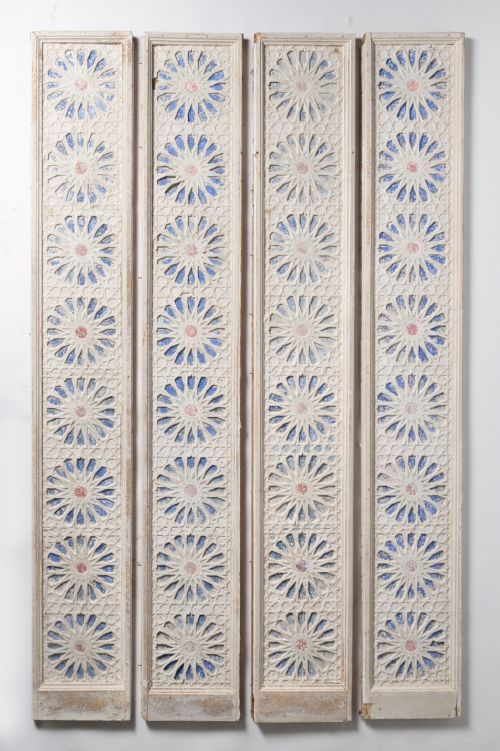
Oriental wood wall art encompasses carved wooden panels, temple carvings, lacquered plaques, and framed paintings created across diverse Asian traditions. These works range from intricate Chinese gilt wood reliefs to Japanese woodblock prints and Burmese wooden panels.
Buyers will most frequently encounter nineteenth-century pieces, alongside items from the mid-eighteenth through to the mid-twentieth centuries. Common forms include pairs of decorative plaques, framed silk paintings, and carved teak wall hangings designed for interior display.
Materials and construction
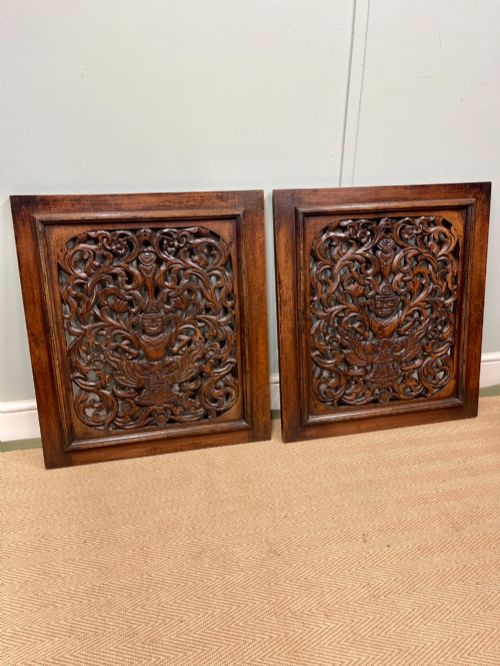
Artisans utilised dense timbers such as teak and rosewood, applying deep relief carving, pierced work, and joinery to build the structural panels. Surface treatments frequently incorporate lacquer, gold leaf, paint, and paper mounts.
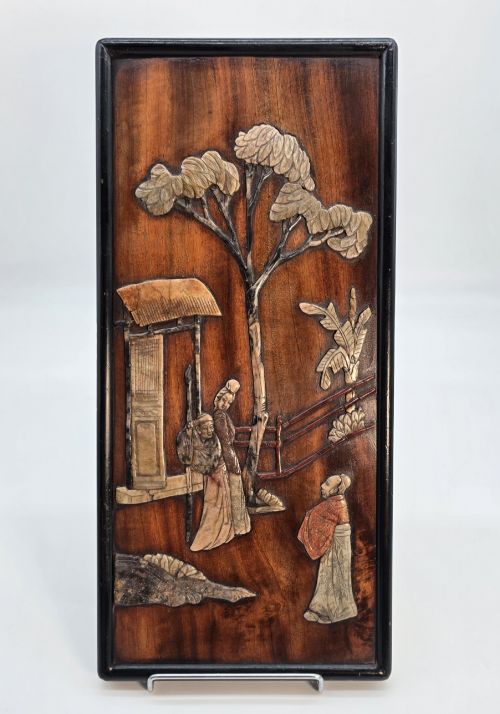
Many works combine multiple mediums within a single piece, pairing carved wood with glass, silk, or stone elements. Frames are often constructed to complement the primary artwork, utilising traditional framing techniques and silk brocade mounts.
Oriental Wood Wall Art Retail Price Guide 2026
Typical asking prices for oriental wood wall art among the pieces listed under this phrase on Sellingantiques today, from the lower quarter to the upper quarter. They describe what is for sale here now, not the wider market.
Current listings feature items executed in wood, lacquer, glass, paper, paint, gold leaf, silk, and teak.
Variations in quality
Quality varies significantly in the depth and precision of the carving, distinguishing sharply rendered relief work from softer, more shallow execution. The fineness of the original brushwork on silk paintings and the preservation of delicate lacquer and gold leaf also determine the standing of a piece.
The integrity of the materials, the survival of original frames and mounts, and the complexity of the composition separate standard decorative items from superior examples of craftsmanship.
Takabatake Kasho·Otto Pilny
The Oriental Wood Wall Art Glossary
- Shan Shui
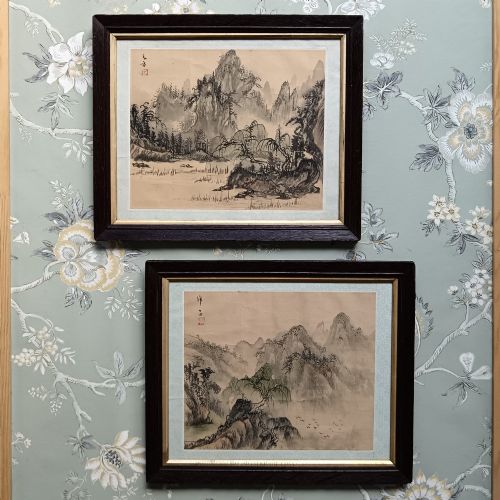
- Traditional Chinese landscape painting style depicting scenery such as mountains, rivers, and waterfalls. These compositions are frequently rendered on silk and housed in original frames.
- Gilt Wood
- Wood that has been treated with a thin layer of gold leaf or gold paint. This technique was frequently applied to temple panels and decorative reliefs to create a luminous surface.
- Coromandel
- A type of Chinese incised lacquer work where the design is carved into a dark ground and filled with colours. Pieces in this style are often referred to as Bantam work.
- Ukiyo-e
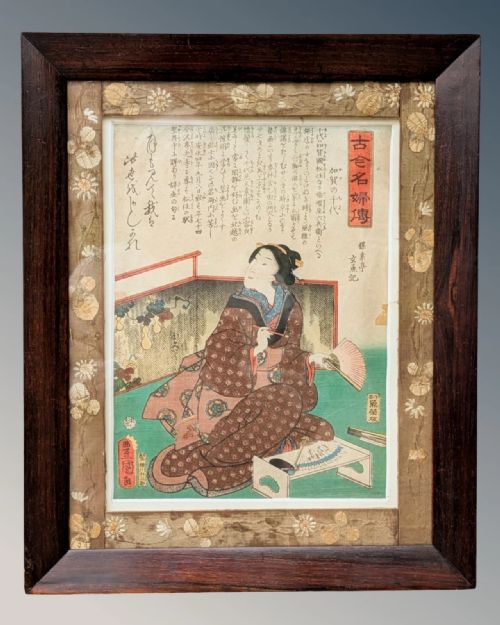
- A genre of Japanese art depicting scenes from history, folk tales, and everyday life. These works often manifest as woodblock prints set within rosewood frames and silk brocade mounts.
Oriental Wood Wall Art: Frequently Asked Questions
What periods do these wall pieces cover?
The available selection spans from the mid-eighteenth century through the nineteenth century and into the twentieth century, including pieces dated around nineteen-ten, nineteen-twenty, and nineteen-sixty.
Most items originate from the nineteenth century, reflecting diverse traditions across China, Japan, Burma, and Southeast Asia.
How were these wall panels originally used?
Many of these items functioned as architectural elements, temple panels, or decorative wall hangings within traditional interiors. Framed prints, paintings, and lacquer plaques were typically displayed as focal points in domestic or religious spaces.
Larger sets of panels were often arranged in sequences to decorate specific walls or rooms.
How should I care for lacquered and wooden wall art?
Keep wooden and lacquered pieces away from direct sunlight and extreme fluctuations in temperature to prevent warping or cracking of the timber. Dust gently with a dry, soft cloth and avoid chemical cleaning products that might damage delicate lacquer or gold leaf surfaces.
Ensure that hanging fixtures are secure, particularly for heavier carved teak panels and stone-framed pictures.
How do I identify Japanese Meiji period panels?
Meiji period panels date from the late nineteenth to the early twentieth century and often exhibit high levels of craftsmanship in carved wood, lacquer, or metalwork integration. Stylistic markers include naturalistic motifs, meticulous detailing, and adherence to traditional Japanese aesthetic principles of that era.
Comparative study of framing styles and mounting fabrics also assists in period identification.