

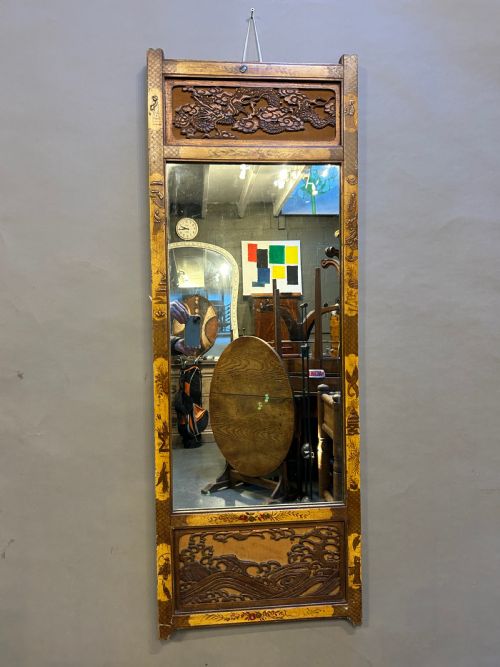


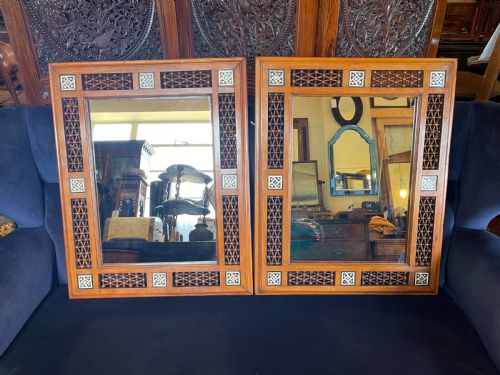
Oriental Wood Mirror
An oriental wood mirror brings depth and texture to a room, combining rich regional carving, lacquer, or inlay with practical glass.
Oriental Wood Mirror
An oriental wood mirror encompasses decorative wall glasses, cheval mirrors, and table mirrors shaped by distinct global design traditions. These pieces draw on Chinoiserie, Anglo-Indian, Qing Dynasty, and Moorish Revival aesthetics, spanning the nineteenth century through the early twentieth century.
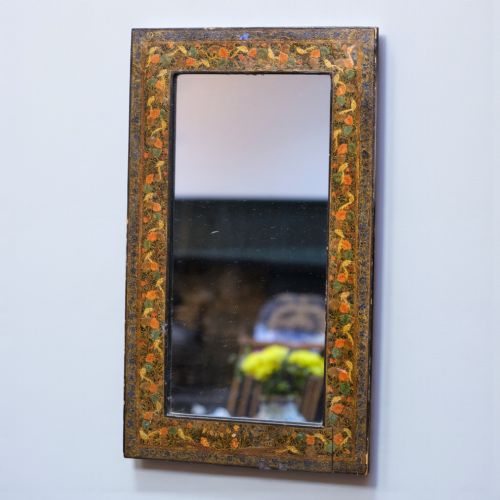
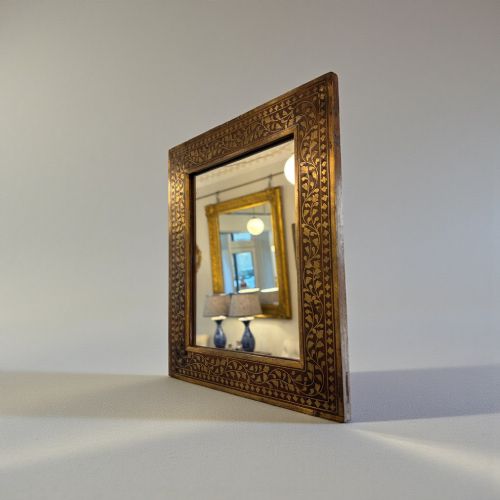
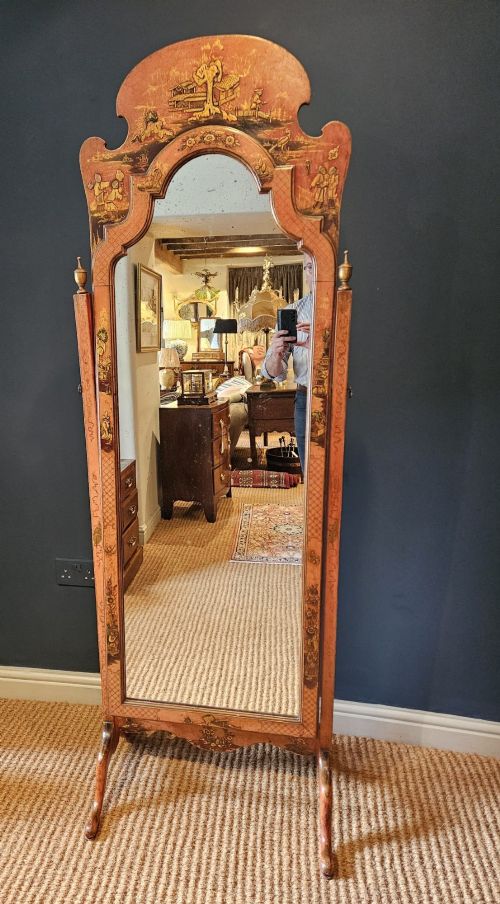
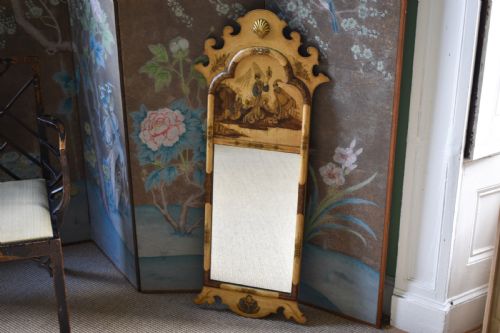
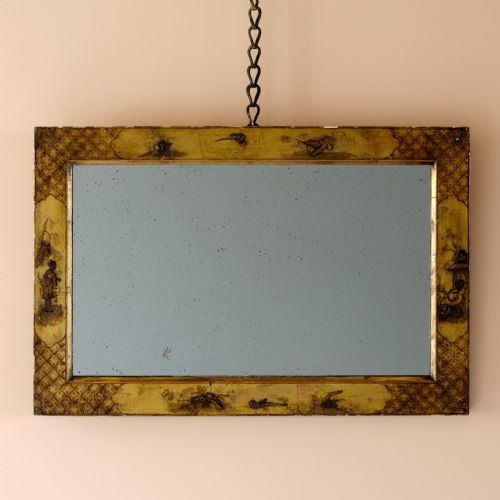
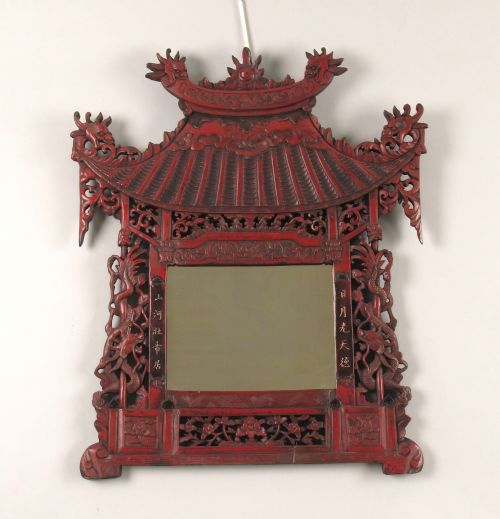
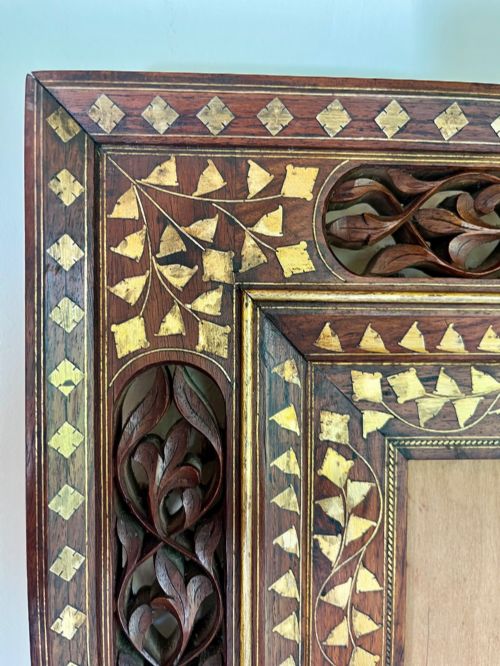
The version most commonly encountered on this page is the Chinoiserie wall mirror, often finished in black or red lacquer and decorated with gilt motifs. Buyers also frequently find Kashmiri and Anglo-Indian works featuring intricate brass inlay, carved hardwood frames, and pierced edges.
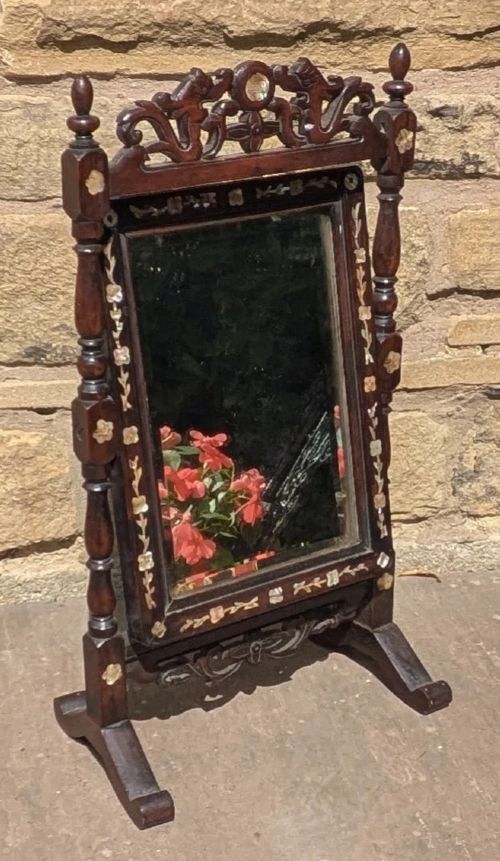
Forms range from grand pagoda-topped wall mirrors and floor-standing cheval glasses to compact oval pier mirrors and carved frames. Each object integrates timber construction with traditional surface ornamentation, functioning simultaneously as a reflective utility and a focal point of interior design.
Materials and construction techniques
Makers utilised a variety of dense timbers, including cherrywood, general hardwood, and specialised lacquered wood frames. These structural woods were then transformed using surface treatments such as multi-layered lacquer, applied pigment, and surface gilding.
Decoration relied heavily on specialised handcrafts, evidenced by mother-of-pearl inlay, brass wire inlay, and intricate pierced wood carving. Glass elements sometimes incorporated reverse painting techniques, particularly in Chinese export trade pieces from the nineteenth century.
Oriental Wood Mirror Retail Price Guide 2026
Typical asking prices for oriental wood mirror among the pieces listed under this phrase on Sellingantiques today, from the lower quarter to the upper quarter. They describe what is for sale here now, not the wider market.
Some pagoda mirrors are ambitious enough to make a modest hallway feel like a nineteenth-century export warehouse.
Distinctions in craftsmanship and finish
The division between standard examples and superior pieces rests on the depth and precision of the manual work. Finer items exhibit deeply sculpted carvings, meticulous brass or mother-of-pearl inlay flush to the timber, and controlled application of lacquer or gilding.
Proportion and structural integrity also dictate distinction, where balanced frames, well-preserved mirror glass, and cohesive stylistic unity elevate an object above simpler production pieces.
The Oriental Wood Mirror Glossary
- Chinoiserie
- European interpretation and imitation of Chinese artistic traditions and motifs, frequently applied to furniture and mirror frames.
- Cheval mirror
- A full-length freestanding mirror suspended on a vertical frame or pivot stands, allowing the glass to tilt.
- Anglo-Indian
- Furniture and decorative objects made in India during the British period, combining British forms with traditional Indian craftsmanship.
- Reverse painted mirror-glass
- A technique where paint or gilt is applied directly to the back of the glass plate, creating a luminous finish viewed from the front.
- Pier mirror
- A tall mirror designed specifically to be hung on the wall between two windows, often placed above a pier table.
Oriental Wood Mirror: Frequently Asked Questions
Where should I hang a wall mirror?
These mirrors suit hallways, living rooms, and bedrooms where they can reflect natural light and open up wall space.
Ensure the wall fixings match the weight of the timber and glass frame safely.
How do I date a wooden mirror?
Dating relies on observing construction methods, timber types, edge bevels on the glass, and stylistic indicators such as Edwardian or Qing Dynasty details.
Examining the backboards and fixings often reveals the manufacturing era more clearly than the surface finish alone.
How do I clean a lacquered frame?
Dust the timber gently with a dry, soft cloth to prevent scratching the delicate lacquer surface.
Avoid using modern chemical polishes or excessive water, which can damage historic finishes and gilding.
What is a cheval mirror used for?
A cheval mirror provides a full-length reflection for dressing, supported by a freestanding swivel frame.
It allows the user to adjust the angle of the glass without requiring permanent wall mounting.