






Oriental Room Divider
An oriental room divider splits a space with dramatic narrative panels, bringing historic craftsmanship and rich decorative depth into a modern interior.
Oriental Room Divider
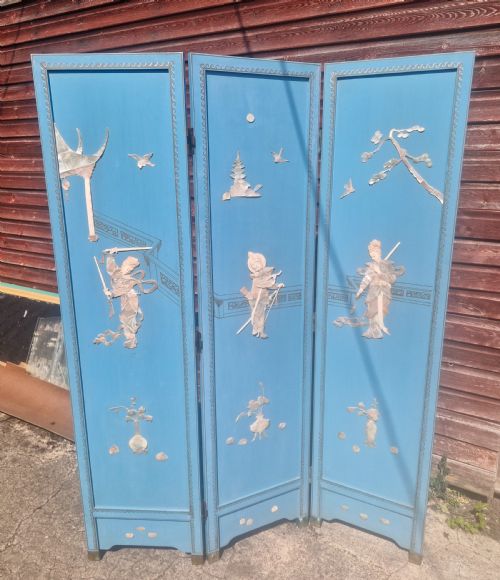
An oriental room divider is a multi-panel folding screen designed to zone open areas, shield draughts or create private corners within a room. These pieces range from small three-fold dressing screens to grand eight-fold architectural barriers.
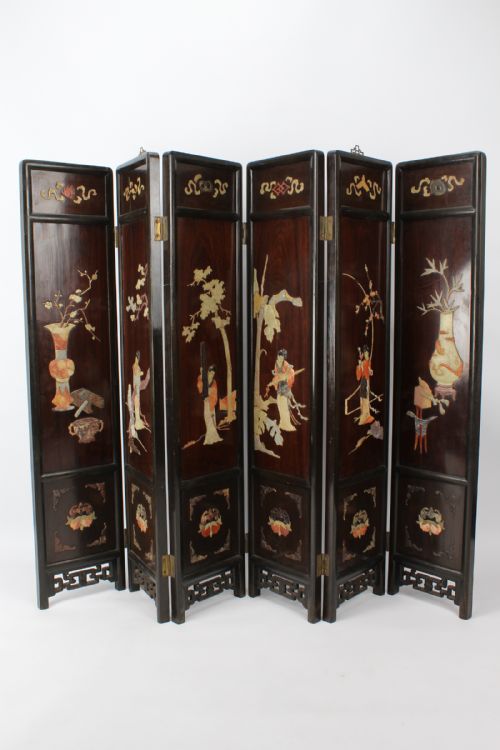
The pieces on this page are predominantly Chinese and Japanese folding screens dating from the eighteenth century to the mid-twentieth century. You will encounter black lacquered wood panels, intricate coromandel work and freestanding screens designed for domestic use.
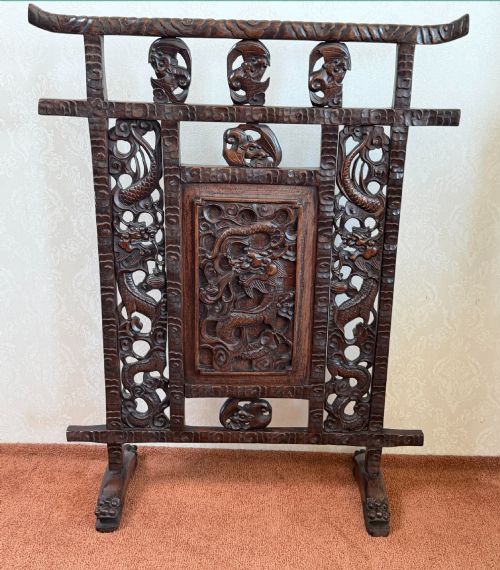
Beyond traditional floor-standing dividers, the selection includes smaller tabletop screens, fire screens and photographic prop screens. Each type shares a reliance on hinged panels that fold flat for storage or extend to command a wall.
How they were made
Makers built these screens using solid hardwoods and softwoods, forming folding panels joined by metal hinges or traditional pin mechanisms. Carved details frequently incorporate applied bone, hardstone or painted silk panels set into the wooden framework.
Surface decoration relies heavily on lacquer applied in multiple coats, sometimes finished with gold leaf or incised using the coromandel technique to reveal contrasting layers beneath. Painters and carvers added intricate depictions of figures, foliage and dragons by hand.
Oriental Room Divider Retail Price Guide 2026
Typical asking prices for oriental room divider among the pieces listed under this phrase on Sellingantiques today, from the lower quarter to the upper quarter. They describe what is for sale here now, not the wider market.
Object forms range from grand eight-fold architectural barriers and dressing screens down to delicate tabletop screens and photographic props.
What varies in quality
Quality rests on the depth and precision of the carving, the richness of the lacquer surface and the integration of inlay materials like bone and hardstone. Superior panels display crisp detail in human figures and foliage, whereas simpler versions rely purely on flat paint.
The integrity of the hinges and the weight of the underlying timber dictate how well a multi-fold screen stands over time. Screens with thick hardwood frames and deep, multi-tiered lacquer retain their structural stability and visual impact far better than lighter decorative alternatives.
William Morris
The Oriental Room Divider Glossary
- Coromandel lacquer
- A Chinese incised lacquer technique where motifs are carved into a dark ground and filled with colours or gold leaf. This method creates a textured, multi-layered surface often seen on grand folding screens.
- Chinoiserie
- A European artistic style reflecting Chinese and East Asian motifs, popular in furniture and interior decoration from the seventeenth century onward. It interprets traditional oriental scenes through a Western decorative lens.
- Table screen
- A small decorative screen mounted on a wooden stand, traditionally used on desks or scholarly tables in East Asia. These pieces focus on miniature carving, inlay or painted detail rather than room division.
- Fire screen
- A freestanding domestic screen placed in front of an unused fireplace to block draughts or conceal the grate. They are generally smaller than room dividers and often feature needlework, silk or painted panels.
Oriental Room Divider: Frequently Asked Questions
How do I use a folding screen at home?
Folding screens work well to zone open-plan living areas, create a secluded dressing corner in a bedroom or simply soften a bare wall. They stand unsupported when angled correctly across the floor.
Heavier multi-fold wooden screens require sufficient clearance to extend safely without tipping. Lighter silk or fabric versions are best kept away from high-traffic family pathways.
What is the difference between coromandel and lacquered screens?
Coromandel screens involve an incised carving technique where the artisan cuts deeply into layers of dark lacquer to reveal contrasting colours underneath. Standard lacquered screens rely on surface painting, gilding or low relief without the deep incised carving.
Both finishes require careful placement away from direct sunlight and damp conditions to preserve the integrity of the surface materials.
How do I tell an eighteenth-century screen from a twentieth-century one?
Earlier screens from the eighteenth and nineteenth centuries typically feature heavier hardwoods, hand-mixed lacquer finishes and traditional joinery without modern metal screws. Their carved motifs often reflect period-specific iconography and deeper patination.
Twentieth-century pieces tend to incorporate lighter timbers, standardised hinges and finishes that show less wear from age. Examining the reverse sides and hinge mounts often reveals the manufacturing era.
Can these screens support their own weight?
Most freestanding folding screens are designed to stand independently when the panels are arranged in a zig-zag or accordion fold. The weight of the timber and the strength of the hinges keep the structure stable.
Extending a screen completely flat reduces its stability and usually requires wall brackets or additional support to prevent it from falling over.