







Oriental Marble Furniture
Oriental marble furniture brings together carved hardwoods and inset stone tops across nineteenth century and Victorian forms.
Oriental Marble Furniture
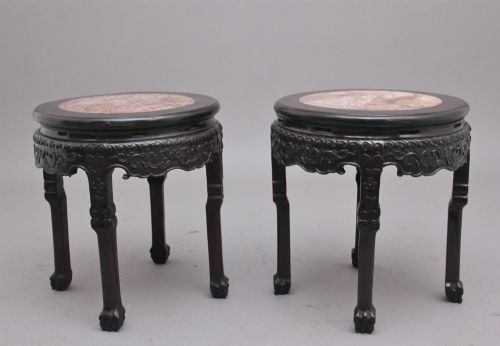
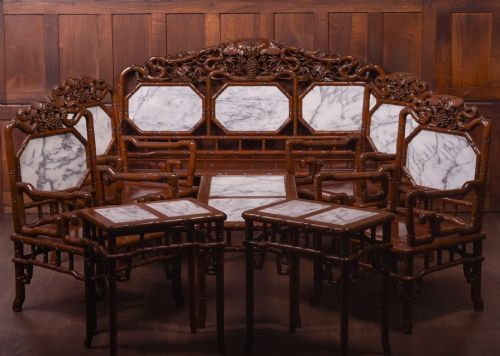
Oriental marble furniture encompasses plant stands, jardiniere tables, and side tables constructed during the nineteenth century and the Victorian era. Buyers searching for oriental marble furniture frequently encounter compact pedestals, low tables, and occasional pieces designed to display decorative objects.
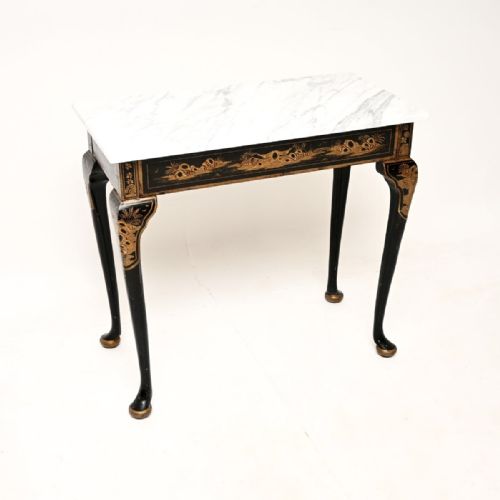
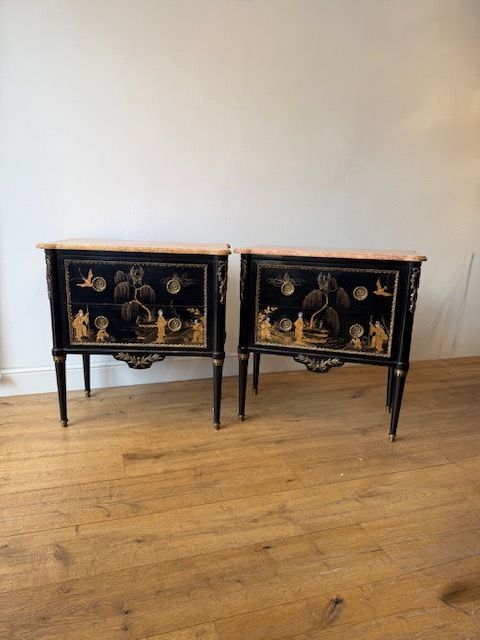
The objects stem from Chinese export workshops and Qing Dynasty traditions, alongside Victorian interpretations incorporating chinoiserie lacquer and ebonised finishes. These forms range from single urn stands to matching pairs and low occasional tables intended for formal parlours.
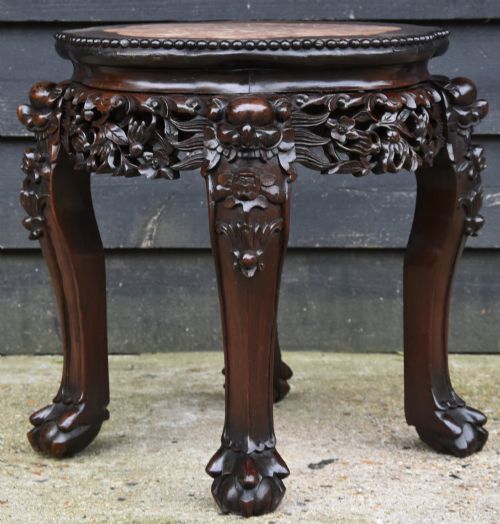
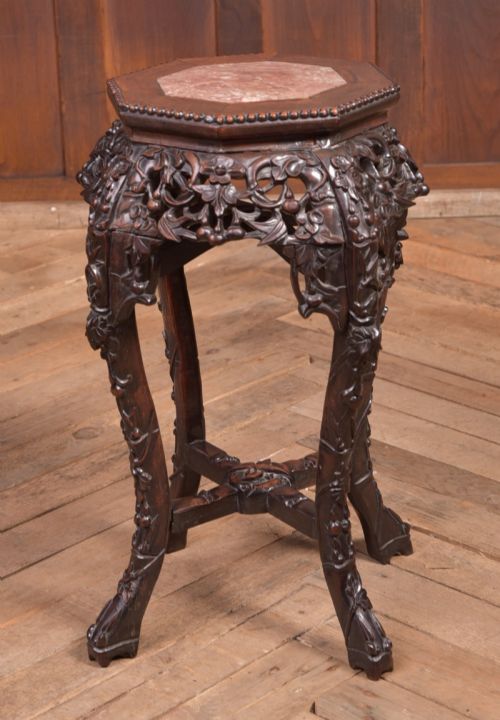
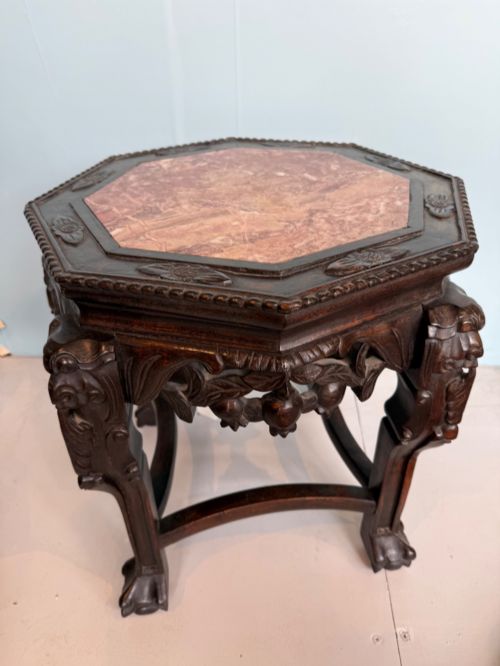
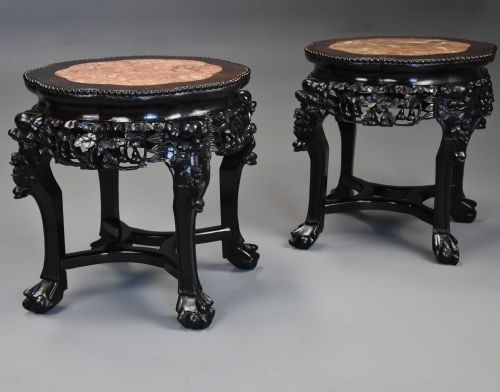
The structural vocabulary relies heavily on carved hardwood frames holding circular or shaped inset stone panels. Such pieces serve as functional display surfaces while showing distinct regional cabinetmaking techniques from the late nineteenth and early twentieth centuries.
Materials and Construction
Makers utilised dense timbers such as rosewood, padouk, hongmu, and general hardwoods to support heavy stone inserts. These woods provide the structural strength needed for deeply carved aprons, cabriole legs, and stretcher bases.
Rouge marble and standard marble slabs are precision fitted into recessed wooden tops, often secured without modern adhesives. Workshops combined traditional joinery with intricate surface carving, sometimes incorporating mother-of-pearl inlay and black lacquer finishes.
Oriental Marble Furniture Retail Price Guide 2026
Typical asking prices for oriental marble furniture among the pieces listed under this phrase on Sellingantiques today, from the lower quarter to the upper quarter. They describe what is for sale here now, not the wider market.
Listings feature items from the 19th Century, Victorian period, and early 1900s, constructed in rosewood, padouk, hongmu, and lacquer.
Craftsmanship and Material Selection
The depth and clarity of the timber carving distinguish standard production from exceptional examples. Superior pieces display crisp relief work depicting dragons, foliage, or geometric motifs without splintering in the dense grain.
The quality of the inset marble surface influences the overall integrity of the piece. Well-selected stone panels feature distinct veining and sit flush within the surrounding wooden rebate, demonstrating precise cabinetmaking.
The Oriental Marble Furniture Glossary
- Hongmu
- A dense, dark tropical hardwood utilised in traditional Chinese furniture making. It provides a heavy, durable frame capable of holding stone inserts.
- Jardiniere stand
- A tall, slender piece designed to hold plant pots or floral arrangements. These stands feature inset marble tops to protect the wood from moisture.
- Padouk
- A heavy reddish-brown hardwood seen in nineteenth century oriental tables and stands. Its natural stability suits intricate carved details.
- Qing Dynasty
- The final imperial dynasty of China, spanning from the seventeenth to the early twentieth century. Pieces from this era often display formal carved motifs and dense timbers.
- Chinoiserie
- European artistic styles reflecting Chinese decorative motifs. Victorian interpretations frequently combined lacquered finishes with oriental forms.
Oriental Marble Furniture: Frequently Asked Questions
What is oriental marble furniture used for?
These pieces function primarily as display surfaces for plants, urns, lamps, and decorative objects within living spaces.
Their sturdy hardwood construction and moisture-resistant stone tops make them practical for everyday household use.
How do I identify a Qing Dynasty piece?
Identification relies on observing traditional carved motifs, dense timbers like hongmu and rosewood, and structural joinery methods.
Such pieces typically date from the nineteenth century through the early twentieth century.
Are these tables suitable for modern homes?
The compact proportions of plant stands and side tables allow them to fit easily beside seating or in hallways.
Their neutral stone surfaces and dark wood tones complement various interior styles.
What distinguishes rosewood from padouk?
Rosewood exhibits a darker, more varied grain pattern with natural oils that take a fine polish. Padouk tends toward a distinct reddish hue with high density.