



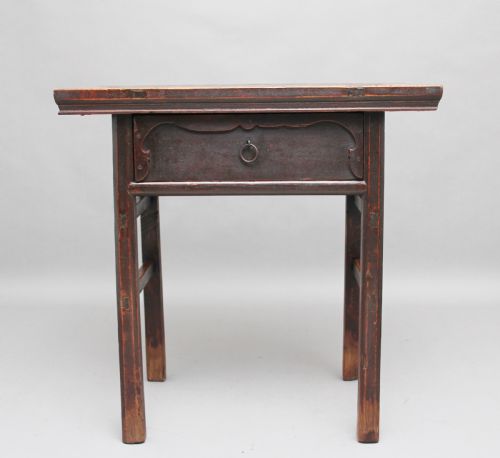


Oriental Elm Table
An oriental elm table brings substantial timber grain and traditional joinery from Chinese and Japanese workshops into a room.
Oriental Elm Table
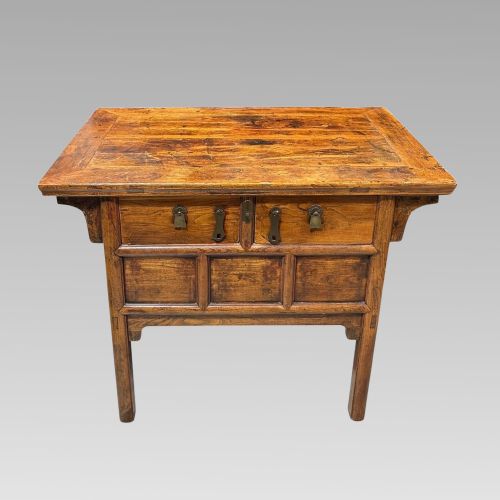
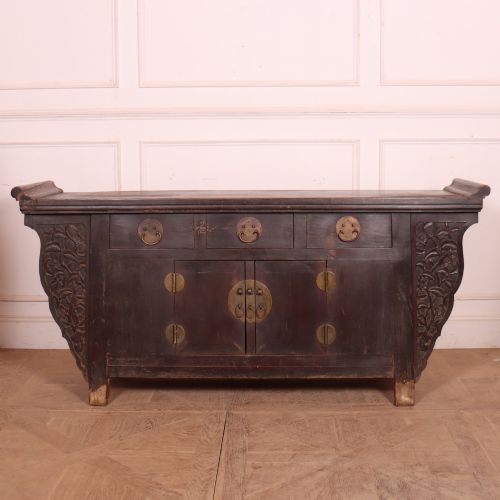
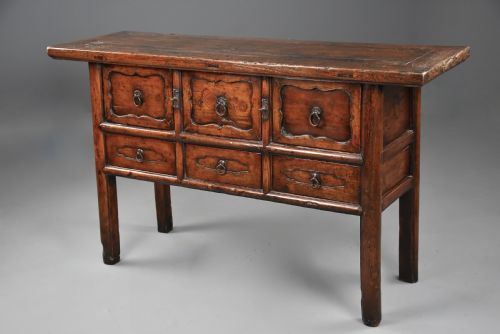
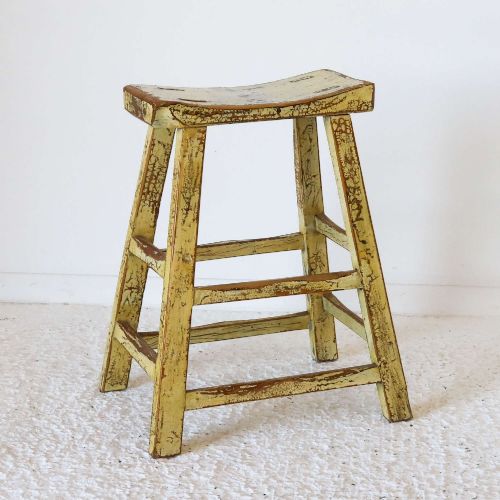
An oriental elm table spans forms from low coffee tables and chabudai tea tables to tall altar tables, console tables, and writing desks. These pieces originate predominantly from Chinese regional and provincial traditions, alongside Japanese Meiji period examples.
The selections visible here feature items constructed across the eighteenth and nineteenth centuries, extending into the early twentieth century. Side tables and low coffee formats appear most frequently among these listings.
Buyers encounter surfaces finished in natural timber grain, patinated dark wood, or occasionally red lacquer and ebonised treatments. The structures range from rustic dressers and sideboards to refined altar styles with plank tops.
How they were made
The makers relied on native elm, sometimes noted as locust wood, paired with supplementary hardwood timbers for structural framing. Metal components such as brass or iron appear on hardware, drawer fittings, and corner braces.
Surface treatments include traditional lacquer applications and ebonised finishes applied over the timber base. Carved details and natural patination develop through sustained use and polishing over the centuries.
Oriental Elm Table Retail Price Guide 2026
Typical asking prices for oriental elm table among the pieces listed under this phrase on Sellingantiques today, from the lower quarter to the upper quarter. They describe what is for sale here now, not the wider market.
Some nineteenth century tables arrive with hidden compartments that likely stored secret tea leaves or stray calligraphy brushes.
What varies in quality
The character of the timber grain and the depth of the patination dictate the visual presence of each piece. Tables retaining an original lacquered finish or untouched surface show greater integrity than those stripped down.
Joinery execution distinguishes provincial workshop output from finer urban furniture. The stability of plank tops and the crispness of carved elements separate standard utility items from more ambitious altar and console forms.
The Oriental Elm Table Glossary
- Altar table
- A tall, narrow table traditionally positioned against a wall in domestic or ceremonial spaces, often featuring upturned flanges at the short ends.
- Chabudai
- A short Japanese traditional table used while sitting on tatami mats for dining or tea consumption.
- Patina
- The surface sheen and colour depth developed by timber over decades of handling, exposure, and polishing.
- Plank top
- A solid wooden surface constructed from wide boards joined side by side to form the main tabletop.
- Ebonised
- Timber treated with a dark stain or finish to simulate the appearance of ebony wood.
Oriental Elm Table: Frequently Asked Questions
How do I use an oriental elm table at home?
Low tables function effectively as coffee tables or tea stations in living spaces. Taller altar and console formats serve as sideboards, hallway surfaces, or writing desks against a wall.
Allow sufficient floor clearance around larger sideboards and benches to let the timber proportions anchor the room without overcrowding the space.
How do I tell nineteenth century pieces apart from later ones?
Nineteenth century examples generally display deeper timber patination, heavier construction wear, and traditional joinery methods. Later pieces from the early twentieth century often show cleaner factory surfaces and lighter hardware.
Examine the underside and drawer interiors for tool marks and timber shrinkage that indicate genuine age.
What is the difference between Chinese and Japanese tables here?
Chinese regional tables frequently include tall altar forms, sideboards, and writing desks with carved aprons or curved flanges. Japanese Meiji period examples often present as low chabudai tea tables or ebonised side tables with distinct proportions.
Both traditions utilise elm timber but apply different structural geometries and surface finishes.
How should I care for an antique elm surface?
Dust the timber regularly with a soft, dry cloth and avoid placing items in direct sunlight or beside intense heat sources. Protect the natural patination by using beeswax polish sparingly when the wood appears dry.
Keep liquid spills away from lacquered or unsealed grain to prevent permanent staining.