






Oriental Carved Throne Chair
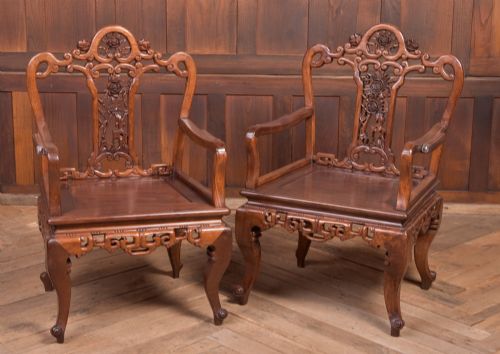
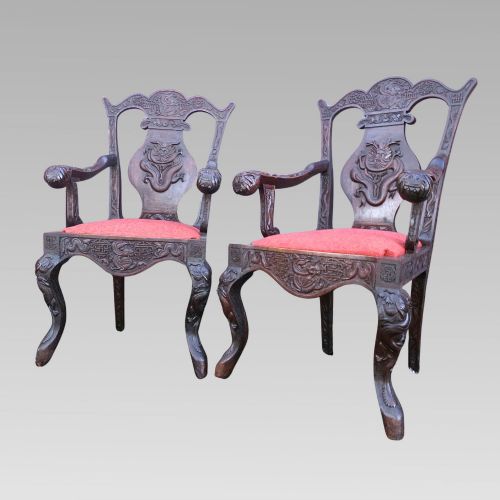
These oriental carved throne chair examples offer dense regional carving and heavy timber frames, combining high-status seating with intricate traditional craftsmanship.
Oriental Carved Throne Chair
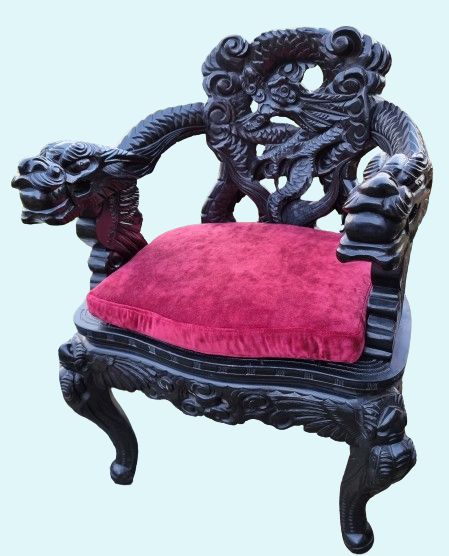
An oriental carved throne chair brings monumental presence to a room through deep relief carving and imposing armrest structures. When you examine an oriental carved throne chair on this page, you will mostly encounter pieces fashioned from dense timbers during the nineteenth century and the early twentieth century.
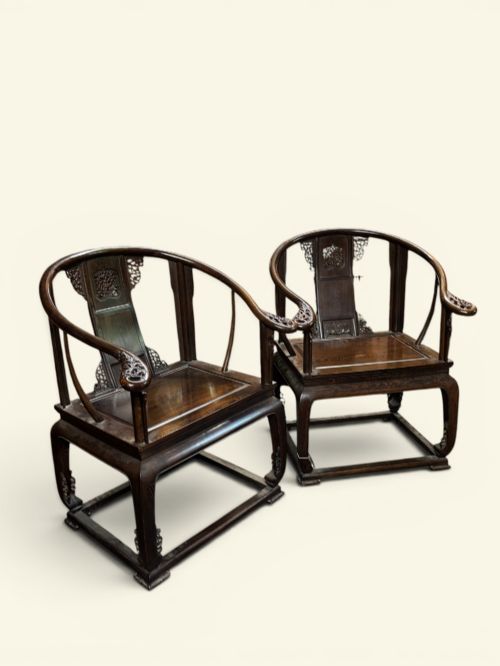
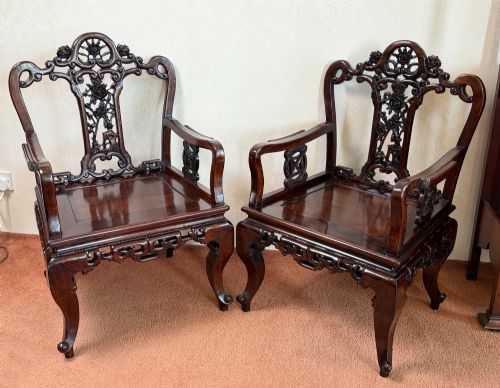
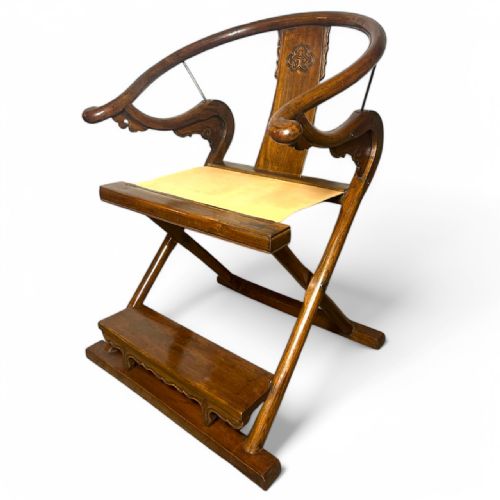
The forms range from horseshoe-back armchairs to broad benches, settles, and occasional matching pairs. Many originate from Chinese workshops under Qing Dynasty influences, alongside distinct Anglo-Indian and Moghul variants.
These items served primarily as ceremonial or high-status seating within traditional interiors, rather than casual household loungers. Their robust frames and elaborate iconography distinguish them immediately from standard European seating of the same periods.
How they were made
Maker workshops utilised dense, heavy timbers such as rosewood, teak, hongmu, and general dark hardwoods to ensure structural integrity under deep chisel work. These materials possess the natural grain and weight required to support intricate openwork carving without splintering.
Joinery techniques relied heavily on traditional mortise and tenon construction, allowing the heavy wooden components to interlock securely without modern metal fasteners. Certain examples incorporate carved marble inserts into the back panels or layered cinnabar lacquer finishes over the timber base.
Oriental Carved Throne Chair Retail Price Guide 2026
Typical asking prices for oriental carved throne chair among the pieces listed under this phrase on Sellingantiques today, from the lower quarter to the upper quarter. They describe what is for sale here now, not the wider market.
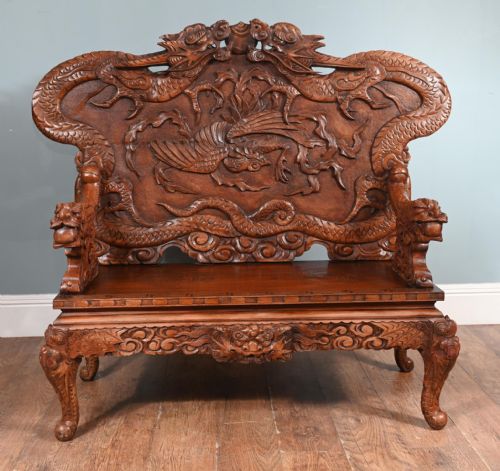
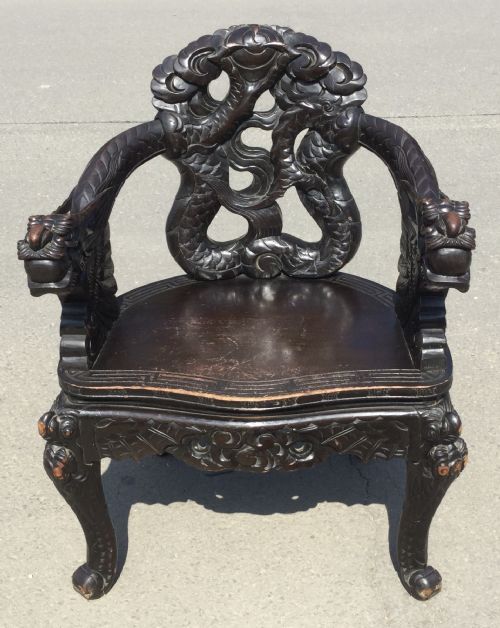
Several dragon benches stare back with ferocious wooden expressions designed to guard the household from wandering spirits.
What varies in quality
The depth and crispness of the hand-carved detail dictate the upper tiers of quality, separating deeply undercut dragon motifs from shallow, mechanical impressions. Superior examples exhibit sharp relief work where every scale, claw, and floral scroll is defined with deliberate precision.
Choice of material also drives distinction, with dense rosewood and heavy hongmu carrying greater natural prestige than standard domestic hardwoods or softer elm. Furthermore, the symmetry of matched pairs and the structural rigidity of the original joinery elevate certain seating well above standard utility grade.
The Oriental Carved Throne Chair Glossary
- Hongmu
- A dense, dark tropical hardwood traditionally favored in high-status Chinese furniture manufacturing. It is valued for its heavy weight and capacity to hold extremely fine detail.
- Cinnabar lacquer
- A traditional layered red resin coating applied to wood and carved after hardening. This technique produces durable, vibrant surfaces with deep decorative relief.
- Horseshoe-back
- A chair design featuring a continuous curved crestrail that sweeps down to form the armrests. This ergonomic form has ancient origins in Asian seating.
- Qing Dynasty
- The final imperial dynasty of China, spanning from sixteen forty-four to nineteen twelve. Furniture from this period is characterised by robust proportions and complex symbolic carving.
- Moghul
- A stylistic descriptor linked to the historic empire governing the Indian subcontinent. Pieces bearing this influence often display sweeping crests and intricate floral scrollwork.
Oriental Carved Throne Chair: Frequently Asked Questions
How do I care for hardwood furniture?
Maintain stable indoor humidity levels to prevent the dense timbers from splitting or warping over time. Apply neutral beeswax sparingly to nourish the grain without leaving heavy residue.
Keep these items away from direct heat sources and strong sunlight to preserve the original finish and lacquer work.
Were these chairs used daily?
Many grand seating forms served ceremonial or authoritative functions within traditional households rather than casual lounging. Their imposing scale and upright postures reflect this formal purpose.
Matching pairs were frequently positioned in reception halls to seat hosts or honoured guests during important domestic gatherings.
How can I date a piece?
Examine the timber shrinkage, tool marks left by hand chisels, and the composition of the joinery beneath the frame. Nineteenth-century examples typically show older patina and heavier regional wear.
Comparing the specific carving style against documented Qing Dynasty or Anglo-Indian motifs helps narrow down the production era.
Are these seats comfortable to sit in?
The rigid wooden frames and upright wooden seats are designed for posture and status rather than sinking relaxation. Adding a custom silk or cotton cushion can improve comfort for modern use.
Their substantial armrests and supportive back rails provide a distinct, upright seating experience.