

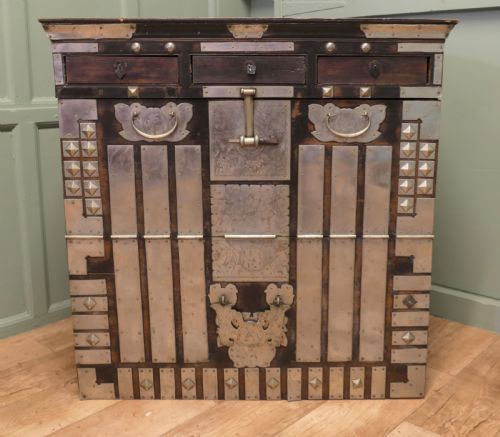


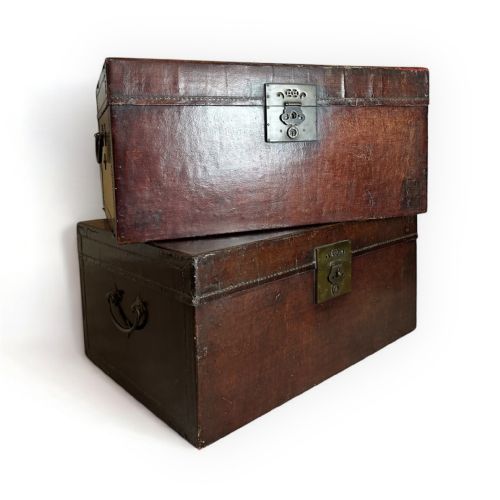


Oriental Brass Bound Box
An oriental brass bound box brings solid travel storage and rich wood into a room, combining heavy metal mounts with sturdy camphor, teak, and lacquer.
Oriental Brass Bound Box
When searching for an oriental brass bound box, a buyer encounters practical travel containers designed for maritime trade and distant postings. These pieces range from compact decorative boxes to large storage trunks and coffers suited for heavy duty use.
The versions most commonly met on this page date from the nineteenth century, including Victorian examples and earlier eighteenth century items. They draw on Chinese export, Anglo-Indian, and China trade traditions, alongside distinctive East African Zanzibar forms.
Makers shaped these trunks and chests using camphor wood, teak, hardwood, and leather, often reinforcing the edges and corners with substantial brass hardware. Red lacquered finishes and polychrome painted details appear across the selection alongside natural wood grains.
How they were made
Workshops constructed these trunks and chests using durable woods such as camphor wood and East African teak, selected for strength and insect resistance during long sea voyages. Artisans also employed hardwood, leather, and lacquer to build the bodies of the boxes.
Makers secured the joints and protected vulnerable corners using heavy brass plates, straps, and corner brackets fastened with pins or screws. Original brass hardware remains a defining characteristic of these travel trunks and storage chests.
Oriental Brass Bound Box Retail Price Guide 2026
Typical asking prices for oriental brass bound box among the pieces listed under this phrase on Sellingantiques today, from the lower quarter to the upper quarter. They describe what is for sale here now, not the wider market.
Camphor wood chests retain their distinct herbal aroma after more than a century of travel.
What varies in quality
The standard of a box depends on the integrity of the original brass hardware and the preservation of its primary material, whether camphor wood, teak, or red lacquer. Pieces retaining their fitted interior compartments and substantial metal reinforcements stand apart.
Construction scale and surface finish also differentiate examples, from small decorative boxes to larger scale Canton and China trade trunks with detailed leather or polychrome painted surfaces.
The Oriental Brass Bound Box Glossary
- Camphor wood
- A fragrant timber utilised for maritime chests to protect contents from insects. Its distinct scent often lingers within nineteenth century trunks.
- China trade
- Goods manufactured in China specifically for export to Western markets during the eighteenth and nineteenth centuries. These items frequently combine Asian craftsmanship with European functional requirements.
- Coffre fort
- A heavy portable strongbox designed for securing valuables during travel. Such pieces feature reinforced locking mechanisms and robust metal bindings.
- Zanzibar chest
- A distinct form of travel trunk originating in East Africa with strong trade connections to India and the wider Indian Ocean. They typically feature heavy brass studding and elaborate corner mounts on teak.
- Campaign trunk
- Portable furniture built for military officers or travellers on the move. These storage chests were constructed to withstand the rigours of transit.
Oriental Brass Bound Box: Frequently Asked Questions
What were oriental brass bound boxes used for?
These boxes and trunks served as secure storage for personal belongings, documents, and valuables during long journeys at sea and overland.
Travellers and merchants relied on their sturdy timber construction and metal reinforcements to protect contents from rough handling and moisture.
How do I date an antique brass bound box?
Dating relies on examining the timber species, construction methods, and the style of the brass hardware. Eighteenth century examples often show distinct export forms, while nineteenth century and Victorian pieces frequently utilise camphor wood and specific regional joinery.
Comparing the locks, hinges, and overall form against documented trade pieces helps clarify the period of origin.
Where were these boxes manufactured?
Production occurred across various trading hubs in Asia, including Chinese export workshops in Canton, as well as centres connected to Anglo-Indian and China trade routes.
Some forms, such as Zanzibar chests, reflect the maritime exchange between the East African coast and Indian Ocean trading networks.
How do I care for a camphor wood chest?
Keep the wood away from direct heat sources and sudden temperature shifts to prevent the timber and lacquer from drying out or splitting. Gentle dusting and occasional soft polishing help maintain the surface without harming the original brass bindings.
Allowing the wood to breathe preserves its natural properties and historic character.