
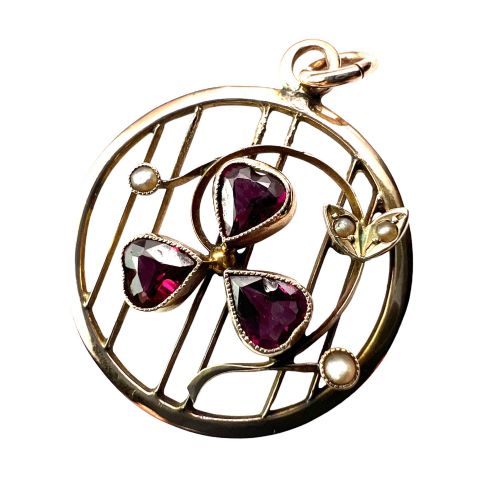


Openwork Gold Pearl Pendant
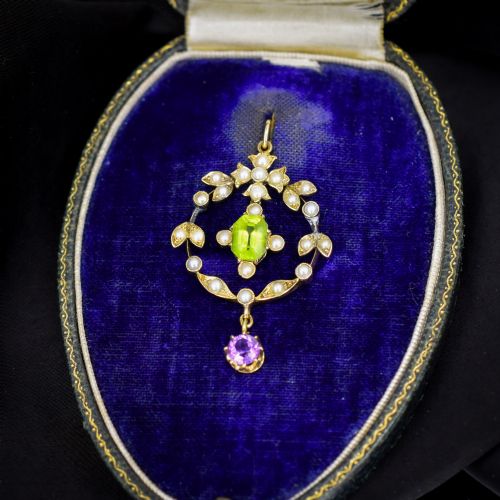
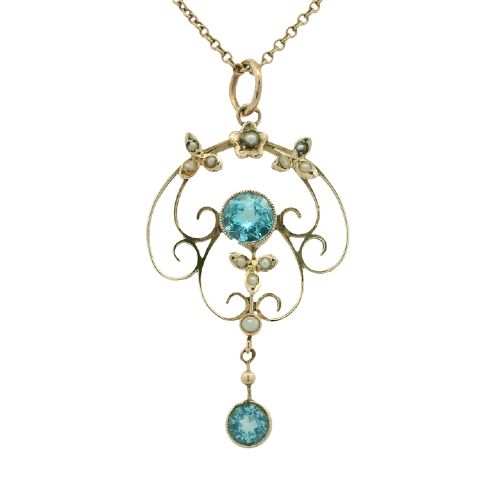
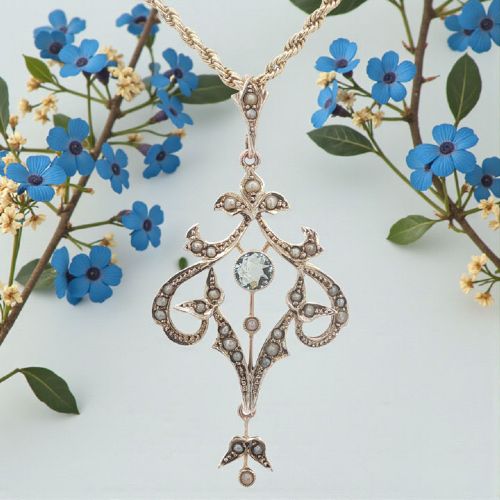
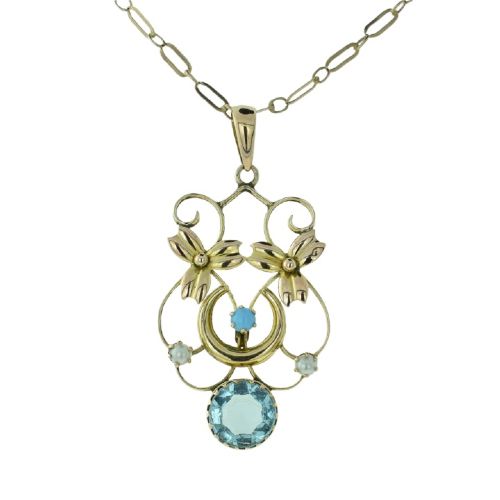
An openwork gold pearl pendant brings together pierced precious metal and lustrous gems to create a delicate framework of light.
Openwork Gold Pearl Pendant
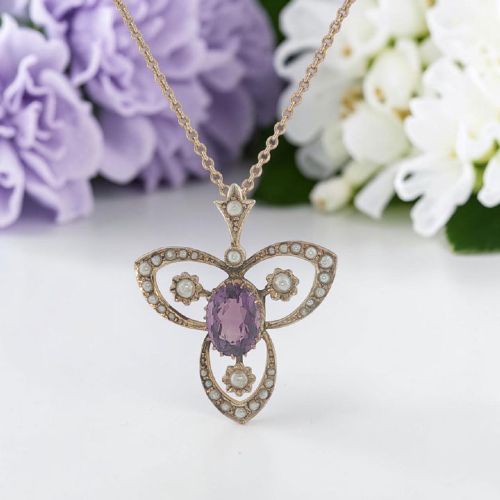
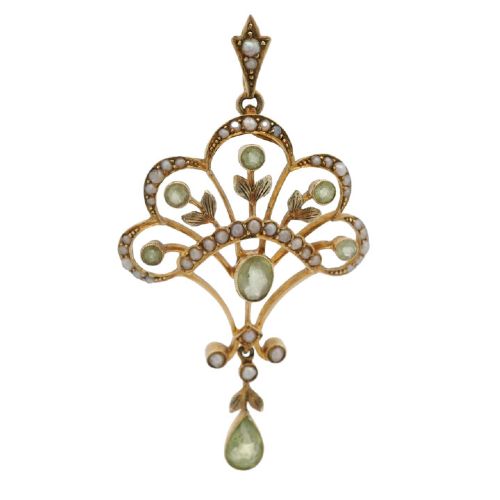
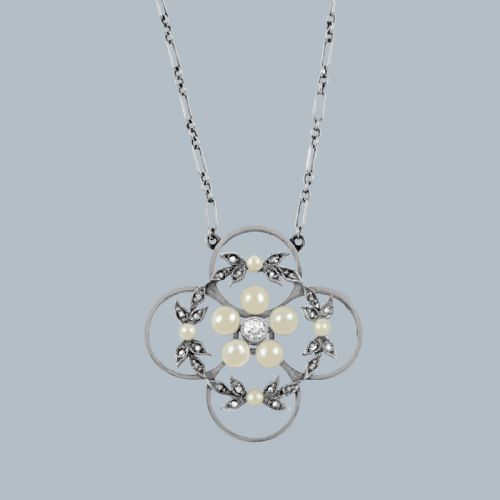
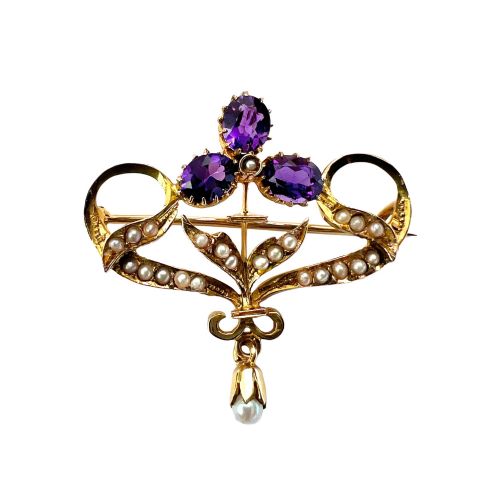
When you search for an openwork gold pearl pendant, you encounter intricate items originating primarily from the Victorian and Edwardian eras, alongside pieces from the Art Nouveau and Arts and Crafts movements. The form relies on delicate pierced metalwork that creates airy floral, geometric, or foliate patterns framing central gems.
Materials and construction
Goldsmiths constructed these openwork pendants using yellow and rose gold alloys, typically 9 carat or 15 carat, shaped into wirework, pierced sheet metal, and cast settings. Platinum also appears alongside gold in later Edwardian examples to mount diamonds.
Makers set pearls, seed pearls, and gemstones such as peridot, amethyst, and aquamarine within closed or open-backed collets, suspending dangling drops from hinged or articulated connections.
Listings feature yellow gold, rose gold, and silver gilt materials combined with seed pearls, amethysts, peridots, and aquamarines.
Variations in quality
The sophistication of the piercing and the fineness of the gold wirework distinguish higher-grade pieces from simpler productions. Master jewellers achieved balanced, symmetrical openwork frames that securely hold stones without heavy metal backing.
The selection and matching of the pearls and coloured gems, such as clean aquamarines or vibrant peridots, dictate the overall refinement of the pendant.
S. Blanckensee & Son·Artificers Guild
The Openwork Gold Pearl Pendant Glossary
- Openwork
- Metalwork pierced or cut through to create a pattern resembling lace or wire tracery. This technique reduces weight and allows light to pass through the design.
- Seed pearl
- A very small, naturally formed pearl, often half-drilled and glued or pegged onto gold settings. These tiny pearls form delicate borders and floral clusters in Victorian and Edwardian jewellery.
- Lavalier
- A pendant featuring a suspended drop stone or tassel hanging below the main body. This style gained immense popularity during the Edwardian period.
- Collet
- A band or collar of metal that holds a gemstone in place. It forms the immediate setting around the girdle of a stone.
- Art Nouveau
- An international style of art and jewellery popular around 1900 characterised by flowing, organic lines and asymmetrical plant-inspired motifs.
Openwork Gold Pearl Pendant: Frequently Asked Questions
How do I wear a pendant brooch?
These versatile jewels feature a pin mechanism on the reverse alongside a suspension loop for a chain. You can thread a gold chain through the top loop to wear the piece as a necklace.
Alternatively, you can fasten the integrated pin to secure the piece directly onto a lapel or garment as a brooch.
What periods do these pendants date from?
The listings span the Victorian and Edwardian eras, with many pieces originating around 1900. You will also find items from the late nineteenth century and the early 1930s.
Stylistic elements like pierced foliate work and delicate seed pearl clusters help distinguish these historical periods.
Are the pearls natural?
The seed pearls used in these nineteenth and early twentieth-century pieces are natural saltwater or freshwater pearls typical of the era before cultured pearls became dominant. They display organic variations in shape and lustre.
Examining the pearls under magnification reveals the characteristic nacre layers of antique specimens.
What stones accompany the pearls?
Peridot, amethyst, and aquamarine appear frequently alongside the pearls in these gold pendants. Other accompanying gems include garnets, tourmalines, turquoise, and diamonds.
These coloured stones are often mixed within floral or lavalier designs characteristic of Edwardian taste.