






Open Twist Candle Holders
Open twist candle holders bring dynamic movement and texture to a room, turning practical lighting into sculptural wooden or metal forms.
Open Twist Candle Holders
When you search for open twist candle holders, you are looking at functional lighting carved or cast with a spiralling shaft that lets light pass through the open helical gaps. These pieces span from the eighteenth century through the Victorian and Edwardian eras, bridging Georgian elegance and early twentieth-century revival styles.
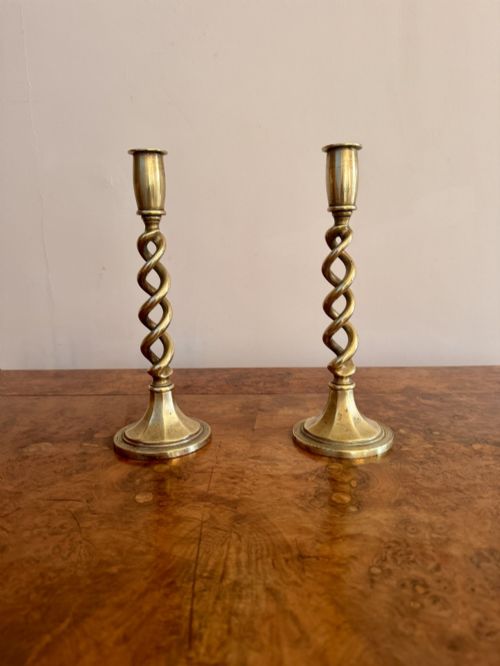
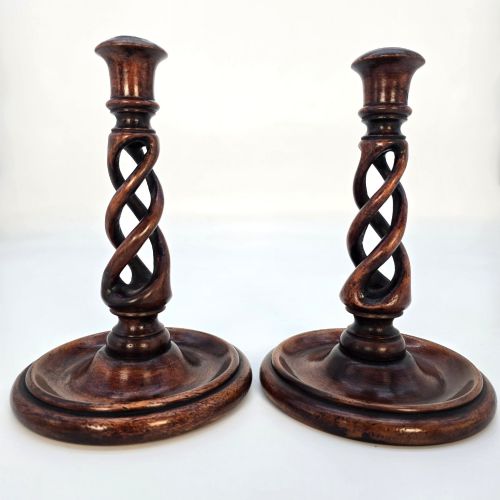
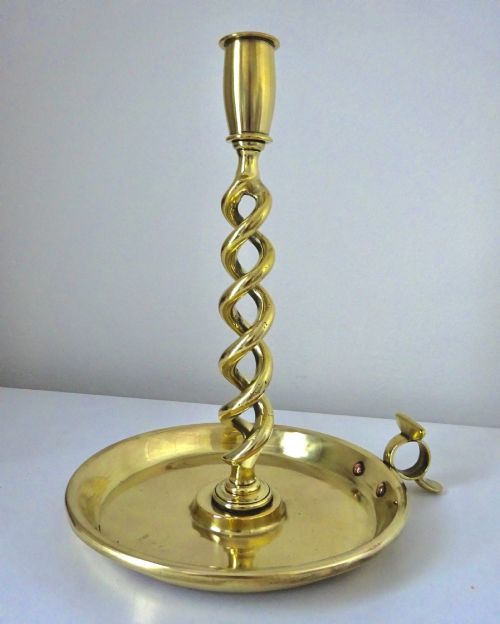
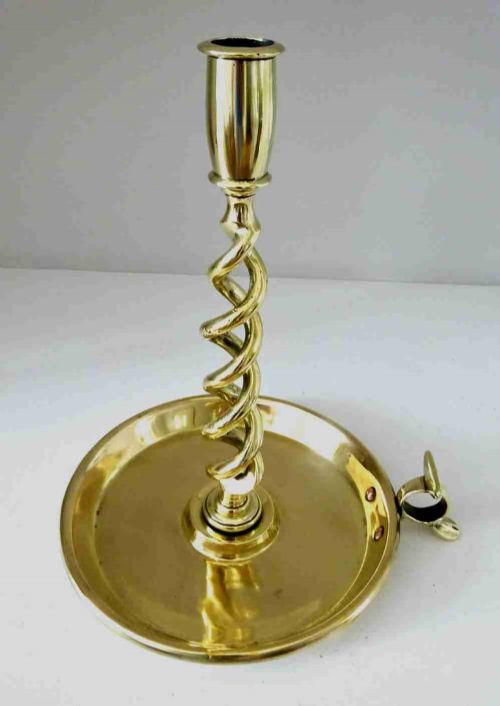
The versions you are most likely to meet on this page are tall oak pairs from around nineteen-ten, alongside eighteenth-century fruitwood examples and nineteenth-century brass pieces. They appear frequently as candlesticks, sometimes mounted on fitted brass bases or equipped with matching trays and handles for transport.
How they were made
Fruitwood and oak pieces rely on precision carpentry and turning, where craftsmen carved and hollowed timber into a continuous open helix while retaining structural integrity. Oak examples often incorporate turned wooden shafts fitted with cast brass bungs and top sockets.
Brass items utilise foundry casting and lathe work to shape the molten metal into rigid, sharp-edged spirals. Makers frequently combined materials, pairing heavy oak stems with brass sockets and fitted square bases to ensure stability.
Open Twist Candle Holders Retail Price Guide 2026
Typical asking prices for open twist candle holders among the pieces listed under this phrase on Sellingantiques today, from the lower quarter to the upper quarter. They describe what is for sale here now, not the wider market.
Listings feature oak, fruitwood, and brass materials across periods spanning the eighteenth century to nineteen-twenty.
What varies in quality
The standard of an open twist candle holder rests on the rhythm and depth of the spiral cut. Sharp, clean execution in the timber or metal creates a sense of lightness, whereas heavy or sluggish turns lack definition.
Proportion and material pairing dictate the character of the piece. Well-balanced heights, integrated trays, and crisp brass fittings separate standard domestic items from more substantial creations.
The Open Twist Candle Holders Glossary
- Open twist
- A carved or cast spiral design where the central core is hollowed out, allowing space to be visible between the strands of the helix. This technique requires considerable skill to maintain strength in wood or metal.
- Barley twist
- A spiralling decorative column resembling a stalk of barley, frequently utilised in furniture legs and candlestick stems from the seventeenth century onwards. It gained renewed popularity during the Victorian and Edwardian revival periods.
- Socket
- The upper cup of a candlestick designed to hold the base of a candle in place. In mixed-material pieces, this component is commonly cast in brass.
- Fitted base
- A broad foundation, sometimes incorporating a tray with a handle, designed to catch dripping wax and provide stability for tall stems.
Open Twist Candle Holders: Frequently Asked Questions
What are open twist candle holders?
Open twist candle holders are lighting fixtures featuring a distinctive spiralled stem that leaves open space through the centre of the twist. They are typically made from brass, oak, or fruitwood.
Craftsmen produced these decorative items across the eighteenth, nineteenth, and early twentieth centuries. They function as both candle supports and sculptural table ornaments.
How were they used historically?
These candlesticks provided portable illumination in homes before the widespread adoption of gas and electric lighting. Their tall stems allowed them to cast light across a dining table or mantelpiece.
Some variants included fitted trays and handles, making it easier to carry the lit candle safely from room to room. Others stood permanently on sideboards as decorative objects.
How do I live with them?
Integrating these pieces into a modern interior involves placing them on sideboards, mantels, or dining tables where their twisted silhouettes can catch the light. They mix well with both traditional and contemporary settings due to their organic textures.
Care should be taken to use standard taper candles that fit securely in the sockets without requiring excessive force. Cleaning is straightforward, needing only gentle dusting for wood and appropriate metal polish for brass components.
How do I tell periods apart?
Identifying the age of an open twist candlestick relies on examining the materials, tool marks, and overall design style. Eighteenth-century examples frequently utilise fruitwood with hand-carved turns, showing the subtle irregularities of early craftsmanship.
Later pieces from the Victorian, Edwardian, and nineteen-twenties periods often display the sharper uniformity of machine-assisted turning in oak or mass-produced brass casting. Revival styles such as Jacobean and Georgian frequently informed the design choices of these later nineteenth and twentieth-century makers.