


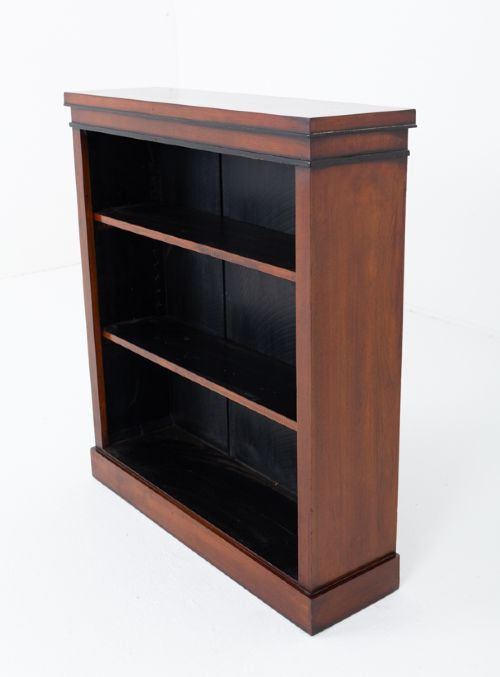
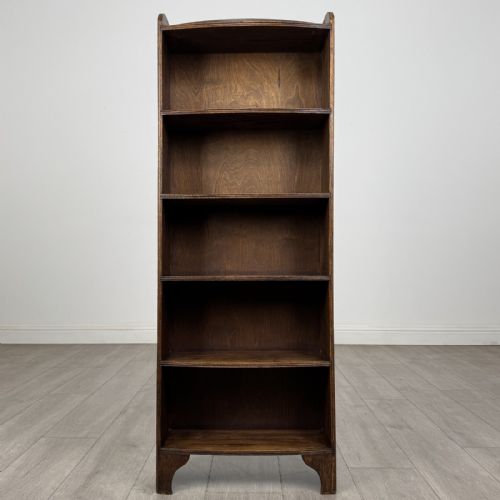
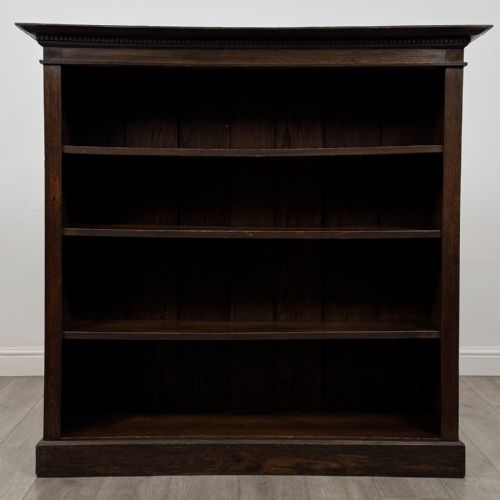
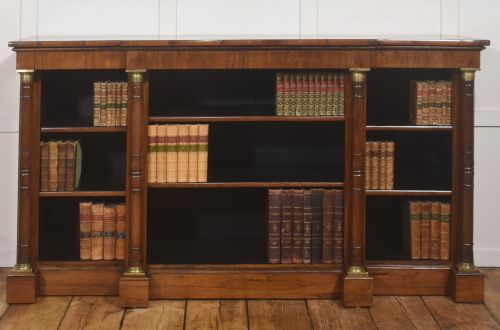
Open Shelved Cabinet
An open shelved cabinet provides accessible storage and display, bringing character and practical organisation to any room.
Open Shelved Cabinet
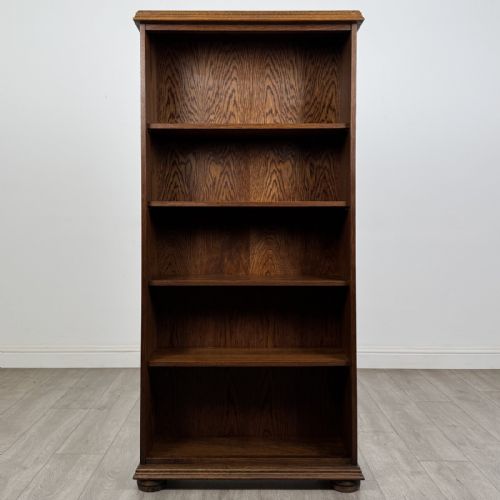
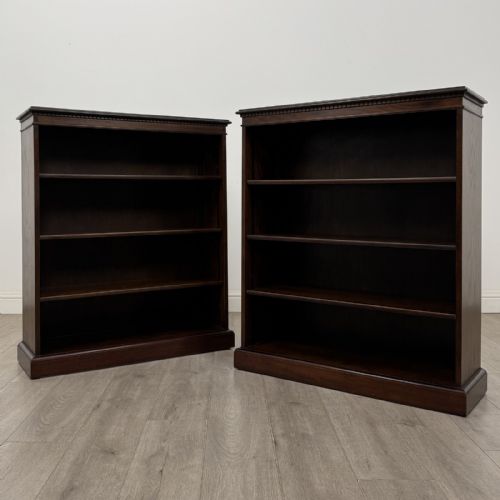
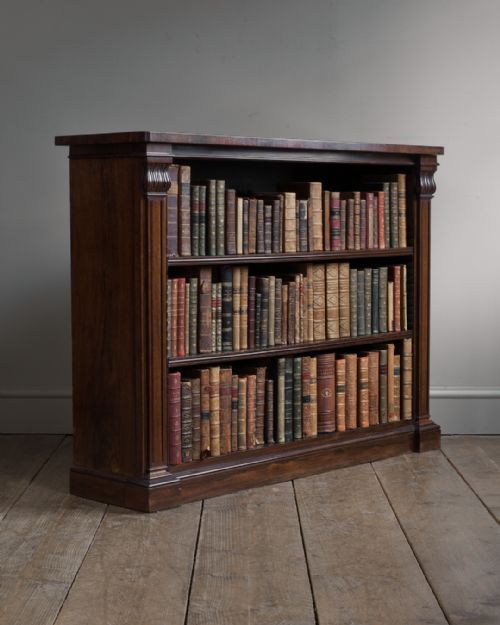
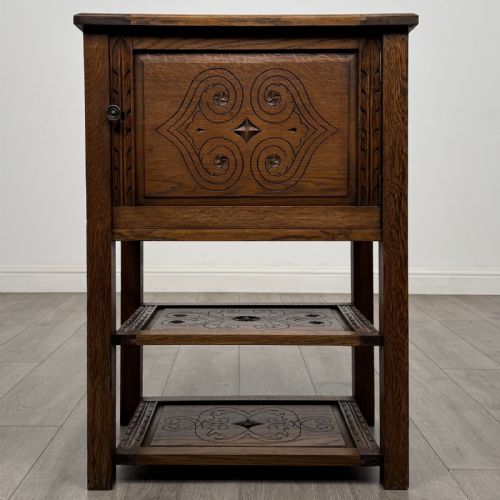
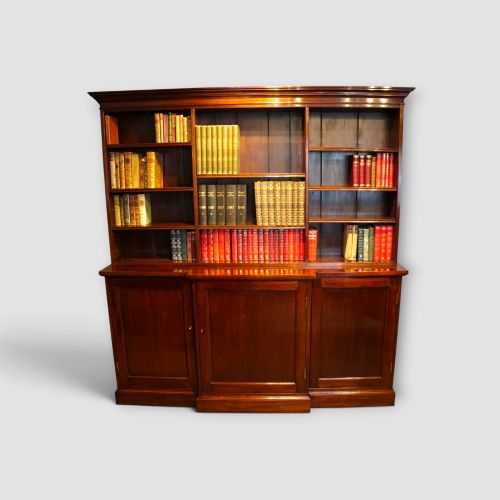
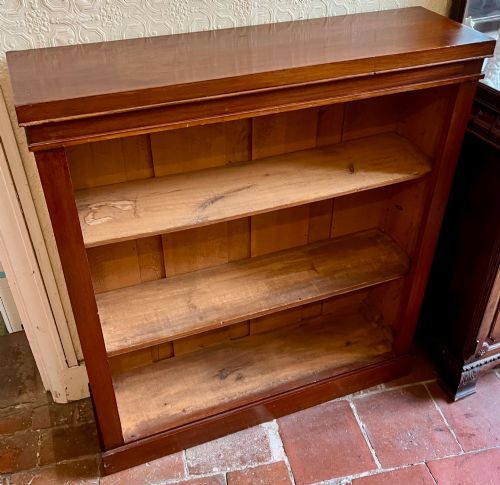
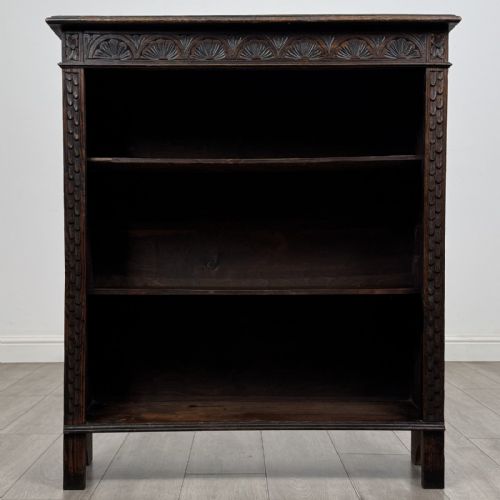
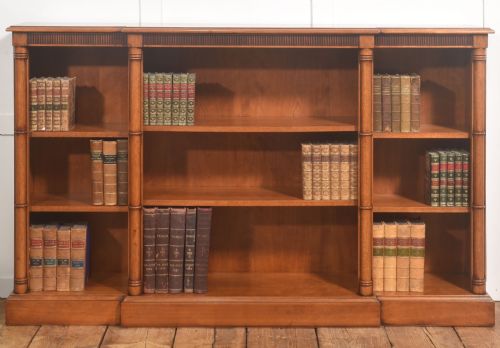
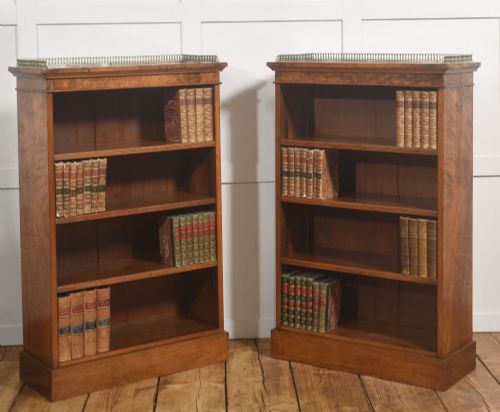
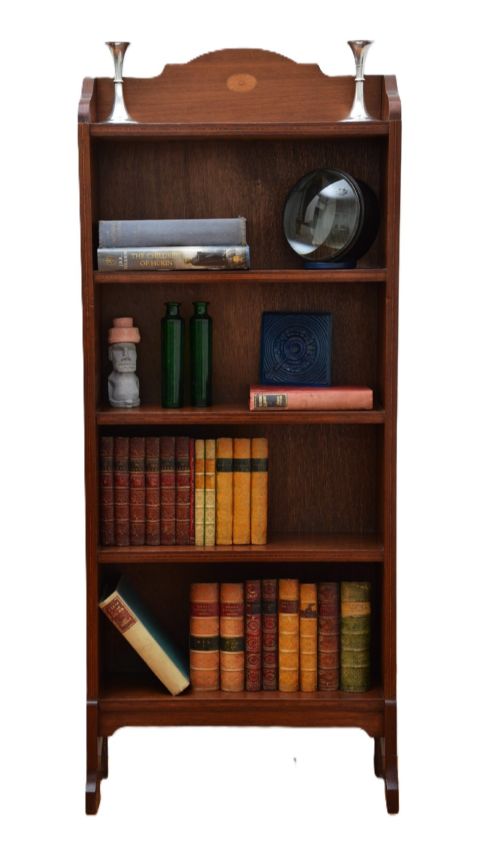
An open shelved cabinet serves as a functional piece for displaying books and collections while maintaining an accessible layout. When exploring the category of an open shelved cabinet, buyers encounter various formats ranging from tall library bookcases to compact bedside units.
Makers utilised rich hardwoods to construct breakfront configurations, narrow bookcases, and corner units. These pieces range from restrained, clean-lined utility to ornate revival styles influenced by Jacobean and Regency aesthetics.
Materials and Construction
Cabinetmakers relied heavily on durable timbers such as mahogany, oak, walnut, and rosewood to build the structural carcass and shelving. Figured veneers like burr walnut added decorative visual depth to drawer fronts and cornices.
Brass mounts, galleries, and ormolu detailing frequently accented the woodwork, particularly on Regency and mid-19th-century examples. Carved decorations, dentil cornices, and raised galleries demonstrated precise hand-tooling techniques applied by period craftsmen.
Open Shelved Cabinet Retail Price Guide 2026
Typical asking prices for open shelved cabinet among the pieces listed under this phrase on Sellingantiques today, from the lower quarter to the upper quarter. They describe what is for sale here now, not the wider market.
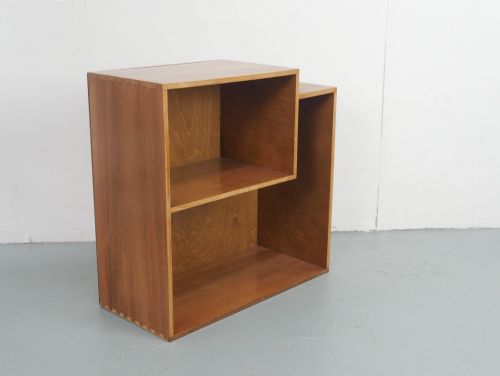
The available formats range from compact corner shelves and bedside tables to expansive breakfront library bookcases.
Distinctions in Quality
The standard of a piece rests on the selection of timber and the precision of its joinery. High-grade examples employ solid hardwoods and finely figured veneers that have retained their structural integrity and surface depth over time.
Refined detailing separates standard utility furniture from exceptional cabinet work. The inclusion of adjustable shelving mechanisms, crisp carved mouldings, original brass galleries, and balanced proportions signal superior craftsmanship.
Gillows·Johnstone And Jeanes
The Open Shelved Cabinet Glossary
- Breakfront
- A cabinet design where the central section projects forward from the flanking outer sections. This architectural arrangement creates depth and shadow on the facade.
- Dentil cornice
- A decorative moulding featuring a series of small, evenly spaced rectangular blocks resembling teeth. It typically crowns the upper edge of a bookcase or cabinet.
- Ormolu
- Gilded bronze applied as decorative mounts and hardware on furniture. It gained popularity during the 19th century on high-status cabinets.
- Waterfall bookcase
- A tiered shelving unit where the sides step back in a cascading profile from top to bottom. This form emerged during the Regency period.
- Shodona
- A Japanese-style display cabinet featuring asymmetrical shelving and compartments. These pieces entered Western interiors during the late 19th century.
Open Shelved Cabinet: Frequently Asked Questions
Where should I place an open shelved cabinet?
These cabinets suit studies, living rooms, and libraries where books and decorative objects require accessible display space. Tall narrow variants fit neatly into alcoves and smaller wall spaces.
Ensure the placement protects the timber from direct sunlight and extreme temperature fluctuations to preserve the finish.
Are the shelves adjustable?
Many period examples feature adjustable shelving supported by wooden racks or brass studs. This allows the height between shelves to accommodate volumes of varying sizes.
Fixed shelves do appear on specific traditional forms, so reviewing individual descriptions clarifies the internal layout.
How do I care for mahogany and walnut timber?
Routine dusting with a soft, dry cloth prevents surface accumulation. Application of appropriate natural waxes maintains the lustre of the wood grain without creating buildup.
Avoid using silicone-based polishes or placing damp items directly onto antique wood surfaces.
How do I distinguish Victorian from Edwardian cabinets?
Victorian pieces often display darker, denser timbers with heavier carvings and robust proportions. Edwardian furniture typically presents lighter mahogany or oak with simpler, airier lines and delicate inlay.
Revival styles from both periods draw inspiration from earlier Georgian and Regency designs, combining traditional motifs with contemporary utility.