
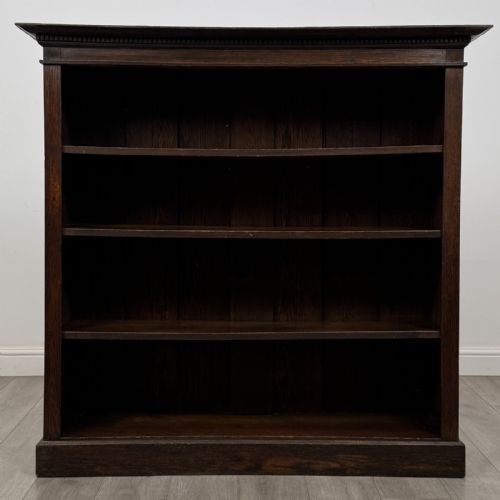
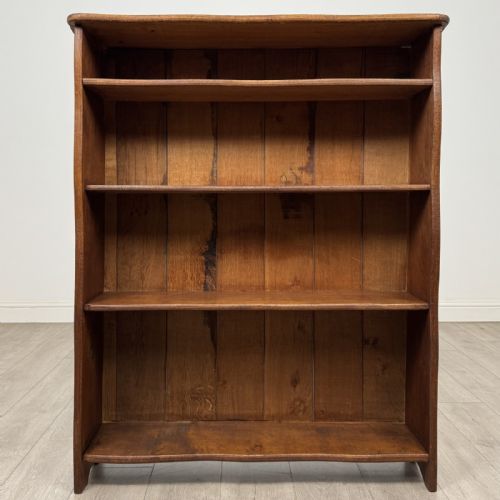
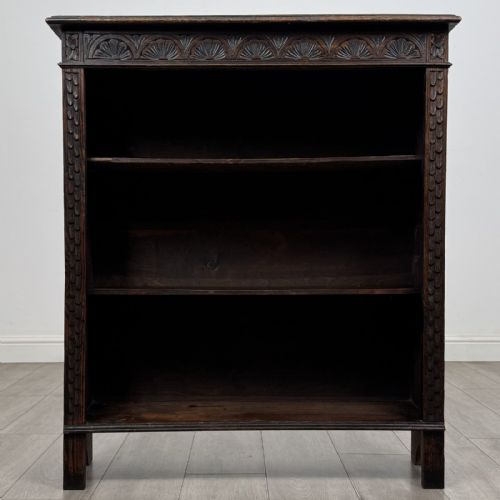
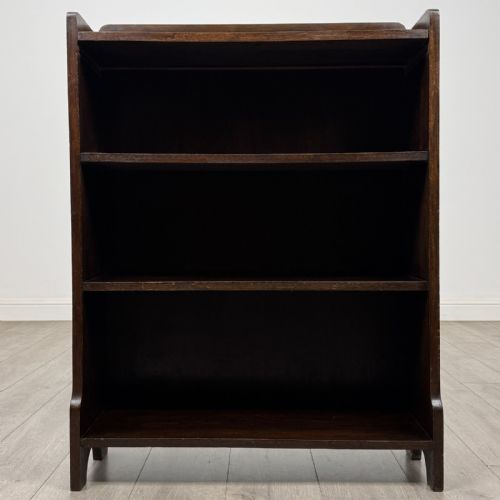
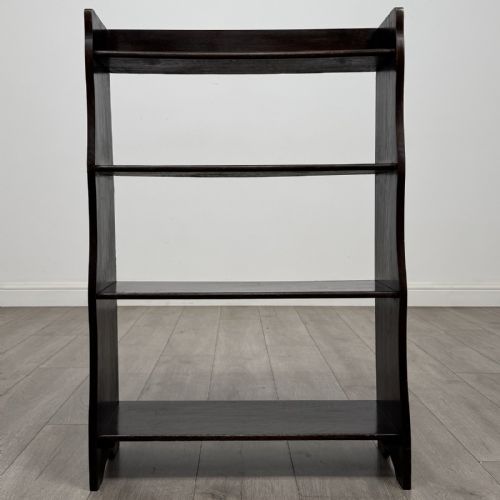
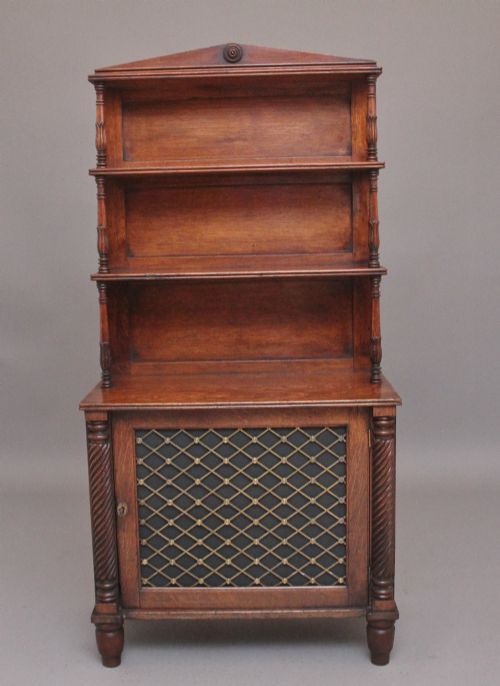
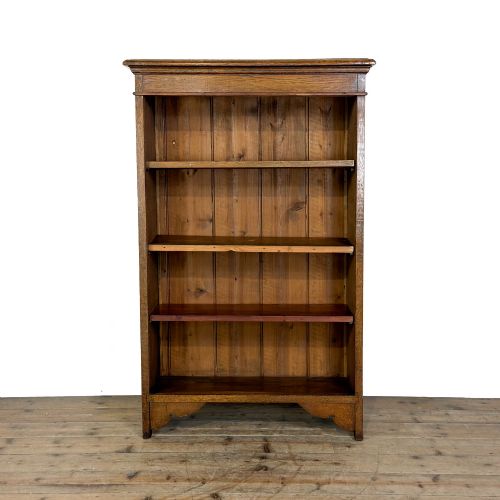
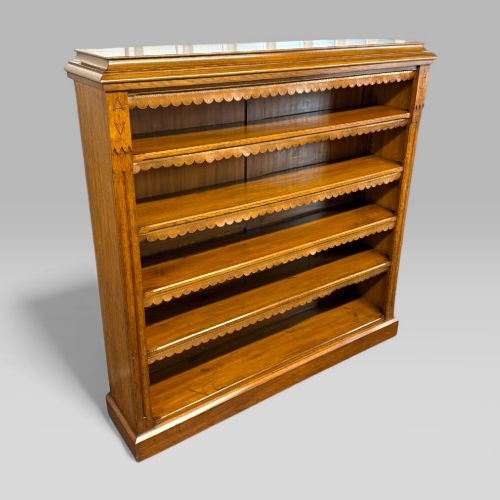
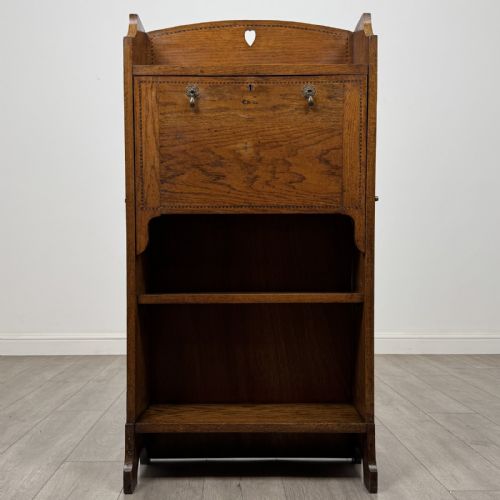
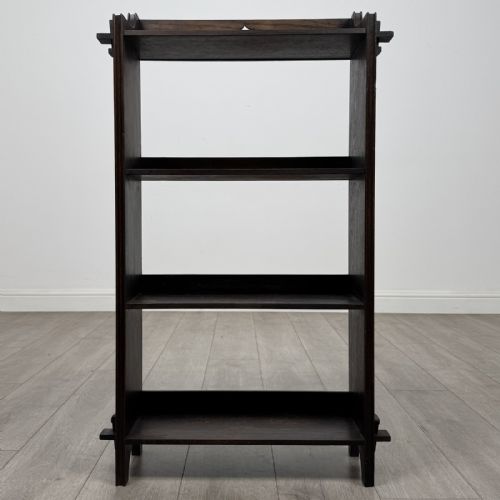
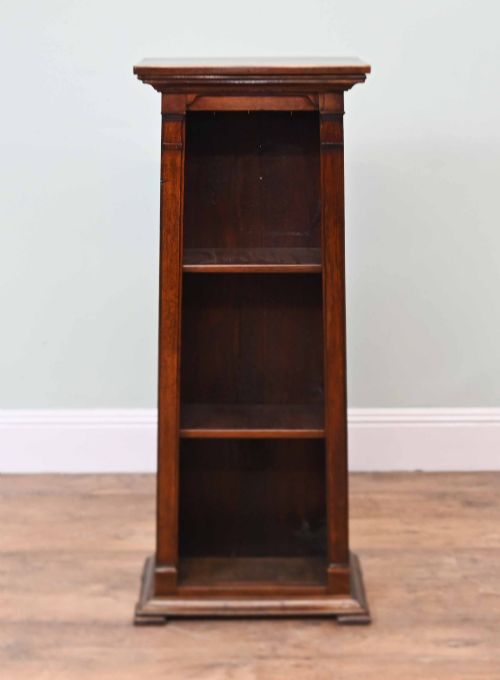
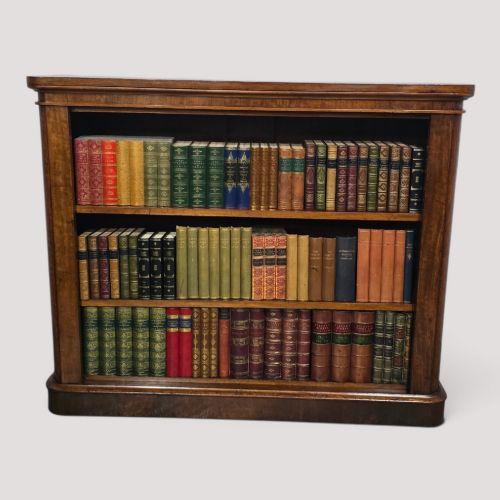
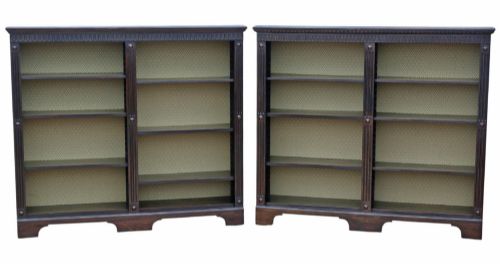
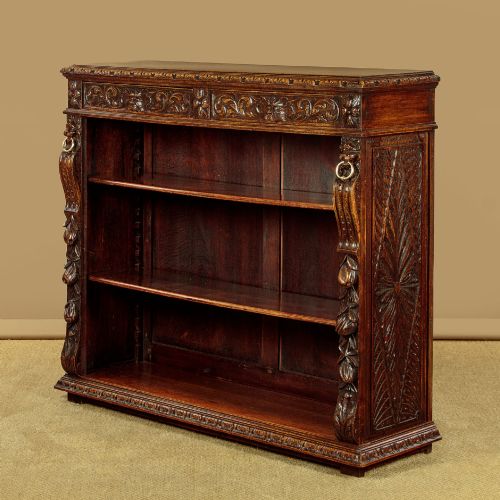
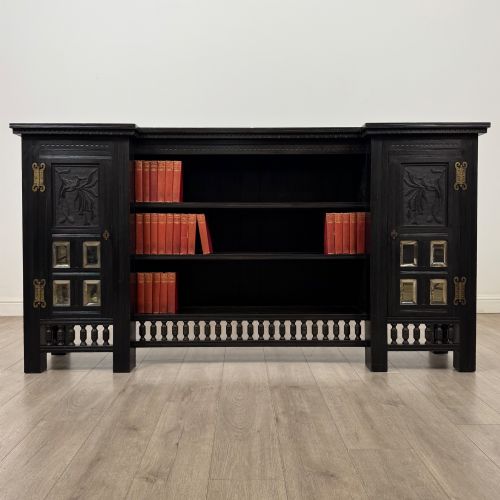
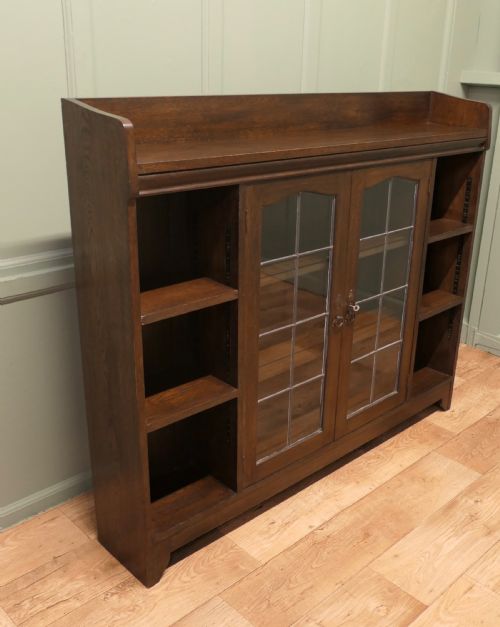
Open Shelf Bookcase Oak
An open shelf bookcase oak provides accessible storage for volumes while displaying grain and timber tone.
Open Shelf Bookcase Oak
When searching for an open shelf bookcase oak, buyers encounter pieces spanning from the late nineteenth century through to the interwar decades. The selection includes standard upright library editions, dwarf formats, and specialised waterfall or slope-shelf variations.
Edwardian and Victorian examples dominate the available inventory, frequently incorporating adjustable shelving or carved detailing. Makers from these periods employed native timbers alongside golden and dark finishes to suit domestic interiors.
Sturdiness defines the construction, with many items designed to support heavy volumes without sagging. The absence of doors places the timber grain and book spines directly on view.
Materials and construction
Cabinetmakers utilised solid oak and selected veneers, sometimes combining brass hardware, metal components, and ebonised details to accent the primary timber. Plywood and secondary woods occasionally appear in backing boards or internal partitions.
Joinery techniques ranged from traditional mortise and tenon joints to functional beaded edges and carved embellishments. Surface treatments varied from natural wax polishes to dark stains and golden washes.
Listings feature oak open bookcases spanning the Victorian, Edwardian, and Art Deco periods, incorporating adjustable shelving and brass hardware.
Quality distinctions
Construction methods and timber selection divide the standard production pieces from workshop commissions. Heavier library editions with thick timber uprights and refined carved detailing command attention for their substantial build.
The integration of adjustable shelving mechanisms and secondary materials such as brass fixtures indicates thoughtful design. Condition of the timber surface and the crispness of any carved ornament further separate ordinary items from finer examples.
Heals·Waring and Gillows
The Open Shelf Bookcase Oak Glossary
- Edwardian
- Pertaining to the reign of King Edward VII, spanning from 1901 to 1910. Furniture from this era often lighter in proportion than Victorian equivalents.
- Arts and Crafts
- A design movement emphasising handcraftsmanship and simple forms. Pieces often display honest construction methods and minimal surface ornament.
- Adjustable shelves
- Shelve boards supported on movable pegs or ratchets. This system allows the internal height to adapt to varying book sizes.
- Ebonised
- Timber treated to resemble ebony through staining or painting. This technique creates a dark, contrasting finish popular in nineteenth-century decorative items.
- Waterfall bookcase
- A tiered shelving unit where each successive shelf steps back from the one below. The profile resembles descending ledges.
Open Shelf Bookcase Oak: Frequently Asked Questions
How do I adjust the shelves?
Most period examples use a system of wooden pegs, metal pins, or side ratchets to support the boards at different heights. You simply lift the shelf and reposition the supports into adjacent slots.
Older mechanisms may require gentle handling if the timber has settled over decades of use. Ensure both sides are level before placing heavy volumes back onto the timber.
Are these bookcases sturdy enough for heavy books?
Solid timber construction provides the necessary load-bearing capacity for extensive libraries and reference volumes. Many Victorian and Edwardian editions were engineered specifically for heavy duty use.
Thick oak uprights and fixed lower bases prevent warping under pressure. Adjustable shelves should be checked for thickness if supporting large folios.
How do I identify an Arts and Crafts piece?
Arts and Crafts items emphasise visible construction details, exposed tenons, and straightforward timber grain over applied decoration. They frequently lack elaborate carving, relying instead on honest proportions.
Associated workshops and specific period stamps can sometimes be found on the reverse or along the interior panels.
What is the difference between golden oak and dark oak?
Golden oak finishes highlight the lighter, warmer tones of the natural timber grain, which became popular during the Edwardian period. Dark oak treatments use deeper stains or fuming techniques favored in earlier Victorian and Jacobean Revival styles.
Both finishes protect the wood while offering distinctly different visual weights within a room.