



Open Low Bookshelf Pair
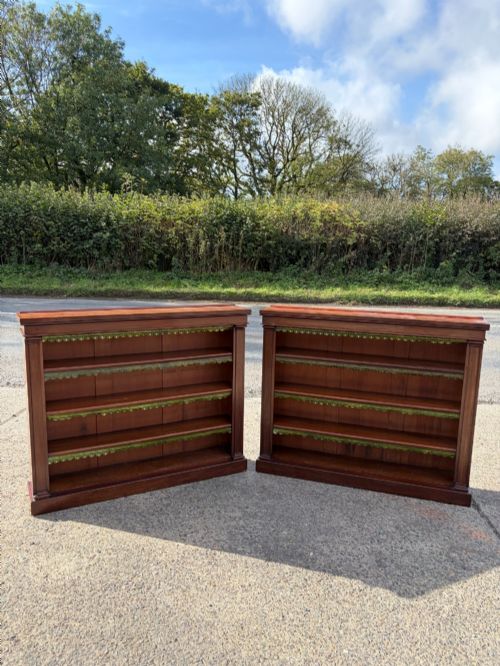
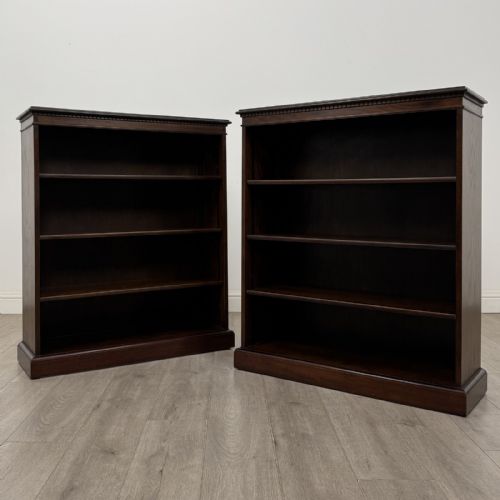
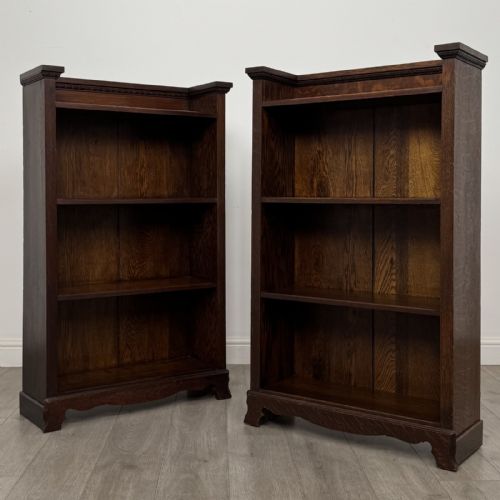
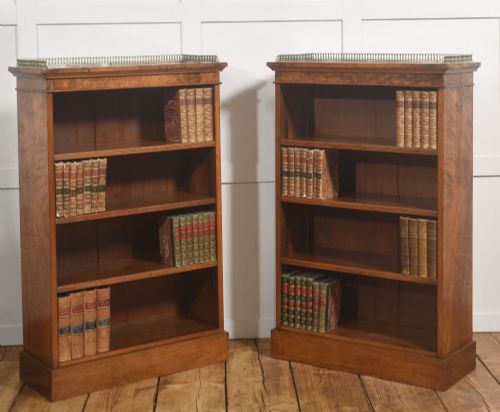
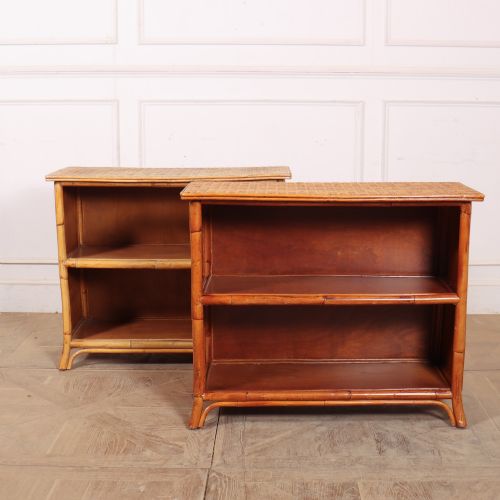
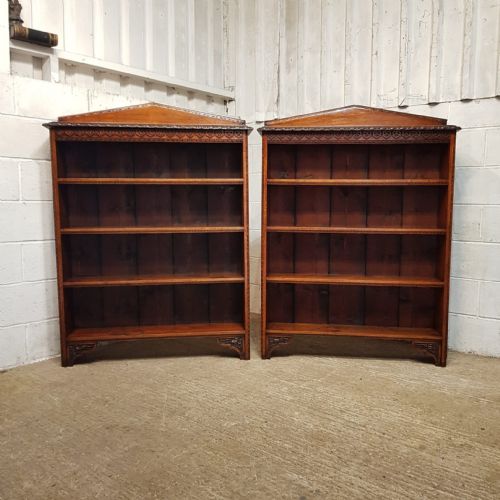
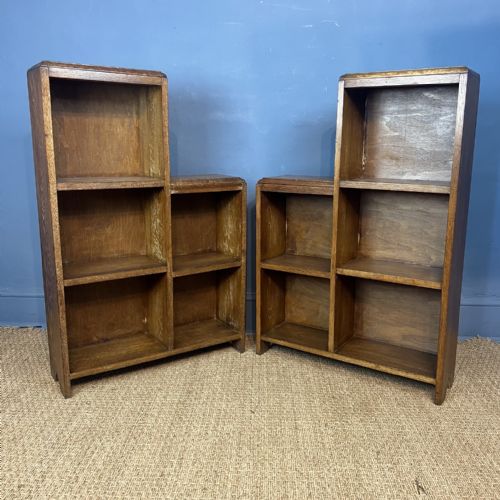
These open low bookshelf pair options bring symmetry to a room, offering low timber tiers designed for accessible volumes and balanced display.
Open Low Bookshelf Pair
An open low bookshelf pair delivers matching low-level shelving units built to house books without enclosing them behind doors. These symmetrical arrangements appear across various historical periods, frequently taking low proportions that suit placement beneath windows or against panelled walls.
The selections on this page span the nineteenth century through the nineteen-thirties, covering Victorian, Edwardian, and Regency eras alongside later revivals. Buyers commonly encounter mahogany, rosewood, and oak constructions, often arranged as twin matching companions from the same origin.
Makers shaped these low bookcases in multiple regional interpretations, including French vintage editions, English Sheraton revivals, and Anglo-Indian teak designs. The open fronts remain constant, prioritising immediate visibility of spines and bindings across each paired unit.
Materials and construction methods
Carpenters constructed these low bookcases primarily using dense timbers such as mahogany, rosewood, and oak, occasionally incorporating walnut, teak, and bamboo. Selected boards provided stable vertical uprights and horizontal shelves capable of supporting heavy rows of volumes.
Workshop methods included fine joinery for fixed or adjustable shelves, sometimes accented with decorative brass elements, cane panels, or ormolu mounts. Surfaces received polish or wax finishes that highlighted the natural grain patterns of the hardwoods used throughout the construction.
Open Low Bookshelf Pair Retail Price Guide 2026
Typical asking prices for open low bookshelf pair among the pieces listed under this phrase on Sellingantiques today, from the lower quarter to the upper quarter. They describe what is for sale here now, not the wider market.
The documented periods span the nineteenth century, Regency, Victorian, Edwardian, nineteen-tens, nineteen-twenties, and nineteen-thirties.
Differentiating quality across the range
Quality rests upon the selection of timber figures, such as the rich grain of rosewood or figured mahogany, paired with refined proportions. Superior examples demonstrate careful attention to edge moulding and structural integration between the two matching pieces.
Added decorative elements like cast ormolu mounts, delicate brass gallery rails, or finely turned supports distinguish higher-tier workshop output from simpler utilitarian shelving. The consistency of the timber matching across both units in the pair further separates standard production from exceptional pieces.
Heals
The Open Low Bookshelf Pair Glossary
- Open bookcase
- A piece of furniture designed with shelves for holding books that lacks doors or enclosed cabinets. This format ensures direct access to the contents.
- Waterfall bookcase
- A shelving unit featuring tiers that step back progressively from bottom to top, creating a cascading profile. These often appear in mahogany or rosewood.
- Breakfront
- A cabinet or bookcase where the central section projects forward from the flanking wings. This architectural arrangement adds depth to low library furniture.
- Ormolu
- Gilded bronze applied as decorative mounts on furniture during the eighteenth and nineteenth centuries. These metallic details highlight the corners and cornices of select bookcases.
- Sheraton Revival
- A late nineteenth-century design movement inspired by the lightness and classical motifs of eighteenth-century cabinetmaker Thomas Sheraton. Pieces in this style frequently utilise mahogany and bow-fronted shapes.
Open Low Bookshelf Pair: Frequently Asked Questions
What defines an open low bookshelf pair?
An open low bookshelf pair consists of two matching low-height shelving units designed without doors to hold books. They offer symmetrical display space while maintaining a low profile.
Such pairs allow matching proportions on opposite sides of a fireplace or window, bringing balance to an interior while keeping volumes within easy reach.
Which woods appear most often?
The listings show frequent use of mahogany, rosewood, and oak, alongside walnut, teak, and bamboo. These dense hardwoods provided the structural strength required for supporting heavy book collections.
Cabinetmakers selected these materials for their durability and grain patterns, applying polish to enhance the natural appearance of the timber.
How do waterfall bookcases differ?
Waterfall bookcases feature stepped shelves that recede in depth from the base to the top tier. This descending arrangement creates a distinctive cascading profile.
They share the open-shelf format of standard low bookcases but present a more dynamic silhouette through their graduating shelf depths.
How are different periods identified?
Periods are recognised through structural styles, decorative motifs, and timber choices, ranging from Regency and Victorian to Art Deco. Details such as ormolu mounts, brass galleries, and revival styling point towards specific eras of manufacture.
Comparing the proportions and joinery methods helps place a pair within nineteenth-century traditions or later twentieth-century revivals.