

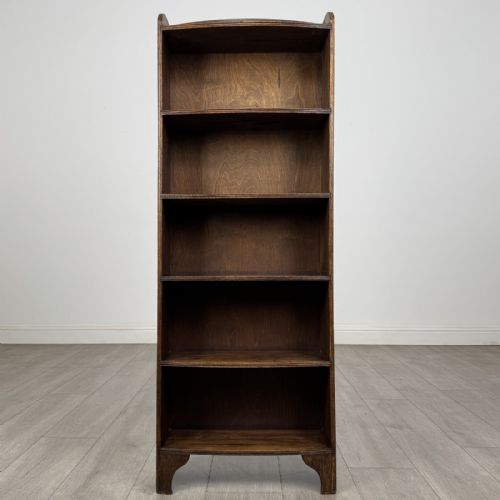
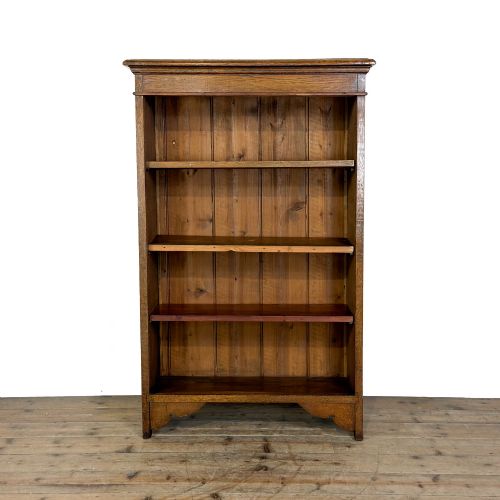
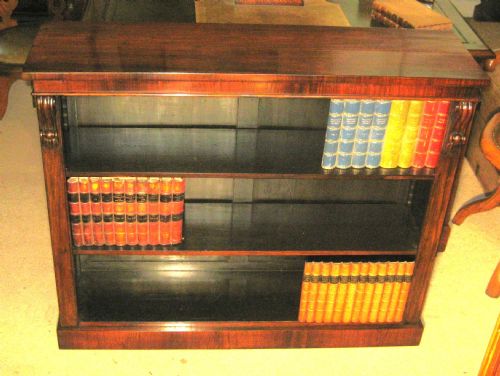
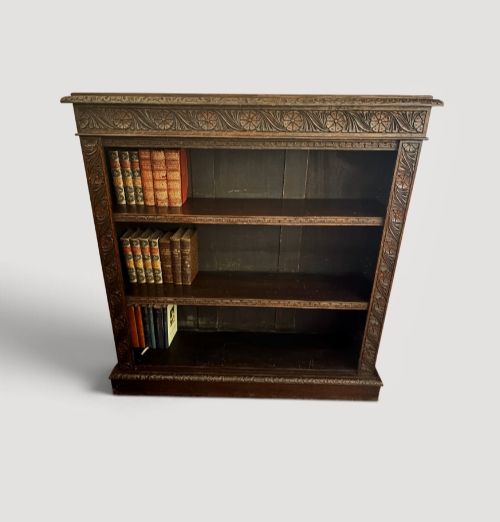
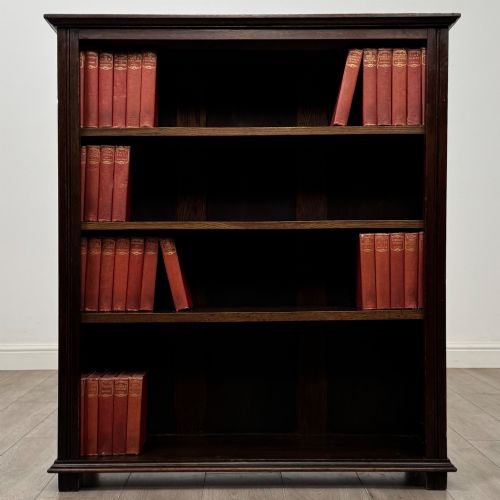
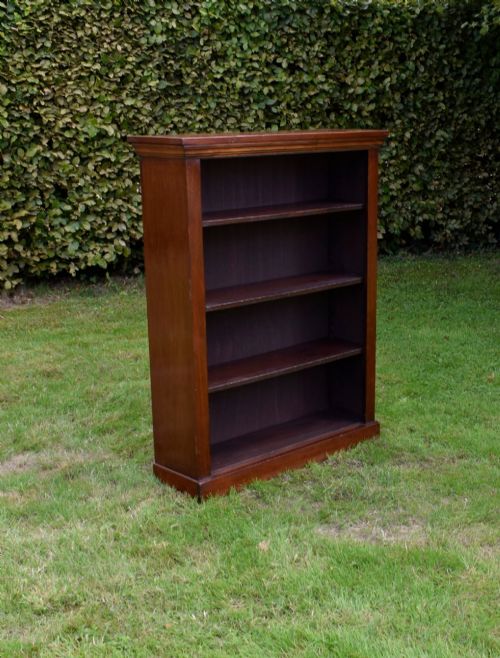


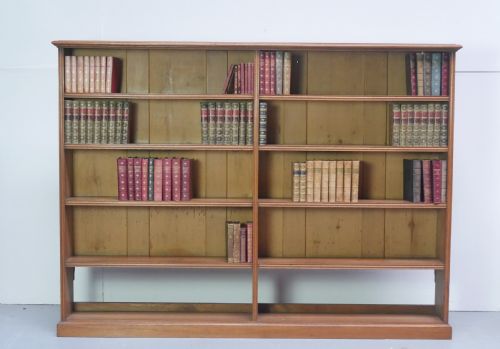


Open Front Book Cabinet
An open front book cabinet offers direct access to a personal library, combining practical shelf space with the warmth of figured timbers.
Open Front Book Cabinet
An open front book cabinet provides straightforward shelving for displaying volumes without the barrier of glass doors. These items appear across various historical periods, offering flexible storage for books and decorative objects alike.
The selections span eras from the Georgian period through the Victorian and Edwardian epochs into the early twentieth century. Oak and mahogany frequently form the primary structure, whilst walnut, rosewood, and satinwood appear with notable regularity.
Pieces range from modest small-scale items to large breakfront configurations featuring multiple shelves. Adjustable shelving and drawer components appear within several examples, adding utility to the core design.
Materials and Construction
Cabinet makers utilised dense hardwoods such as oak, mahogany, and walnut to support heavy rows of books without sagging. Cabinet construction often involved solid timber boards alongside veneered surfaces on secondary woods to highlight figured grain patterns.
Decorative touches included carved motifs, beaded edges, and brass fittings on pieces with integrated drawers. Interior arrangements frequently incorporated adjustable wooden supports to alter shelf heights according to volume sizes.
Open Front Book Cabinet Retail Price Guide 2026
Typical asking prices for open front book cabinet among the pieces listed under this phrase on Sellingantiques today, from the lower quarter to the upper quarter. They describe what is for sale here now, not the wider market.
Several pieces include hidden drawer compartments tucked just beneath the upper cornice for storing private correspondence.
Assessing Quality and Execution
Superior examples distinguish themselves through the choice of timber, particularly figured walnut, richly grained rosewood, or finely selected mahogany. The depth of colour and consistency of the wood grain across the visible surfaces define the visual standard of the piece.
Joinery execution dictates longevity, visible in the snugness of shelf supports and the crispness of any carved detailing or beaded moulding. Breakfront proportions and the integration of functional drawers demand precise carpentry to maintain structural balance.
The Open Front Book Cabinet Glossary
- Breakfront
- A cabinet design where the central section projects forward from the flanking wings. This configuration adds architectural depth to larger library furniture.
- Adjustable shelves
- Movable horizontal boards that rest on pins or ratchets within the cabinet interior. This mechanism allows the owner to alter shelf spacing for different book sizes.
- Goncalo Alves
- A dense exotic hardwood with striking contrasting grain patterns, sometimes called zebrawood. Craftsmen utilised this timber for decorative furniture during the nineteenth century.
- Satinwood
- A pale, lustrous timber native to India and Sri Lanka prized for its fine grain. Furniture makers employed it for high-status pieces and detailed inlay work.
Open Front Book Cabinet: Frequently Asked Questions
What is an open front book cabinet?
An open front book cabinet is a freestanding piece of furniture designed specifically for storing and displaying books without glass doors or enclosing panels.
These cabinets provide immediate access to volumes and allow the spines to contribute colour and texture to a room's interior.
Are the shelves adjustable?
Many examples feature adjustable shelves supported by pegs, racks, or traditional wooden sliding mechanisms.
This adaptability allows owners to accommodate varying book heights from small octavos to large folio volumes.
Which timbers were commonly used?
Cabinet makers relied heavily on oak and mahogany for everyday strength and durability through the Victorian and Edwardian eras.
More decorative items utilised walnut, rosewood, satinwood, and exotic woods like goncalo alves to showcase rich grain patterns.
How do I care for antique wood?
Maintain antique timber furniture by keeping it away from direct sunlight and sudden temperature shifts that cause wood to dry and split.
Apply traditional wax polish sparingly and buff with a soft cloth to preserve the natural lustre of the finish.