

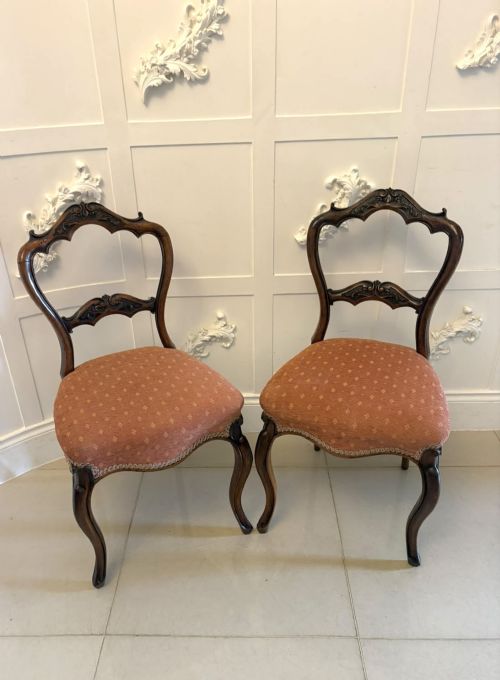
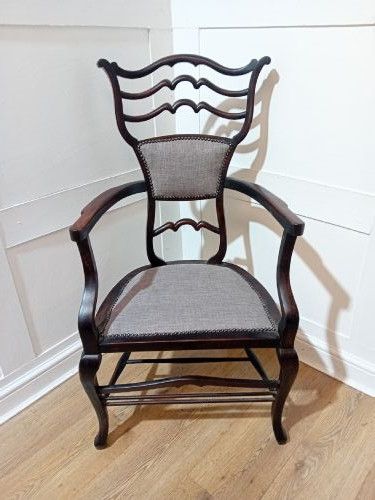
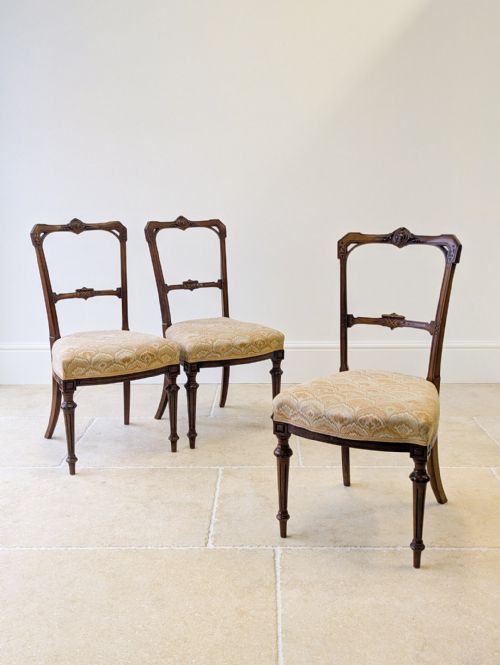
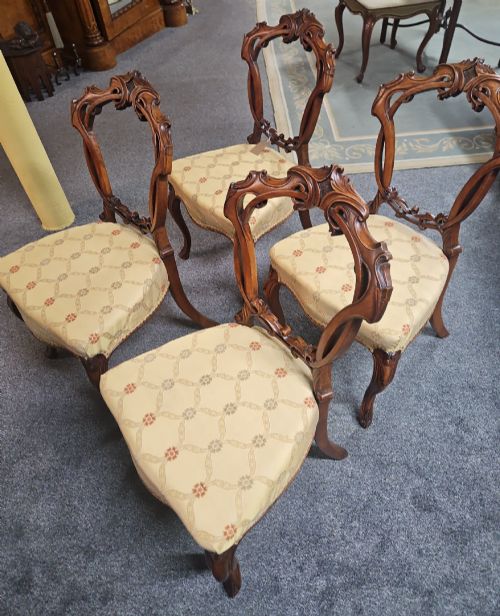
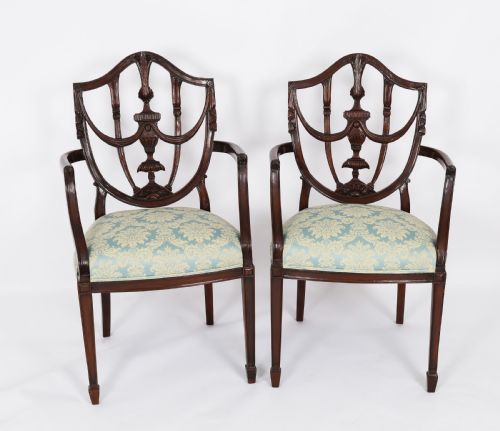
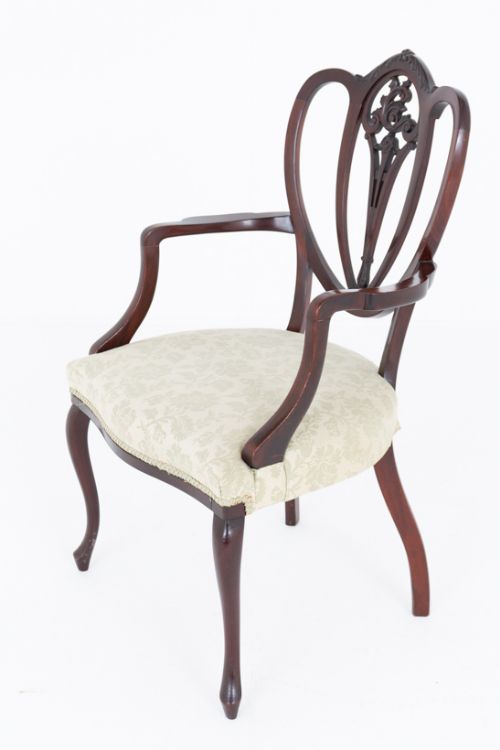
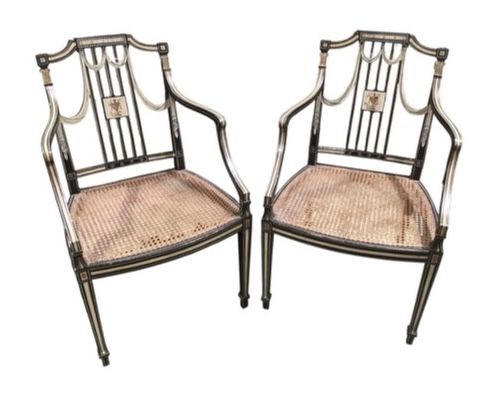


Open Back Side Chairs
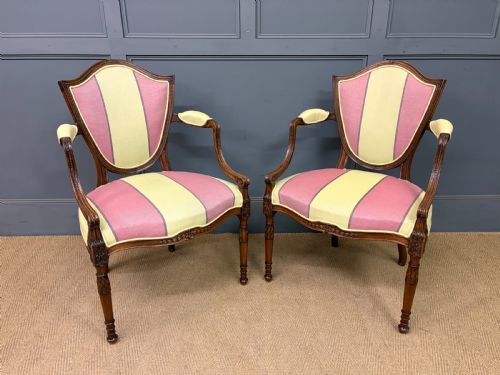
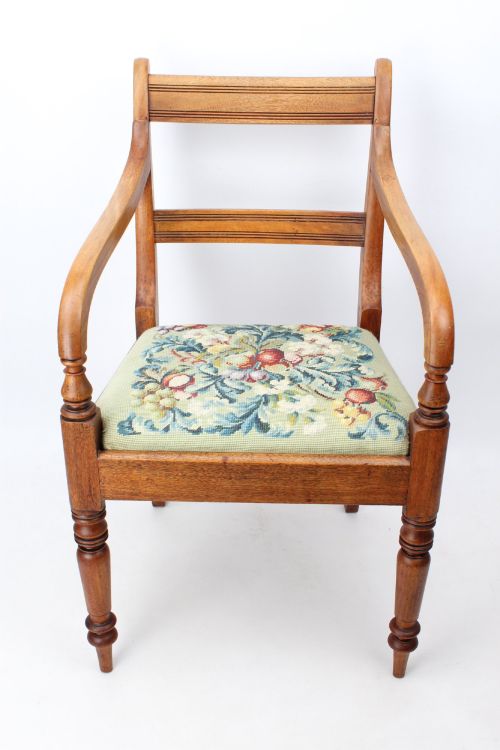
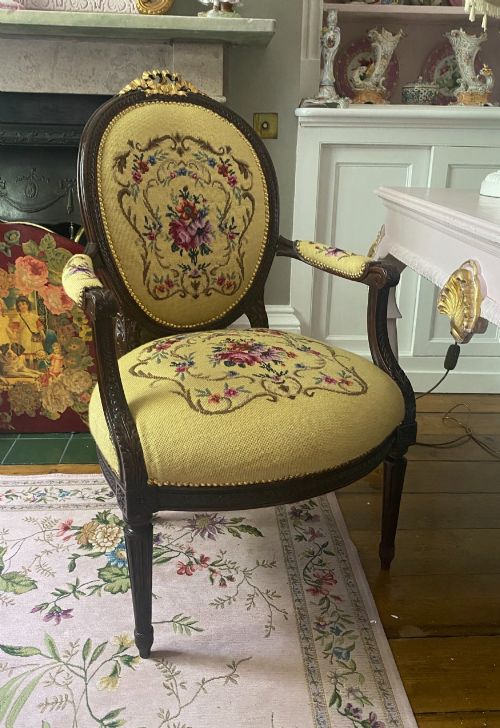
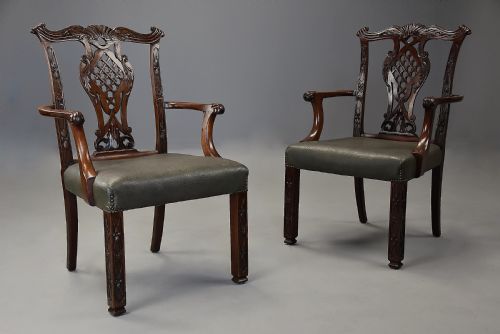
Open back side chairs are versatile seating pieces designed for dining rooms and parlours, prized for their lightness and formal elegance.
Open Back Side Chairs
Open back side chairs encompass a wide variety of forms from the eighteenth century through to the early twentieth century, including dining, salon, and occasional seating. These pieces feature distinct open back structures, often executed in styles ranging from George III and Sheraton revivals to Victorian and Edwardian interpretations.
The selections span numerous decades and incorporate diverse stylistic influences such as Art Nouveau, Neoclassical, and Empire revivals. Buyers frequently encounter mahogany and walnut constructions alongside occasional ebonised or polychrome decorated examples.
How they were made
Craftsmen utilised robust timbers such as mahogany, walnut, oak, and satinwood to construct the frames of these chairs. Joinery techniques ensured structural integrity while allowing for delicate piercing and carving within the backrests.
Upholstery materials including fabric, velvet, and specialised upholstery fabric were integrated into drop-in seats or pad seats. Decorative surface treatments incorporated inlay, paint, and ebonising to enhance the visual appeal of the wood.
Open Back Side Chairs Retail Price Guide 2026
Typical asking prices for open back side chairs among the pieces listed under this phrase on Sellingantiques today, from the lower quarter to the upper quarter. They describe what is for sale here now, not the wider market.
Listings feature periods spanning from the eighteenth century through to the Edwardian era and the early twentieth century.
What varies in quality
The refinement of the carving and the precision of the joinery distinguish higher grade examples from simpler productions. Well-executed open back designs display crisp detailing in motifs such as shield backs, ladderbacks, and balloon backs.
The choice of primary timber and the sophistication of secondary decorative elements like satinwood inlay or giltwood enrich the overall character. Preservation of the original frame structure and appropriate material selection elevate the standing of a piece.
The Open Back Side Chairs Glossary
- Open back side chair
- A chair design featuring a backrest with open spaces or slats, intended primarily for dining or occasional use without flanking armrests.
- Shield back
- A chair back shaped in the outline of a shield, frequently associated with eighteenth century designs and later revivals.
- Balloon back
- A rounded, oval-shaped chair back popular during the Victorian period.
- Ebonised
- Wood treated with a dark finish to imitate expensive ebony.
- Satinwood
- A durable, yellowish timber often utilised for decorative veneers and inlay work.
Open Back Side Chairs: Frequently Asked Questions
How do I date an open back side chair?
Dating relies on identifying the prevailing stylistic era, such as Georgian, Victorian, or Edwardian, through specific decorative motifs and structural proportions.
Material choices and construction methods also provide clear indications of the manufacturing period.
Were these chairs used only for dining?
While many served around dining tables, numerous examples function as salon chairs, occasional chairs, or music and dressing table seating.
Their varied forms allowed them to be placed in parlours, bedrooms, and reception rooms.
How do I care for antique wood frames?
Maintain timber surfaces by keeping them away from direct heat sources and sudden humidity changes to prevent wood movement.
Regular dusting with a soft cloth preserves the polish without harming the underlying finish.
What is the difference between a side chair and an armchair?
Side chairs are built without arms, making them compact and suitable for tucking neatly beneath dining tables.
Armchairs incorporate structural arm supports designed for enhanced comfort in parlour or study settings.