
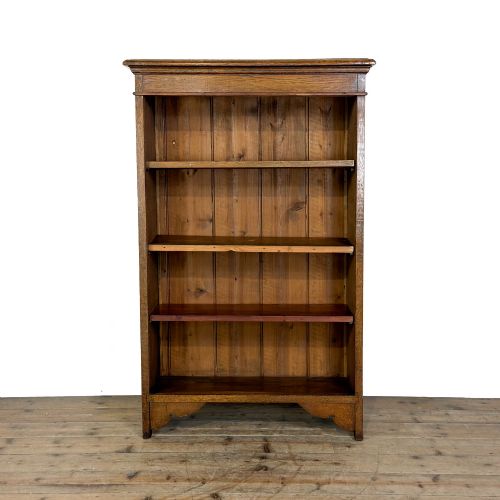
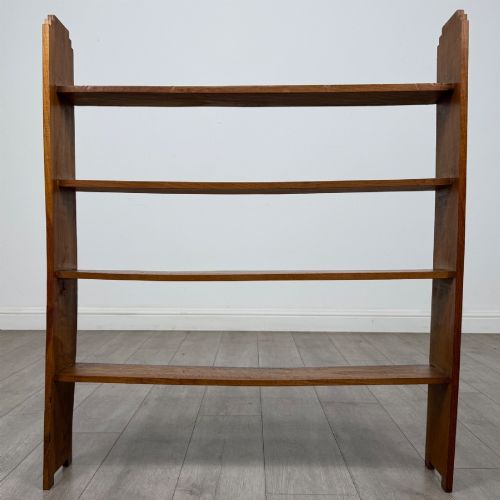
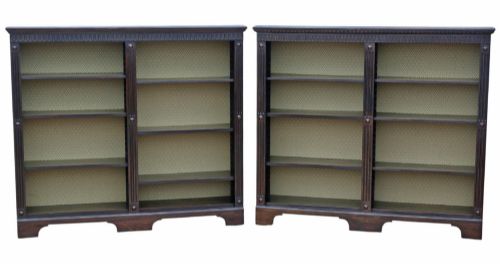

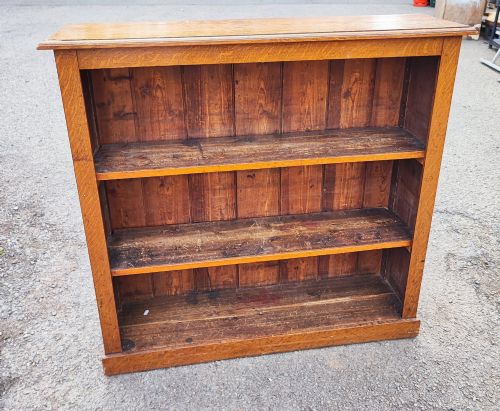
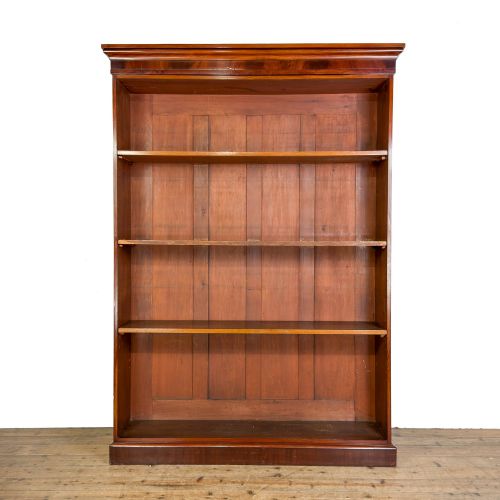
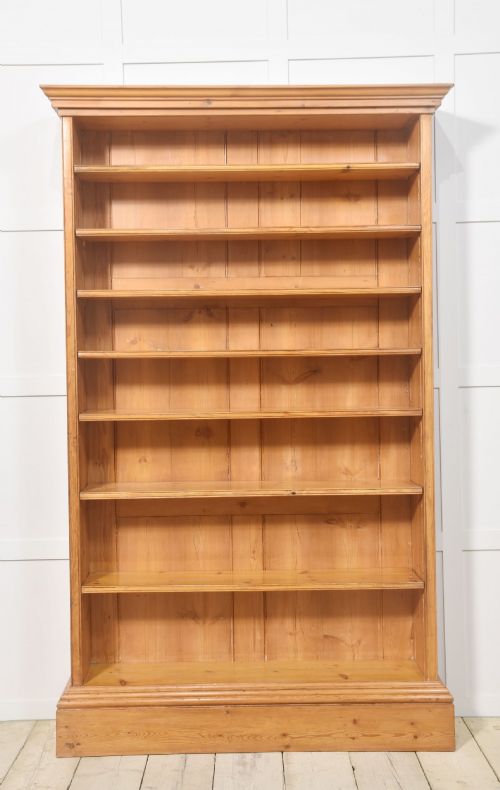
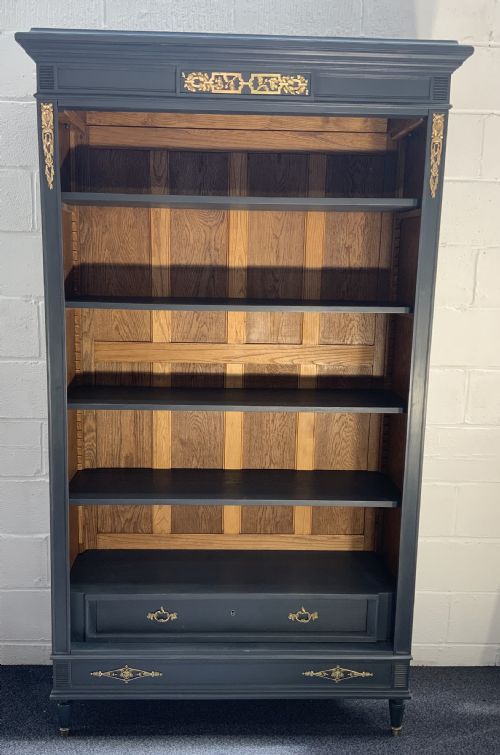
Open Back Shelving
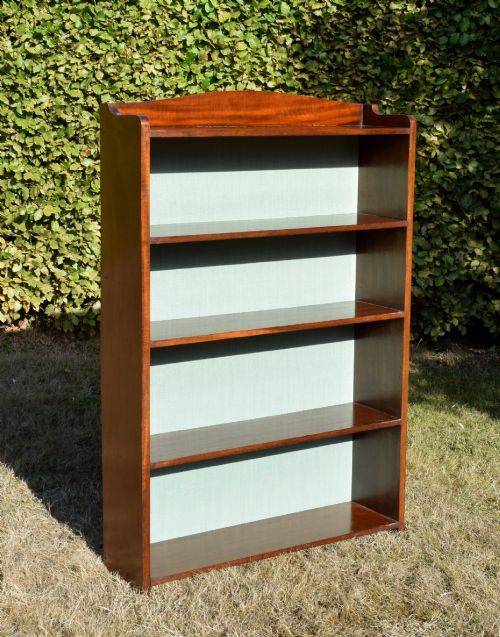
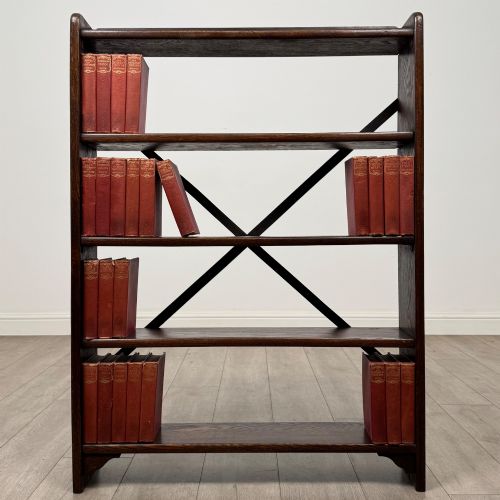
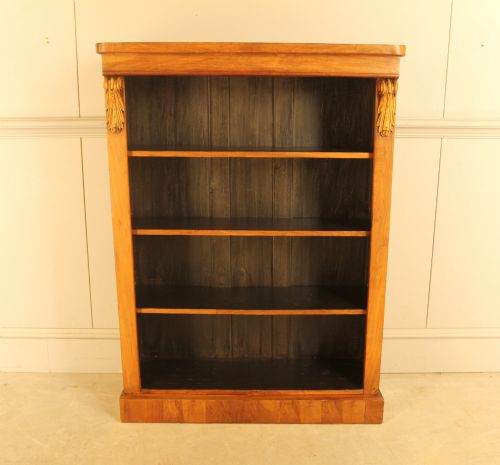
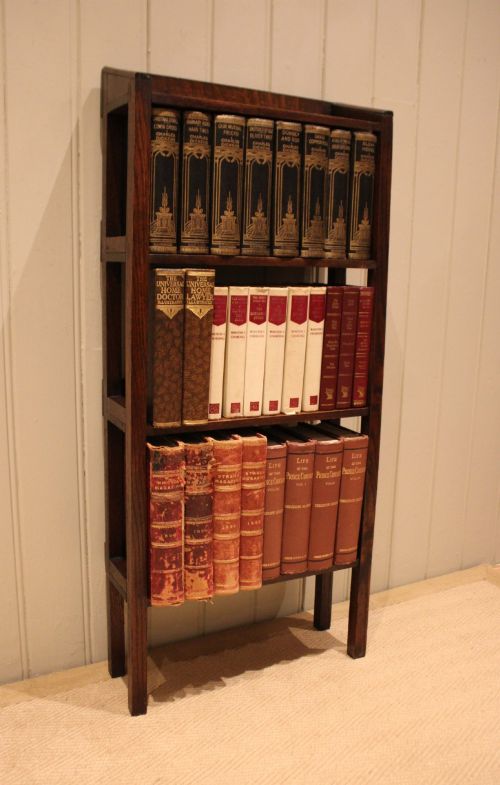
Open back shelving offers a practical and stylish way to display books and collections using pieces that span from the Georgian period through to the 1930s.
Open Back Shelving
Open back shelving primarily comprises bookcases, etageres, and whatnots designed to hold books and decorative objects without a solid rear panel. These pieces appear frequently across Victorian, Edwardian, and Art Deco styles, bringing a sense of airiness to interior spaces.
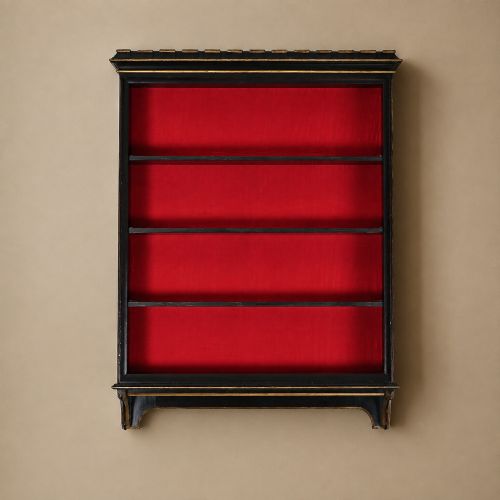
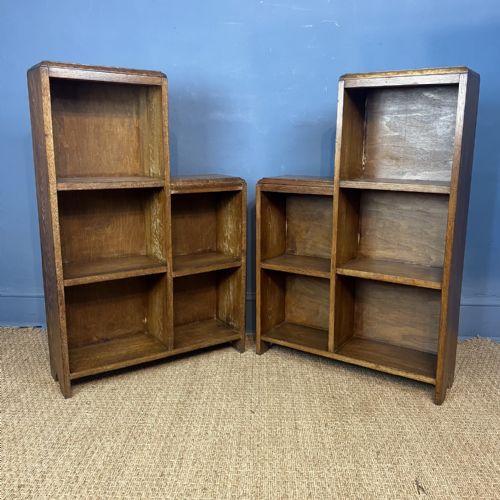
The selection ranges from sturdy oak and pine variants suitable for rustic or industrial settings to refined rosewood and mahogany forms from the Regency and Victorian eras. Buyers encounter everything from compact wall-mounted shelving units to large floor-standing breakfront bookcases.
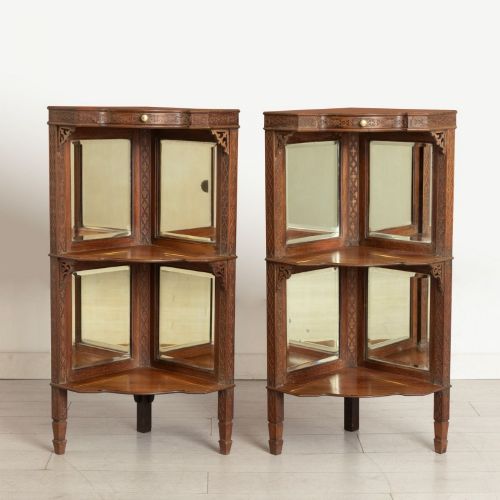
Many examples incorporate adjustable shelves, mirrors, or small drawers, adapting versatile storage solutions to domestic interiors across the nineteenth and early twentieth centuries.
Materials and Construction
Cabinet makers utilised a variety of solid timbers and veneers, predominantly oak, mahogany, walnut, and rosewood, alongside more utilitarian pine. These woods were often carved, ebonised, or polished to suit prevailing aesthetic movements such as Arts & Crafts and Gothic Revival.
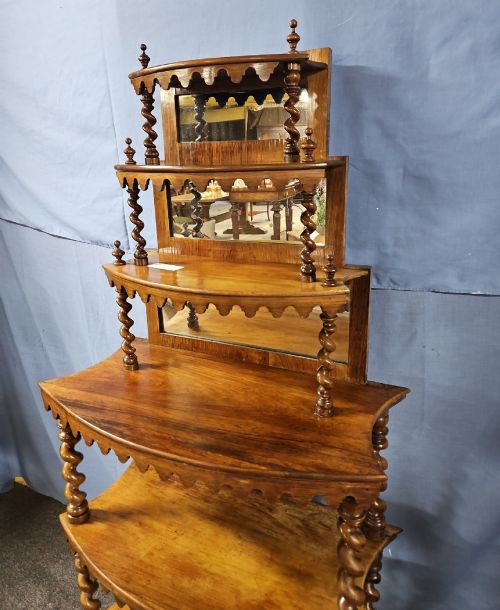
Structural integrity relied on traditional joinery, whilst decorative elements incorporated brass embellishments, mirror backs, and iron supports. Specific forms also feature turned details like barley twist uprights or delicate fretwork.
Design styles represented include Victorian, Edwardian, Art Deco, Arts & Crafts, Jacobean Revival, and Industrial.
Standards of Manufacture
Quality manifests in the selection of timber grain, the precision of the joinery, and the refinement of any applied carving or brasswork. Superior examples show careful attention to structural proportion and timber matching across prominent surfaces.
Maker attribution and period integrity elevate certain pieces, distinguishing standard workshop production from items bearing documented craftsmanship by firms like Edwards & Roberts or Bowman Brothers.
Bowman Brothers, London·George Edmund Street·Heals·Edwards & Roberts
The Open Back Shelving Glossary
- Etagere
- A set of open shelves for displaying small objects or ornaments. These pieces typically feature multiple tiers supported by slender columns.
- Whatnot
- A multi-tiered piece of freestanding furniture used for storage and display. They frequently incorporate small drawers or mirror backs.
- Breakfront
- A piece of furniture having a central section that projects forward from the side sections. This architectural form adds depth and visual interest to larger bookcases.
- Barley twist
- A turned wooden column resembling the spiral shape of barley sugar. This decorative turning appears frequently on Victorian supports and legs.
- Gothic Revival
- An architectural and decorative style drawing inspiration from medieval design. Pieces often display pointed arches, tracery, and heavy oak construction.
Open Back Shelving: Frequently Asked Questions
What is open back shelving?
Open back shelving refers to bookcases and display units designed without a rear panel, allowing light to pass through and walls to remain visible behind the items stored.
These pieces range from simple pine and oak utility shelves to highly decorative rosewood and mahogany etageres from the Victorian and Edwardian eras.
How do I style an open bookcase?
An open bookcase allows you to arrange books vertically and horizontally alongside decorative objects, ceramics, and framed photographs.
Because the wall behind the shelves remains visible, you can coordinate the surrounding room colour with the timber tone of the furniture piece.
Are these shelves adjustable?
Many examples from the late nineteenth and early twentieth centuries feature adjustable shelving systems to accommodate books of varying heights.
Fixed shelves are more common in earlier Georgian and Regency period pieces where structural rigidity took precedence over modular flexibility.
How do I identify a Victorian bookcase?
Victorian bookcases often utilise dense timbers such as walnut, mahogany, or rosewood, frequently displaying rich patination and deep carving.
Stylistic cues such as Gothic Revival arches, barley twist supports, or incorporated mirror backs help distinguish pieces from this period.