

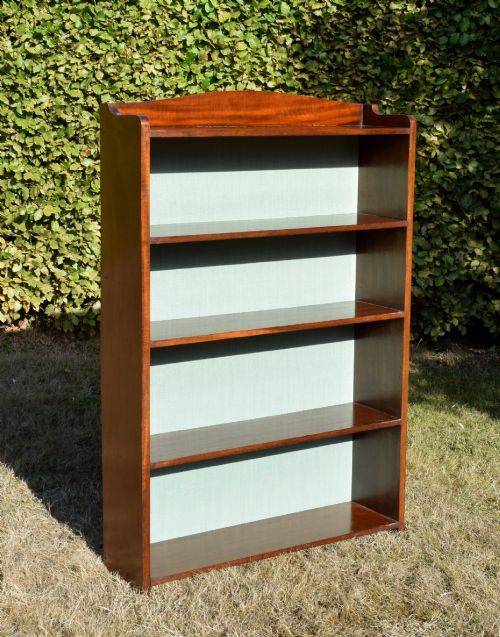
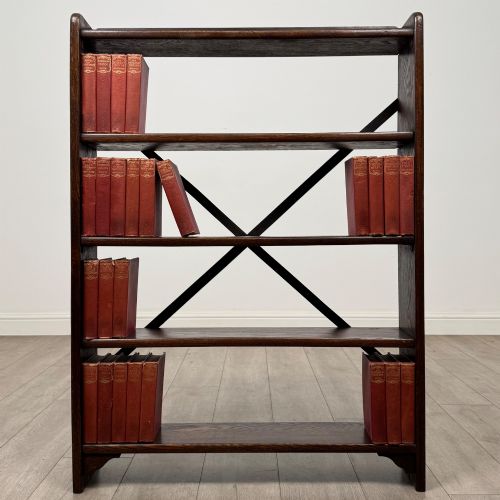
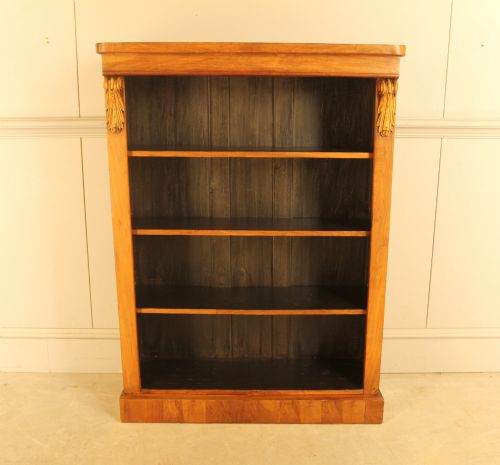
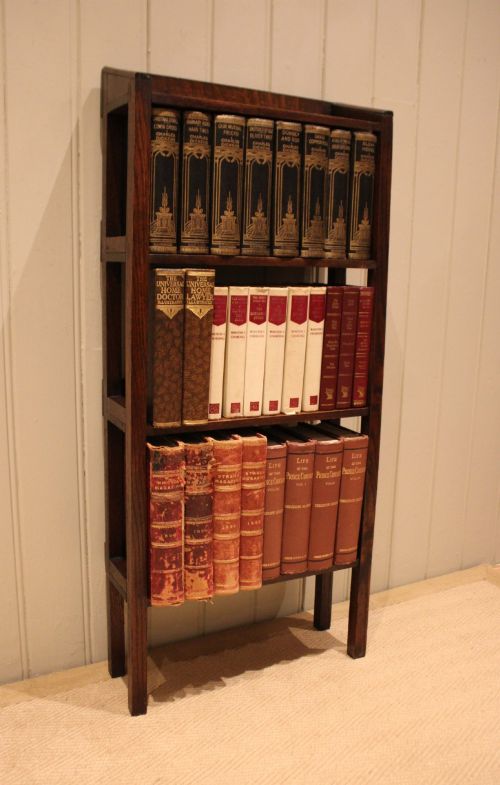
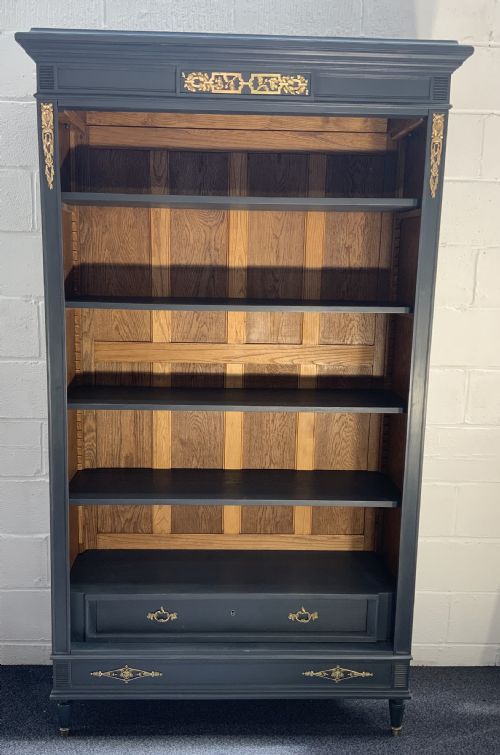


Open Back Shelving Unit
An open back shelving unit brings effortless display space to a room, offering clean sightlines through your books and objects.
Open Back Shelving Unit
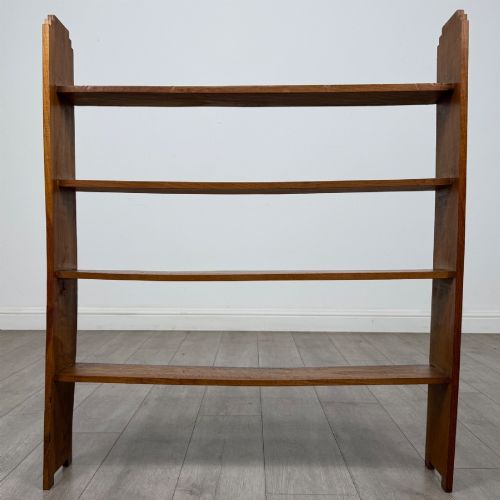
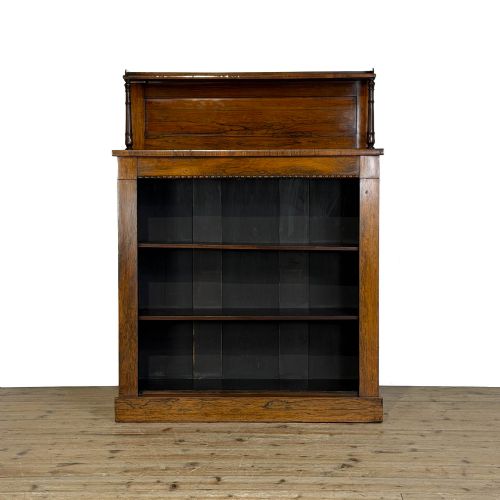
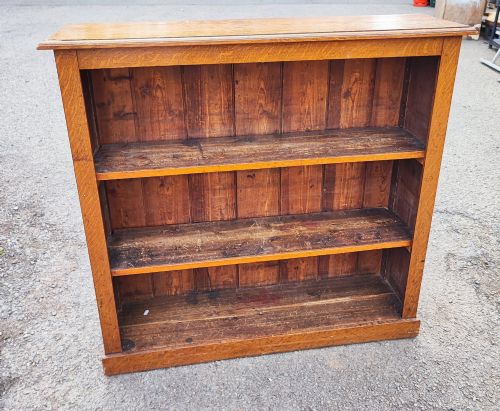
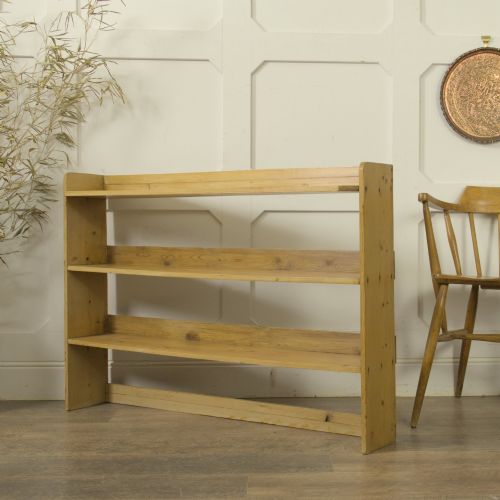
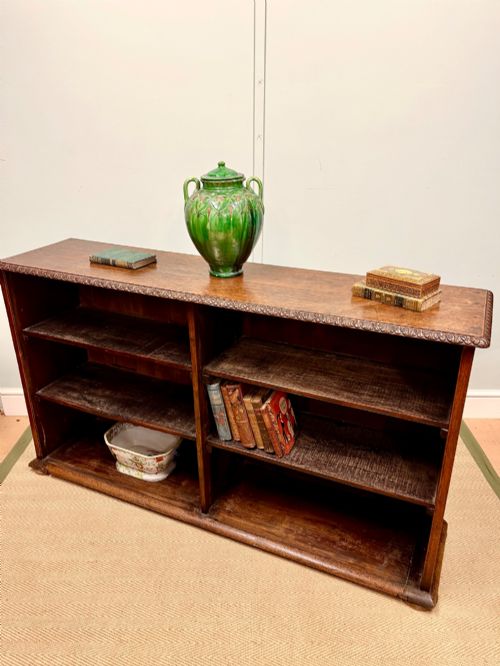
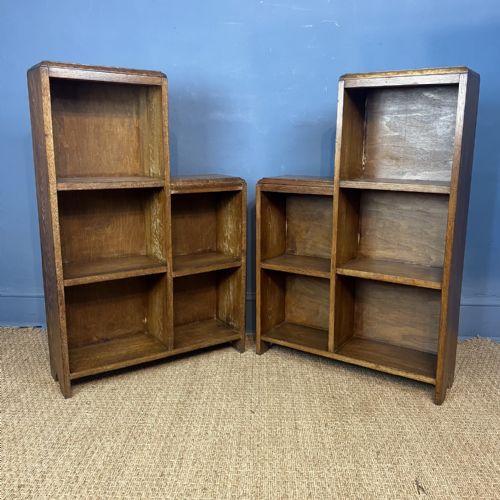
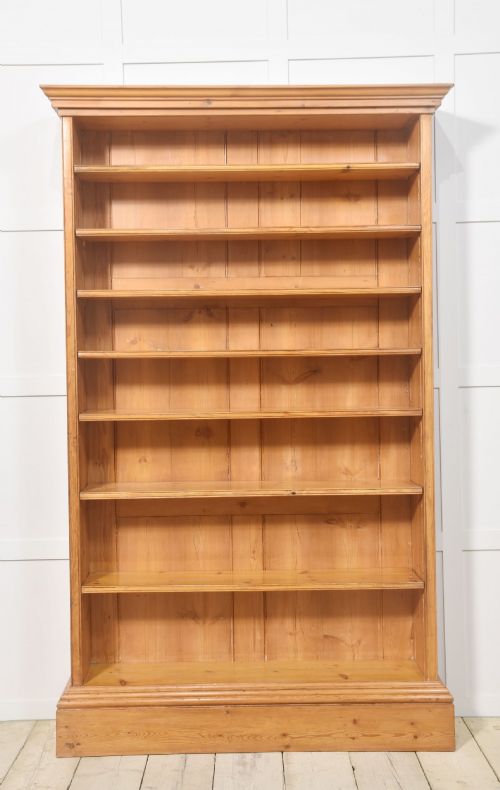
An open back shelving unit functions primarily as a bookcase, etagere, or whatnot, designed to stand freely or against a wall without a solid rear panel. These pieces emerge in styles ranging from robust rustic pine and industrial oak to refined Victorian and Edwardian mahogany, walnut, and rosewood iterations.
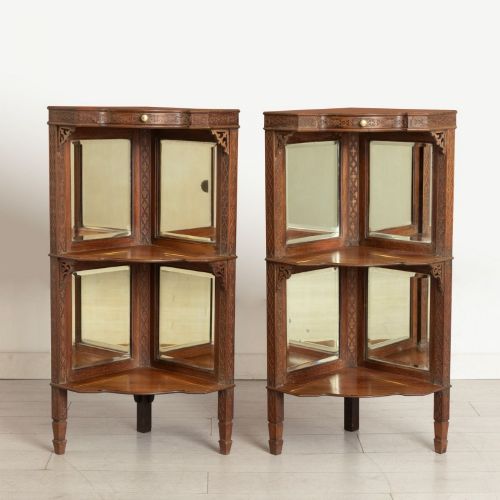
The most common examples on this page span the Victorian and Edwardian periods, often taking the form of upright bookcases or tiered display shelves. You will also encounter specialised pieces like corner display cabinets and mirror-backed whatnots that share this open framework.
Materials and construction methods
Cabinetmakers constructed these units using a variety of hardwoods and softwoods, frequently employing oak, mahogany, walnut, and pine. More ornate examples incorporate brass embellishments, mirror panels, or parcel gilt details to enhance their visual appeal.
Joinery methods reflect the period of origin, from standard nineteenth-century housing of shelves to architectural elements like barley twist supports. Finishes range from natural waxed grain and ebonised surfaces to painted treatments.
What separates the finest examples
Quality in an open back shelving unit rests on the selection of timber and the restraint or elegance of its detailing. Dense grains of rosewood or walnut and well-figured oak distinguish superior pieces from utilitarian pine storage.
Subtlety in proportion and craftsmanship elevates certain items, such as those with carved decoration or integrated mirrors and drawers. Maker attribution, when present, further separates standard regional furniture from master-workshop output.
Edwards and Roberts
The Open Back Shelving Unit Glossary
- Etagere
- A set of open shelves for displaying small objects or ornaments. These pieces typically feature multiple tiers supported by slender uprights.
- Whatnot
- A piece of furniture with shelves for books or ornaments, popular in the nineteenth century. They often include mirrors, drawers, or turned supports.
- Breakfront
- A piece of furniture whose central section projects forward from the flanking sides. This architectural arrangement adds visual depth to larger bookcases.
- Barley twist
- A type of turning resembling a spiral rope, often used for table legs and furniture supports. It became particularly popular during the Victorian period.
Open Back Shelving Unit: Frequently Asked Questions
Where should I place an open shelving unit?
These units suit living rooms, studies, and hallways where their lack of a solid back allows light to pass through. They sit well against walls or function as room dividers in larger spaces.
Because the rear is exposed, consider the wall colour behind the unit as part of your overall display composition.
How do I identify a Victorian open bookcase?
Victorian examples frequently utilise timbers such as mahogany, walnut, and rosewood, often featuring rich dark patination. Look for period joinery and traditional proportions.
Many incorporate decorative elements typical of the nineteenth century, including carved mouldings, mirror backs, or turned uprights.
Can these shelves hold heavy books?
Sturdier hardwood versions in oak or mahogany handle heavy volumes with ease, provided the shelf supports are secure. Pine and lighter etagere formats suit lighter display items and paperbacks.
Inspect the thickness of the timber shelves and the depth of the housing joints to judge the load capacity of each tier.
What is the difference between a bookcase and a whatnot?
A bookcase is primarily built for storing books, featuring deeper and often fixed shelves. A whatnot is a multi-tiered display piece intended for ornaments and bric-a-brac.
Whatnots frequently include mirrors, slender turned columns, and occasionally small drawers beneath the display tiers.