

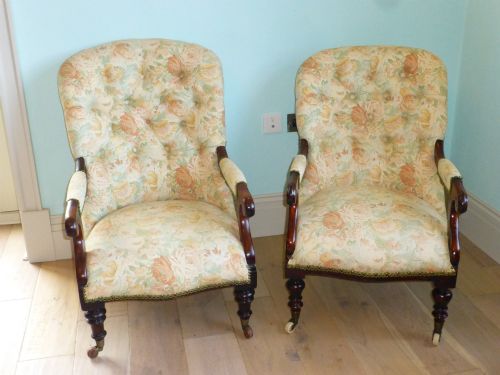
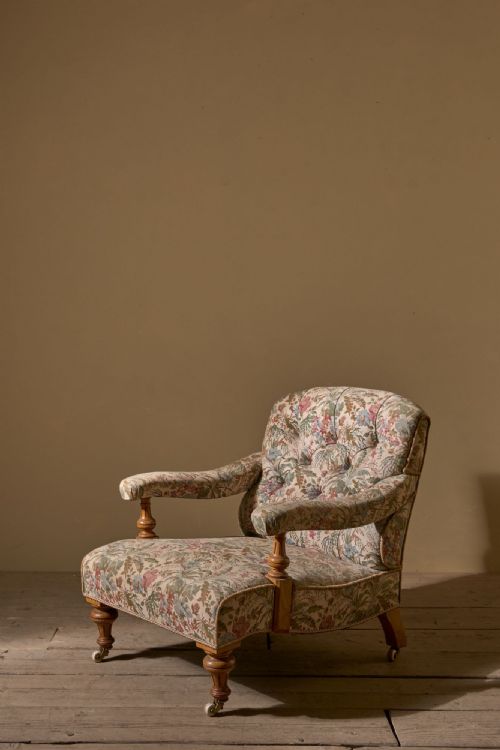
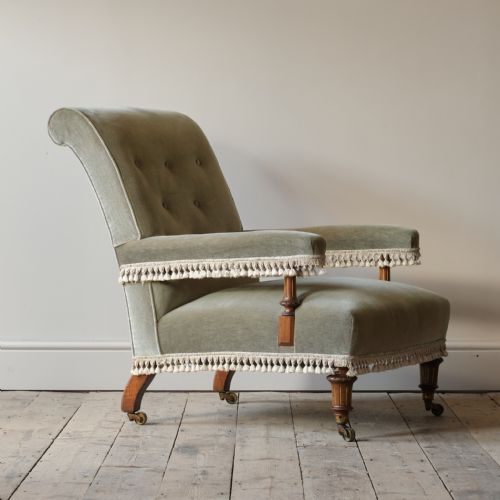


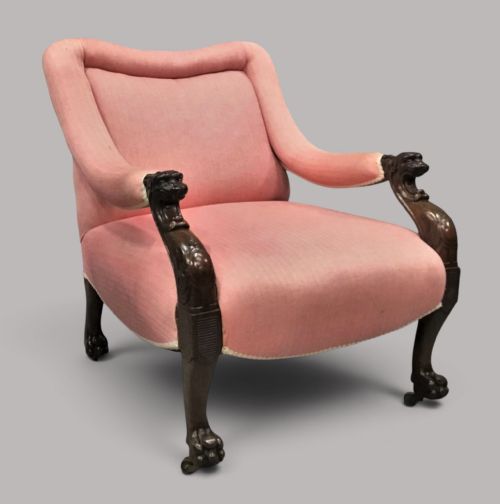

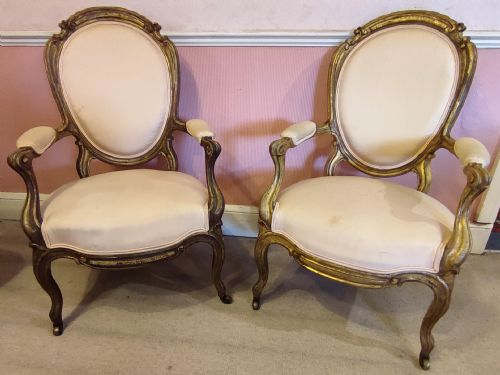


Open Arm Lounge Chair
An open arm lounge chair brings period timber frames and deep upholstery together for a commanding seat in any room.
Open Arm Lounge Chair
An open arm lounge chair provides a comfortable seating form defined by exposed wooden arm supports and upholstered elements. When searching for an open arm lounge chair, buyers encounter diverse expressions ranging from heavy Victorian walnut designs to refined Regency library models.
The selections on this page span the nineteenth century, including specific decades like eighteen-sixty and nineteen-hundred alongside broader Victorian and Regency periods. Pieces arrive in various stylistic interpretations such as Arts and Crafts, French Rococo Revival, and Anglo-Indian carving.
Examples frequently take the form of country house armchairs, salon seats, and library chairs built with sturdy timber frames. These pieces function as statement seating that anchors a drawing room, study, or parlour with historical presence.
Materials and Construction
Frames are constructed from dense hardwoods like mahogany, walnut, oak, and rosewood, sometimes finished in giltwood or ebonised surfaces. These timbers provide the structural integrity required to support exposed arm structures and carved show frames.
Upholstery relies on traditional textiles, velvet, and various fabrics, occasionally featuring button-back detailing or deep padding characteristic of nineteenth-century comfort. Brass components appear selectively for castors and structural reinforcement.
Open Arm Lounge Chair Retail Price Guide 2026
Typical asking prices for open arm lounge chair among the pieces listed under this phrase on Sellingantiques today, from the lower quarter to the upper quarter. They describe what is for sale here now, not the wider market.
Listings feature nineteen-hundred, eighteen-sixty, and Regency periods alongside diverse timbers like mahogany, walnut, and rosewood.
Assessing Quality and Execution
The distinction between standard and superior pieces rests in the crispness of the timber carving and the sophistication of the frame proportions. Finer examples display refined turning, intricate mouldings, and substantial show frames executed in quality walnut or mahogany.
Stylistic cohesion and provenance elevate certain pieces, such as those bearing cabinet-maker attribution or distinct regional characteristics like Scottish country house builds and Anglo-Indian carving. The integrity of the original wood finish and the harmony of the upholstery scale further determine the standing of each chair.
Gillows
The Open Arm Lounge Chair Glossary
- Show frame
- A wooden structural frame left visible around the upholstered sections of an armchair. This timber border defines the silhouette and displays the grain and carving.
- Giltwood
- Wood that has been coated with gold leaf or a gold-coloured metallic finish. This opulent treatment appears on revival pieces and French-influenced salon chairs.
- Ebonised
- Wood treated with a dark stain or finish to imitate ebony. This technique creates a dense, black surface popular in nineteenth-century salon seating.
- Button back
- An upholstery style where depressions are formed in the padding by pulling buttons deep into the stuffing. This method secures the filling and creates a tufted geometric pattern.
Open Arm Lounge Chair: Frequently Asked Questions
What is an open arm lounge chair?
An open arm lounge chair is a seat featuring exposed wooden arms rather than fully upholstered padded enclosures. These chairs combine wooden support structures with upholstered backs and seats.
Originating across the nineteenth century, they appear in styles ranging from simple country house models to ornate French revival pieces.
Where were these chairs used historically?
These armchairs served primarily in formal libraries, drawing rooms, and country house reception spaces. Their supportive frames and comfortable upholstery suited prolonged sitting for reading or conversation.
Matching sets often furnished grand salons, while individual pieces sat comfortably in private studies.
How do I identify a Victorian armchair?
Victorian armchairs are typically identified by dense timbers like walnut and mahogany, combined with button-back upholstery or deep padding. Their construction reflects the heavy, durable building methods of the nineteenth century.
Stylistic cues often include revival motifs drawing from French Rococo or classical precedents.
How do I care for antique upholstery?
Caring for antique upholstery involves gentle vacuuming using a low suction attachment to remove dust from fabric and crevices. Keeping pieces away from direct sunlight prevents the fading of textiles and timber.
Professional cleaning is recommended for delicate velvet and historic fabric coverings to preserve the material.