




Opaline Glass Globe Lamp
Opaline glass globe lamp options bring soft illumination and architectural form to a room through milky translucent shades paired with metal and stone bases.
Opaline Glass Globe Lamp
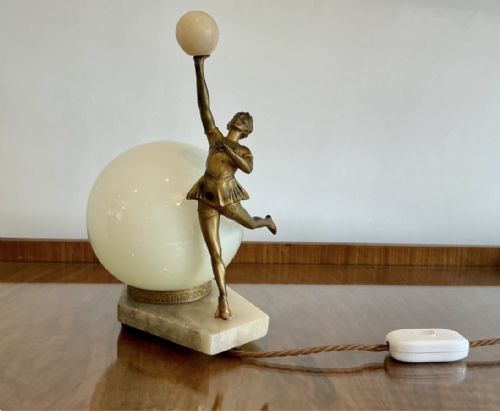
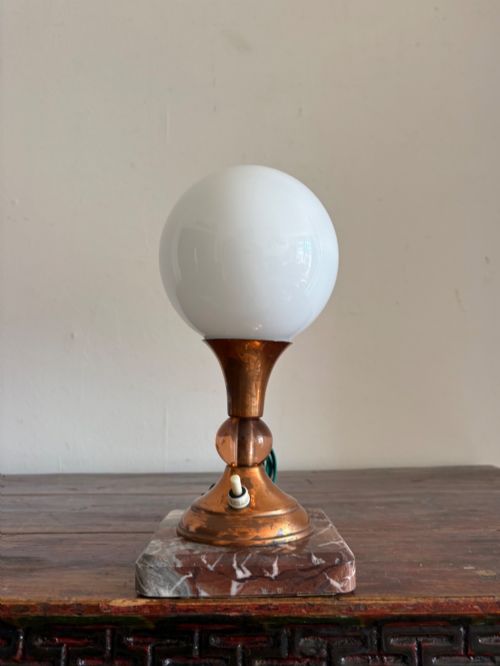
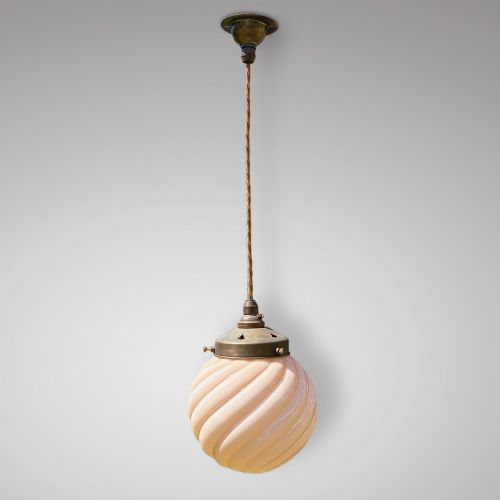
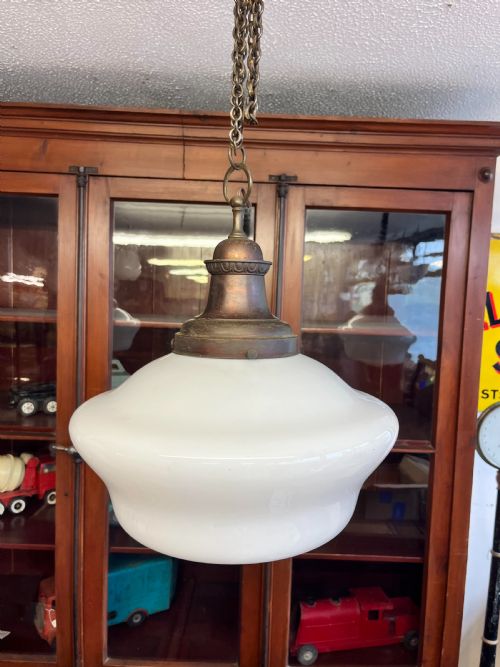
An opaline glass globe lamp combines a milky, translucent glass shade with structural mountings of brass, bronze, copper, or marble to provide diffused interior lighting. These pieces span several distinct eras, appearing in forms such as ceiling pendants, hallway lights, chapel lanterns, and converted table lamps.
The selections on this page draw from the Victorian, Edwardian, and Art Deco periods, alongside early twentieth-century designs. Buyers will frequently encounter pendant configurations alongside table lamps utilising brass or marble bases.
Makers and designers of the period utilised the unique light-scattering properties of opaline glass for functional illumination in domestic and public spaces alike. Surviving examples often retain period-appropriate fittings like fabric flex or gilt bronze mounts.
Materials and construction
The shades are formed from opaline glass, a dense translucent material that diffuses light evenly across its surface. This is combined with spun or cast brass, copper, and gilt bronze for structural components and mountings.
Bases frequently incorporate heavier materials such as marble, granite, or spelter to provide stability for table lamps. Wiring updates often utilise fabric flex while retaining the original metal galleries and collars.
Some early twentieth-century lighting required a seagull motif to safely guide the light through a chapel.
Judging quality in opaline lighting
Quality rests upon the weight and even density of the opaline glass shade, alongside the casting definition of the metal components. Superior examples display refined proportions between the glass globe and its supporting brass or bronze framework.
The integrity of the structural materials, such as solid marble bases and heavy-gauge copper or gilt bronze, distinguishes workshop production from standard utility lighting. Maker attribution, such as work associated with Perry and Co, elevates a piece through documented craftsmanship.
Perry and Co
The Opaline Glass Globe Lamp Glossary
- Opaline glass
- A milky, translucent glass type developed to soften and diffuse light efficiently. It appears in white and tinted varieties across nineteenth and twentieth-century lighting.
- Spelter
- An alloy of zinc used as a cost-effective substitute for bronze in decorative metalwork. It takes patination well but possesses a lighter weight than solid brass.
- Gallery
- The metal ring or collar designed to hold a glass shade securely in place. Galleries often feature thumb screws or fitting brackets characteristic of their period.
- Gilt bronze
- Bronze that has been coated with a thin layer of gold or gold-coloured alloy. This finish provides a durable, decorative surface for Victorian and Edwardian mounts.
Opaline Glass Globe Lamp: Frequently Asked Questions
What periods do these lamps cover?
The lighting options on this page extend from the Victorian and Edwardian eras into the Art Deco period and the early twentieth century. This timeline captures shifts in domestic illumination from converted oil lamps to electrified pendants.
Each era contributes distinct design markers, from ornate gilt bronze mounts to streamlined geometric table bases.
How were opaline lamps originally used?
These fixtures served both task and ambient lighting functions in domestic interiors, hallways, and larger institutional spaces like chapels. Pendant versions lit central rooms, while table models provided focused illumination.
Many period oil lamps were subsequently converted to electricity while retaining their original opaline shades and brass structures.
How do I identify Art Deco examples?
Art Deco pieces from the nineteen-thirties often feature streamlined silhouettes, geometric supports, and mottled glass finishes. Materials like granite, copper, and specialised glass textures define this later aesthetic.
In contrast, earlier Victorian and Edwardian designs lean towards brass oil lamp conversions and ornamental bronze lantern framing.
What metals are used in the bases?
Bases and structural mounts utilise brass, copper, spelter, and gilt bronze, frequently paired with heavy stone plinths made of marble or granite. These materials provide both structural support and decorative contrast to the white glass shades.
Metal components often show patination appropriate to their age and manufacturing period.