




Opaline Glass Fixture
Opaline glass fixture options bring a soft, diffused glow to a room, offering the clean forms and milk-white tones collectors prize.
Opaline Glass Fixture
When you search for opaline glass fixture, you encounter a range of lighting forms spanning the Victorian era through the Art Deco period and the 1930s. The selection on this page centres primarily on ceiling lights, pendant lights, and ceiling lighting, alongside table lamps.
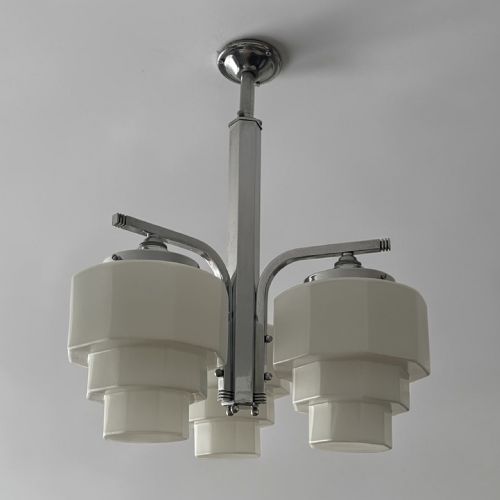
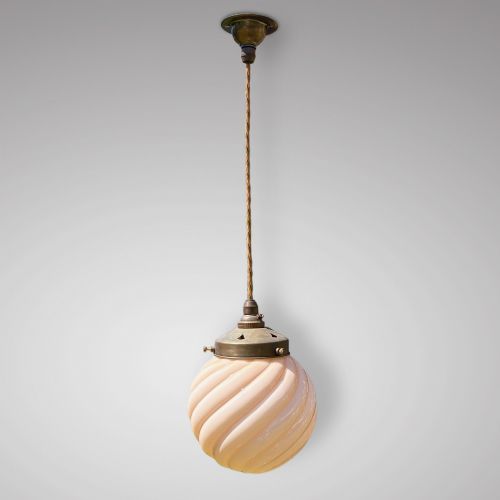
The pieces originate across multiple stylistic traditions, encompassing Victorian, Edwardian, Art Deco, Art Nouveau, Industrial, Gothic Revival, and Mid-Century Modern designs. Pendant lights and ceiling lights appear most frequently in the current listings, often taking pear-shaped or fish scale forms.
Makers and designers span traditional British workshops as well as French houses, with specific examples including Perry & Co. Materials paired with the glass include brass, chrome, gilt bronze, bronze, and fabric flex.
Materials and construction methods
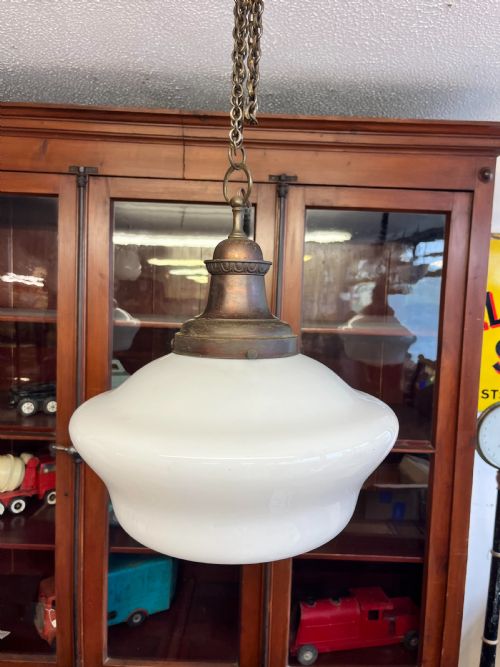
The primary material defining these pieces is opaline glass, valued for its opaque, milky appearance that diffuses light evenly. This glass is typically mouth-blown or moulded into specific shapes such as globes, pears, and fish scale patterns.
Metal mounts, galleries, and fittings utilise brass, chrome, bronze, and gilt bronze to secure the glass shades. Wiring and suspension involve materials like fabric flex, whilst hand-painted details appear on specific Victorian specimens.
Opaline Glass Fixture Retail Price Guide 2026
Typical asking prices for opaline glass fixture among the pieces listed under this phrase on Sellingantiques today, from the lower quarter to the upper quarter. They describe what is for sale here now, not the wider market.
Fish scales and pears illuminate ceilings from the 1930s.
Assessing quality in opaline glass pieces
Quality in these items rests upon the purity and weight of the opaline glass, as well as the crispness of its moulded or blown form. Thicker glass with a smooth, even translucency generally indicates a higher standard of manufacture.
The execution of the metal mounts and structural hardware dictates the overall refinement of the piece. Finer examples display heavier brass, bronze, or gilt bronze fittings that integrate seamlessly with the glass shade, whereas simpler industrial variants rely on more utilitarian components.
Perry & Co
The Opaline Glass Fixture Glossary
- Opaline Glass
- A type of opaque, milk-white or tinted glass developed to diffuse light softly. It gained widespread popularity during the nineteenth and early twentieth centuries for domestic and institutional lighting.
- Gilt Bronze
- Bronze metal treated with a fine layer of gold or gold-coloured alloy to give a rich metallic finish. This material appears on high-status Victorian pendant lanterns and mounts.
- Pendant Light
- A light fixture that is suspended from the ceiling by a cord, chain, or metal rod. These are common forms within early twentieth-century and Art Deco lighting.
- Fabric Flex
- Flexible electrical wire covered in a woven textile sheath. It is commonly utilised in period-appropriate restorations and original twentieth-century pendants.
Opaline Glass Fixture: Frequently Asked Questions
What periods do these opaline glass fixtures come from?
The pieces span several decades and eras, ranging from Victorian and Edwardian examples through to items from 1910, 1920, and 1930.
Styles shift accordingly, moving from ornate nineteenth-century designs to the clean lines of Art Deco and industrial lighting.
How were opaline glass fixtures used originally?
They served as functional illumination in domestic rooms, chapels, and public buildings, utilising oil or electricity depending on the decade.
Pendant lights and ceiling lamps provided ambient overhead light, while tall table lamps offered focused illumination on surfaces.
What metals are typically found with the glass?
Mounts and structural frames are most commonly cast in brass, bronze, or gilt bronze on earlier pieces. Later industrial and Art Deco examples occasionally incorporate chrome or simpler metal components.
Fabric flex is also used for suspension in many hanging ceiling lights.
How do I distinguish between Art Deco and Victorian styles?
Victorian and Edwardian pieces often feature heavier decorative mounts, such as gilt bronze or brass, alongside hand-painted details or gothic influences. Art Deco items from the 1920s and 1930s favour streamlined geometries and clean glass profiles like the fish scale or pear shape.
Industrial variants from the same period prioritise functional simplicity over ornamentation.