



Onyx Display Column
An onyx display column lifts a favourite object into the light, bringing a cool, tactile presence to a room through polished stone and metal.
Onyx Display Column
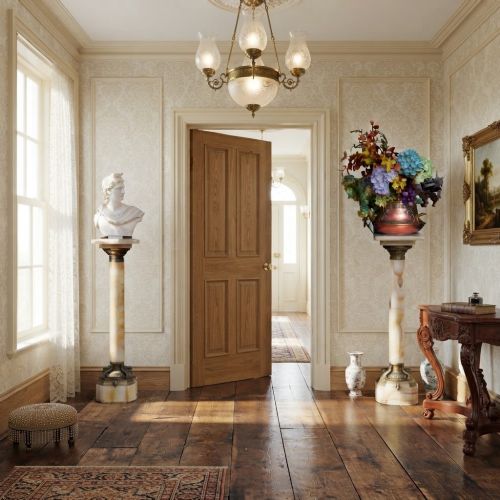
An onyx display column provides a solid, elevated platform for sculpture, urns or plants, taking the form of tall pedestals, torchere columns and occasional pedestal tables. These pieces stand as architectural furniture, designed to draw the eye upwards and command space within a room.
Most examples encountered here belong to the nineteenth century, drawing heavily on neoclassical taste, alongside later designs from the nineteen-thirties. Forms range from slender torchere columns to lower plant stands and two-tier tables, utilising matching plinths and capitals.
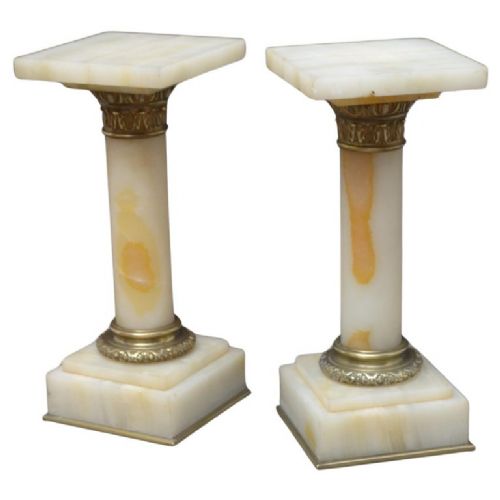
Originating largely from French and classical revival traditions, these columns combine stone shafts with decorative metal mounts. A buyer typically finds either single columns or matched pairs suited for symmetrical placement in a hall or drawing room.
How they were made
Makers constructed these columns by combining banded onyx and marble with cast metal components such as ormolu, brass, gilt bronze and bronze. The stone shafts were turned and polished to reveal natural veining, then secured with metal collars, bases and capitals.
Neoclassical and French chateau styles guided the decorative metalwork, which was chiseled or cast with classical motifs. Ormolu collars and brass mounts were fitted tightly to the stone to provide both structural stability and ornamental contrast.
Onyx Display Column Retail Price Guide 2026
Typical asking prices for onyx display column among the pieces listed under this phrase on Sellingantiques today, from the lower quarter to the upper quarter. They describe what is for sale here now, not the wider market.
Some columns come paired for symmetry, ready to hold up urns they have watched over since the Victorians were young.
What varies in quality
The distinction between ordinary and exceptional pieces lies in the choice of stone and the crispness of the metalwork. Richly figured onyx paired with finely chiseled ormolu or gilt bronze marks out the better examples on the market.
Proportion and architectural balance dictate the success of a column. Pieces with well-matched marble bases, clean turning and secure brass or bronze collars show greater design integrity.
The Onyx Display Column Glossary
- Onyx
- A banded variety of chalcedony quartz prized for its translucent layers and varied natural coloration. It forms the primary shaft material for these decorative columns.
- Ormolu
- Gilded bronze applied to furniture mounts and decorative hardware during the eighteenth and nineteenth centuries. This technique brings a warm metallic contrast to the polished stone.
- Torchere
- A tall, slender stand originally designed to hold a candle or torch, later adapted to support lighting or decorative objects. These columns often take this upright, columnar form.
- Neoclassical
- A style reviving classical Greek and Roman architectural motifs, prominent in nineteenth century furniture. It informs the symmetry and decorative collars seen on these pedestals.
Onyx Display Column: Frequently Asked Questions
What is an onyx display column used for?
These pieces serve primarily as elevated stands for sculpture, vases, urns or heavy decorative items. By lifting objects off the floor, they create a focal point in hallways, corners or reception rooms.
Lower versions also function as plant stands or small display tables. Their sturdy stone construction provides a stable platform for heavy items.
How do I date a nineteenth century column?
Dating relies on observing the combination of materials, the style of the metal mounts, and the turning of the stone shaft. Nineteenth century pieces often show neoclassical or French chateau influences with hand-finished bronze or ormolu collars.
Later examples from the nineteen-thirties tend to feature simpler brass work and different structural proportions, such as two-tier plant stands.
Are these columns strong enough for heavy stone urns?
Most columns are built around a solid core or heavy stone shaft designed to bear substantial weight. The combination of marble, onyx and metal collars provides robust structural integrity.
However, checking the fit of the top capital and the stability of the base ensures the column safely supports top-heavy objects.
How do I care for polished onyx and marble?
Stone surfaces require gentle dusting with a soft, dry cloth to prevent scratching the polished finish. Moisture and acidic substances should be kept away from the stone to avoid staining.
Metal components like brass or ormolu need only light dusting, avoiding harsh chemical cleaners that might strip the original finish.