



Onyx Column Table
These onyx column table pieces combine banded stone shafts with metal mounts, offering practical surfaces and decorative illumination for traditional interiors.
Onyx Column Table
An onyx column table or associated lamp and stand brings heavy stone architecture into domestic spaces through varied Victorian and twentieth century iterations. The selection spans compact side furniture, tall plant stands, and illuminated lamp bases rather than a single uniform form.
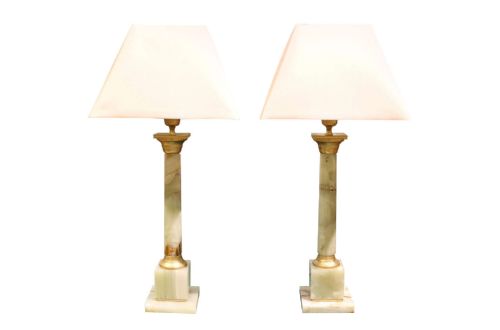
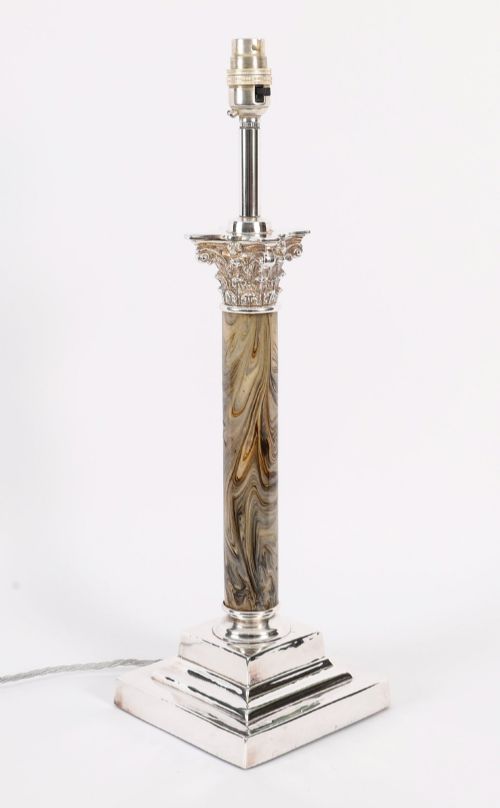
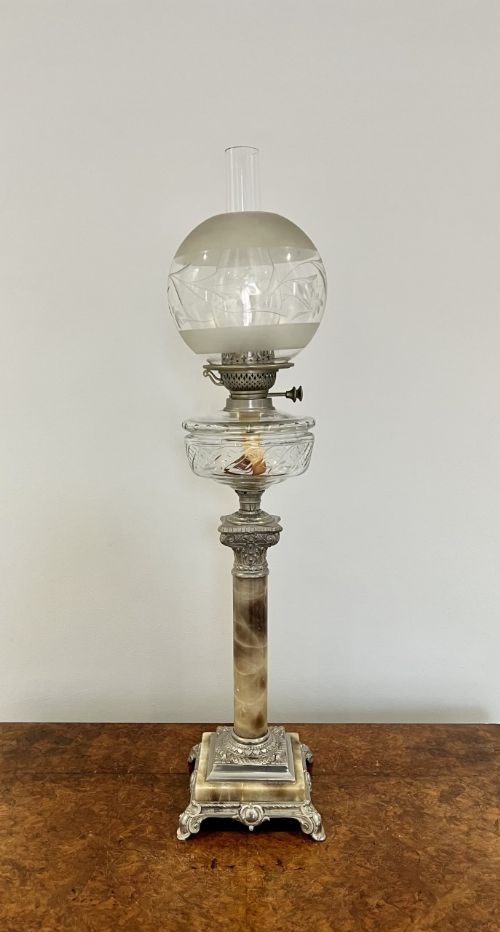
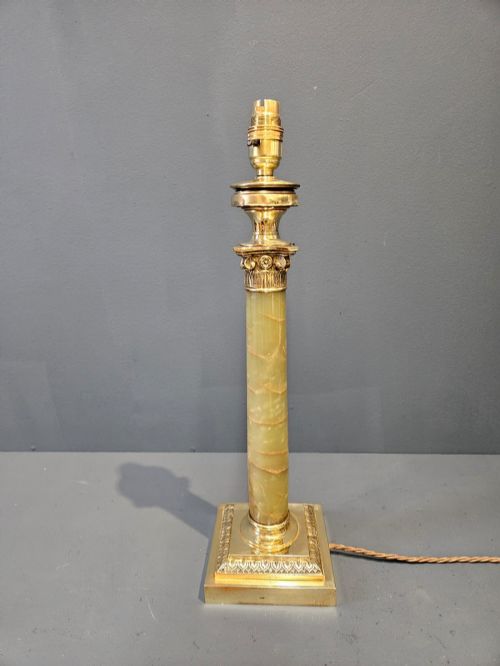
Most examples deploy a vertical column aesthetic rooted in classical revivals, frequently pairing turned stone shafts with cast metal capitals and bases. Surviving forms range from round wine tables with gilt supports to oil and electricity lamps bearing Corinthian capitals.
Origins stretch from late nineteenth century Victorian and Edwardian workshops into the early decades of the twentieth century. French influence appears in decorative mouldings, ormolu mounts, and chiseled brass details applied to the core stone structure.
Materials and construction
Makers utilised solid natural onyx for the main columns and tabletops, prized for its translucent banding and polished finish. This stone pairs structurally with brass, ormolu, and silver plate utilised for structural mounts, Corinthian capitals, and decorative feet.
Foundry work supplied the cast metal components such as floral mouldings and stepped bases, which anchor the dense stone shafts. Secondary elements incorporate glass, fabric shades, and occasionally marble to complete the functional lamps and display tables.
Onyx Column Table Retail Price Guide 2026
Typical asking prices for onyx column table among the pieces listed under this phrase on Sellingantiques today, from the lower quarter to the upper quarter. They describe what is for sale here now, not the wider market.
Current listings demonstrate a concentration of items from the Victorian era up through the nineteen-thirties, spanning lighting and small furniture.
Judging the standard of execution
Superior items exhibit crisp casting in the brass or ormolu mounts, where fine chiselling defines the acanthus leaves and fluting on Corinthian capitals. Weaker examples show softer metal detail and less uniform polish across the stone surfaces.
The integration between stone and metal distinguishes finer commissions from standard production. Tight mechanical joints and substantial gauge brass indicate higher workshop standards than loose fittings or thin sheet metal components.
The Onyx Column Table Glossary
- Onyx
- A form of banded chalcedony or calcite prized for decorative furniture and lamp columns. Its translucent layers display natural mineral variations.
- Corinthian Column
- A classical architectural order featuring an ornate capital decorated with rows of acanthus leaves. This motif appears frequently on lamp standards and table supports.
- Ormolu
- Gilt bronze created by applying finely ground gold mercury amalgam to cast bronze. It provides a rich golden surface finish on decorative mounts.
- Garniture
- A set of matching ornamental objects designed for display together, such as a mantel clock accompanied by matching side pieces.
Onyx Column Table: Frequently Asked Questions
How do I date an onyx table?
Dating relies on examining the metalwork techniques, assembly methods, and stylistic revival cues present in the piece.
Late nineteenth century examples often display heavy cast brass and ormolu mounts, while twentieth century items incorporate simpler chiseled brass work.
Where were these pieces made?
Production occurred across British and continental European workshops influenced by classical revival design movements.
French makers frequently contributed elaborate ormolu mountings and chiseled brass details to round top tables and clock garnitures.
How do I clean onyx stone?
Maintenance requires gentle dusting with a soft, dry cloth to protect the polished mineral surface from abrasion.
Moisture and harsh chemical cleaners should be avoided entirely to preserve the natural lustre of the banded stone.