



Onyx Column Pedestal
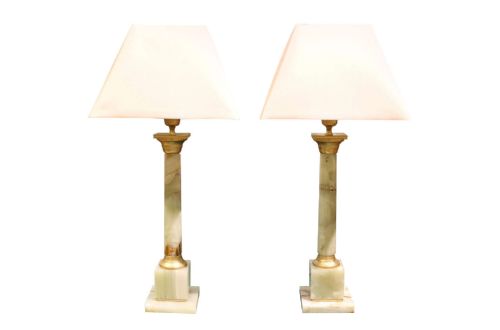
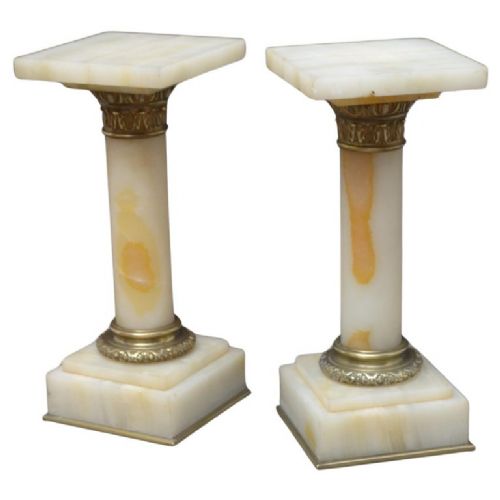
These onyx column pedestal pieces bring striking height and classic mineral grain to a room.
Onyx Column Pedestal
An onyx column pedestal stands as a vertical display stand for sculpture, urns, or plants, elevating decorative objects above floor level. Buyers seeking an onyx column pedestal encounter vertical display furniture spanning the nineteenth century, Edwardian era, and early twentieth century. Most examples belong to the nineteenth century and lean into neoclassical or classical revival vocabulary.
The assortment on this page includes tall torchere columns, paired shafts, and lower pedestal tables with round tops. Forms range from slender plant stands to robust architectural columns mounted with bronze or brass collars. Origins stretch across French chateau traditions and nineteenth-century classical revivals.
Materials and Construction
Makers built these stands using natural stone shafts of onyx and marble, paired with metal mounts in ormolu, brass, gilt bronze, and standard bronze. The stone sections provide solid weight and distinct banding, while the metal components form decorative collars, bases, and flower mouldings.
Joinery and assembly relied on internal metal rods or threaded fittings to secure the stone drums and sections together. Gilt wood also appears alongside metal elements to accent the capitals and plinths of specific columns.
Onyx Column Pedestal Retail Price Guide 2026
Typical asking prices for onyx column pedestal among the pieces listed under this phrase on Sellingantiques today, from the lower quarter to the upper quarter. They describe what is for sale here now, not the wider market.
The documented periods on this page span the 19th Century, 1880, the Edwardian era, and 1930.
Assessing Quality and Execution
Superior examples display crisp chiselling on the bronze or ormolu mounts, where leaf and floral motifs retain sharp relief and clean edges. Poorer execution shows soft casting details and poorly aligned stone joints that interrupt the natural banding.
The selection of the onyx itself dictates visual success, with higher-grade pieces showing rich translucency and harmonious colour variation across the column shaft. Metal collars that fit flush against the stone without visible gaps demonstrate superior stonemasonry and metalworking collaboration.
The Onyx Column Pedestal Glossary
- Onyx
- A banded variety of chalcedony or calcite used for decorative columns and table tops. Its layered mineral deposits create natural parallel stripes across the stone surface.
- Ormolu
- Gilt bronze applied to furniture mounts and architectural hardware. The technique involves creating an amalgam of gold and mercury.
- Torchere
- A tall stand or ornamental candlestick designed to hold a light source or plant. In column form, it provides an elevated platform for display.
- Neoclassical
- A style reviving classical Roman and Greek architectural motifs. It manifests on these pedestals through regular fluting, classical collars, and formal symmetry.
- Plinth
- The lower square block or base supporting a column shaft. It provides stability and visual weight to the upright structure.
Onyx Column Pedestal: Frequently Asked Questions
What were onyx column pedestals used for?
These vertical stands functioned primarily to elevate decorative sculptures, bronze figures, or large floral urns within a grand interior. They lifted prized possessions into the line of sight and added architectural rhythm to nineteenth-century reception rooms.
Lower variations served as small display tables or plant stands holding potted greenery. Their sturdy stone tops provided a stable, water-resistant surface for living plants and heavy decorative objects.
How do I style an onyx column pedestal?
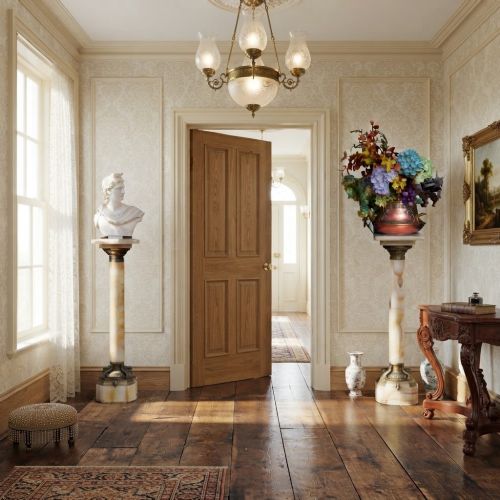
Place a single tall column in an empty hallway corner or flanking a fireplace to draw the eye upward and utilise vertical space. Pair matching columns on either side of a doorway or sideboard for formal symmetry.
Keep the item placed on top proportional to the capital of the column so the silhouette remains balanced. Avoid overcrowding the room, allowing the natural stone grain and metal collars to stand out as focal points.
How can I tell periods apart?
Nineteenth-century examples often lean heavily on classical revival vocabulary, featuring rich ormolu collars and detailed neoclassical bronze mounts. Edwardian and 1930s variations introduce simpler brass elements and two-tier plant stand configurations.
Look at the casting quality of the metalwork and the specific styling of the mouldings to gauge the era. French chateau influences typically display more intricate floral mouldings and gilt wood accents compared to later, plainer designs.
Are these pedestals solid stone?
The vertical shafts and tops are carved from genuine onyx and marble, giving these pieces substantial physical weight. They rely on the heavy natural stone to remain stable while supporting top-heavy objects.
Internal metal rods often run through the centre of the stone sections to hold the column securely together from base to capital. Metal components like ormolu or brass form the decorative collars and mountings fitted around the stone.