
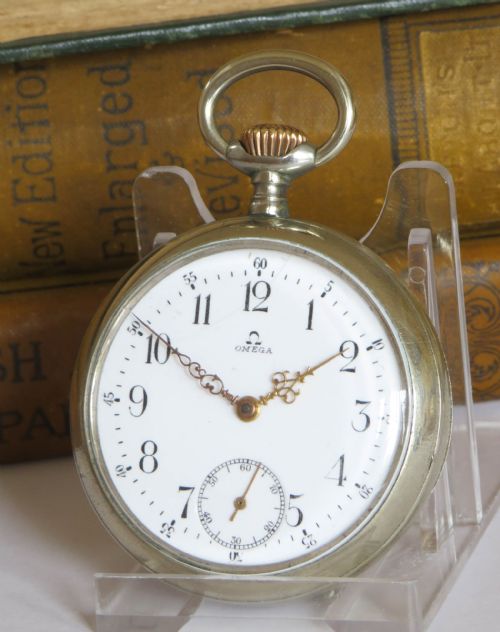
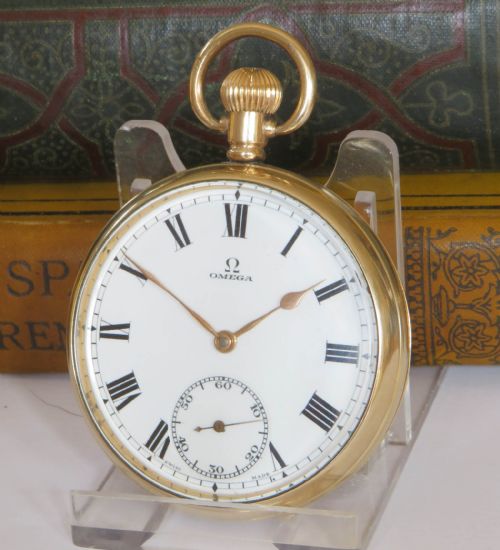
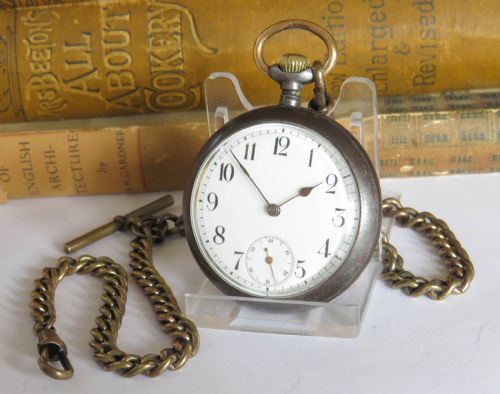
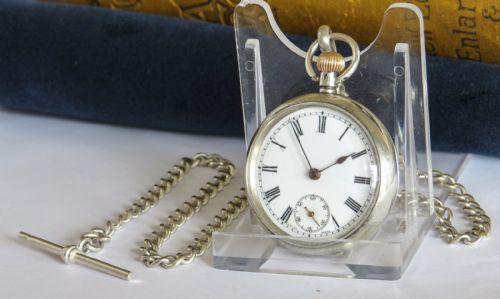
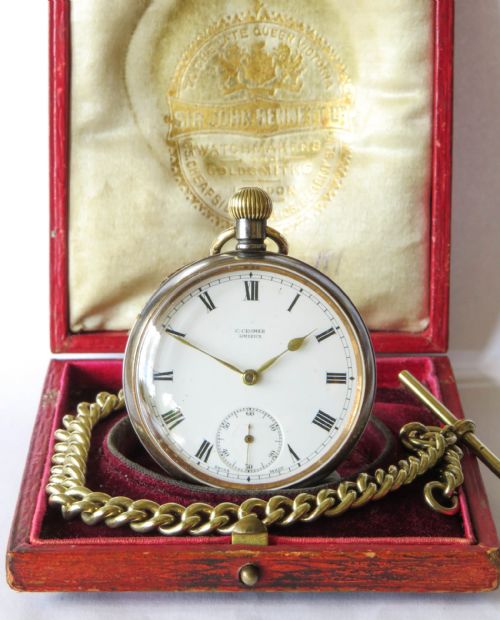
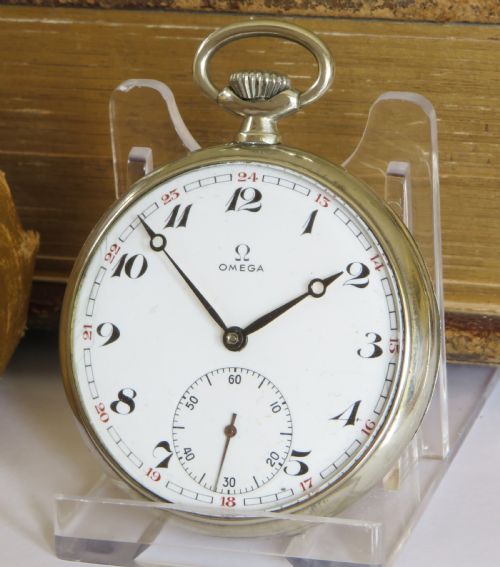


Omega Open Face Watch
An omega open face watch brings reliable Swiss movement and clean dial visibility together in a portable format you can carry every day.
Omega Open Face Watch
An omega open face watch is a portable timepiece designed without a protective front cover, allowing the dial to be read at a glance. When you search for this phrase, you meet pocket watches spanning the Edwardian, Art Deco, and Mid-Century periods.
The inventory on this page includes standard pocket watches, fob watches, and larger goliath variants alongside specialised split second rattrapante models. These pieces originate from the early twentieth century through to the mid-twentieth century.
Silver, gunmetal, gold plate, and nickel-plated metal provide the primary housing for these mechanisms. Enamel dials and glass crystals complete the construction of the examples listed here.
How they were made
Makers housed precision movements inside robust metal cases fabricated from silver, brass, steel, and gunmetal. Enamel dials received kiln-fired numeric markings and delicate subsidiary seconds tracks.
Protective glass crystals were fitted over the faces to shield the hands while maintaining clear visibility. External metal cases often incorporated integrated chains and fob attachments for secure pocket carrying.
The inventory here spans six decades of production, moving from late Victorian and Edwardian pieces through Art Deco into Mid-Century designs.
What varies in quality
Quality differences emerge in the complexity of the internal movement and the durability of the outer case material. Standard timepieces contrast with sophisticated complications like the split second rattrapante mechanism.
The crispness of enamel dial printing and the finish of the metal casing separate standard production pieces from higher grade examples. Heavier goliath formats and precious metal housings represent the more substantial end of the range.
Omega·Louis Brandt And Frere
The Omega Open Face Watch Glossary
- Open face watch
- A pocket watch lacking a hinged metal cover over the dial, allowing immediate time reading. This design exposes the glass crystal directly to the user.
- Fob watch
- A smaller pocket watch designed to be attached to a short chain or ribbon known as a fob. These were frequently worn pinned to a waistcoat or garment.
- Rattrapante
- A chronograph mechanism featuring a split-second hand that times intermediate intervals. This complication uses two overlapping stopwatch hands.
- Goliath watch
- An unusually large pocket watch intended for travel use or desk placement rather than standard pocket wear. These heavy timepieces often featured eight-day movements.
Omega Open Face Watch: Frequently Asked Questions
What is an open face watch?
An open face watch is a timepiece without a hinged metal lid protecting the dial. This design permits immediate reading of the time without needing to open a cover.
The absence of a front lid exposes the glass crystal directly, which defined the standard format for functional daily timekeeping throughout the early twentieth century.
How do I wear a pocket watch?
Pocket watches attach to a waistcoat, belt loop, or buttonhole via a secure chain or fob. The watch rests inside the pocket until retrieved for reading.
Shorter fob chains keep the piece anchored securely, preventing accidental drops while carrying the watch during daily routines.
What does goliath mean?
A goliath refers to an oversized pocket watch built significantly larger than standard wearable timepieces. These were frequently used as travel clocks.
Their substantial dimensions housed robust mechanisms, including eight-day movements that required less frequent winding.
What is a split second watch?
A split second watch, or rattrapante, includes an additional chronograph hand that measures intermediate lap times. Pressing the pusher pauses one hand while the other continues.
This sophisticated complication allowed observers to time separate events simultaneously before resetting both hands together.