



Old Wooden Seat
An old wooden seat brings centuries of utilitarian craftsmanship straight into a modern hallway or garden.
Old Wooden Seat
Armchairs styled after traditional Turner's chairs also feature prominently, utilising solid English oak and beech construction. A watercolour painting of a garden seat from the early twentieth century rounds out the diverse object types recorded.
How they were made
Makers utilised durable native timbers including pine, English oak and beech to build pieces intended to withstand heavy domestic or ecclesiastical use. Surfaces were frequently left with a simple wax finish or coated in historic paint layers, such as grey or black pigments.
Joinery techniques relied on sturdy pegged joints and solid framing, particularly in the construction of box settles and heavy armchairs. Simple plank construction defines the church pews, balancing structural integrity with straightforward utilitarian design.
Old Wooden Seat Retail Price Guide 2026
Typical asking prices for old wooden seat among the pieces listed under this phrase on Sellingantiques today, from the lower quarter to the upper quarter. They describe what is for sale here now, not the wider market.
A solitary watercolour painting captures a quiet garden seat, proving that even artists could not resist sketching a place to sit.
What varies in quality
Quality in an old wooden seat rests upon the integrity of the timber and the preservation of its original surface treatment, whether waxed or painted. Pieces retaining their original structural joinery and untouched patination stand apart from those with extensive modern replacements.
The refinement of regional vernacular details also distinguishes individual examples, from the turned spindles of a Saxon-style armchair to the proportions of a multi-seater box settle.
The Old Wooden Seat Glossary
- Box settle
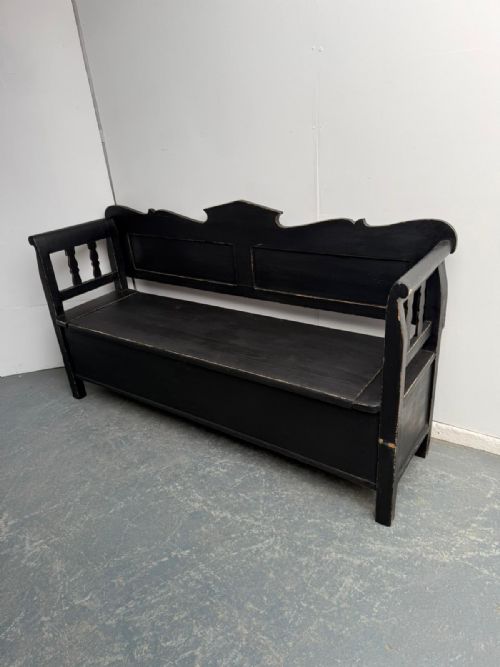
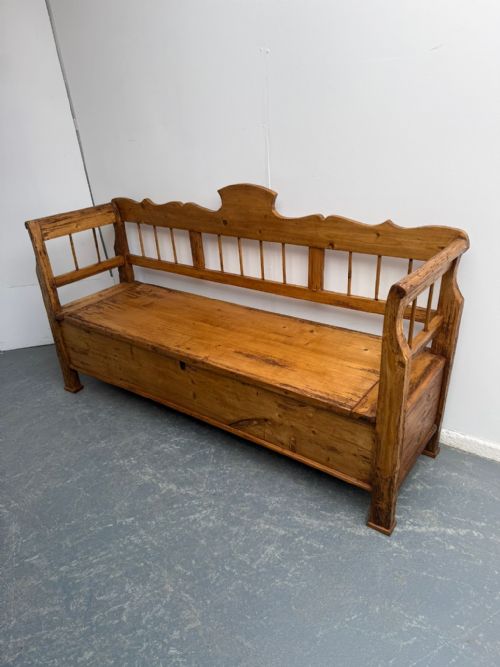
- A wooden bench featuring a high back, solid arms, and an enclosed storage compartment beneath the seat. This form protected occupants from drafts in older draughty properties.
- Church pew
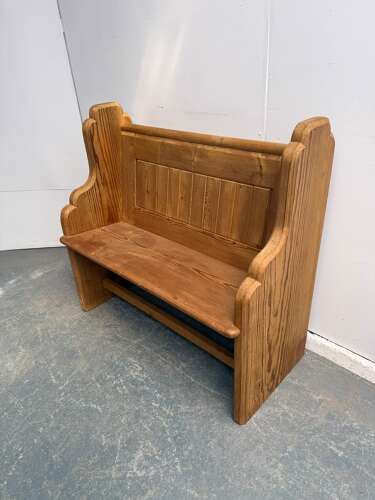
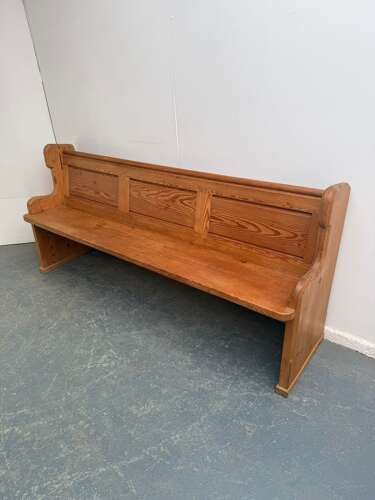
- A long wooden bench traditionally used for seating congregations in places of worship. They are typically constructed from pine and built to accommodate multiple sitters.
- Turner's chair
- A type of armchair constructed entirely from turned wooden members and spindles. These pieces often utilise English oak or beech and date back to revivalist interpretations of early forms.
- Waxed finish
- A surface treatment applied to timber to nourish the wood and provide a soft sheen. This method highlights the natural grain and age-related patination of pine and oak.
Old Wooden Seat: Frequently Asked Questions
What is an old wooden seat?
An old wooden seat encompasses historic practical furniture types such as church pews, box settles, and vernacular armchairs. These pieces were built from solid timbers like pine, oak, and beech for everyday use in domestic or institutional settings.
Today, they serve as functional furniture that introduces historic character and substantial seating capacity into hallways, kitchens, and living spaces.
How were box settles used?
Box settles served a dual purpose in historic homes by providing both a communal bench and a secure storage chest. The high back shielded sitters from cold draughts near open hearths, while the box beneath held household goods.
In modern interiors, this integrated storage makes them practical for stowing away boots, blankets, or everyday clutter while maintaining a traditional aesthetic.
How do I identify a church pew?
Church pews are characterised by their elongated linear form, designed to seat multiple people in institutional rows. They are predominantly constructed from pine and feature simple, robust framing intended to withstand heavy communal usage.
Their length ranges from single-seater versions to large multi-seater configurations, often finished with a traditional waxed coating that reveals the grain of the wood.
What woods were used?
Carpenters and joiners utilised native timbers that were readily available and structurally dependable for heavy furniture. Pine and English oak appear most frequently, supplemented by beech in turned components.
These woods were chosen for their durability and strength, allowing the furniture to survive decades of continuous use while developing a rich patination over time.