


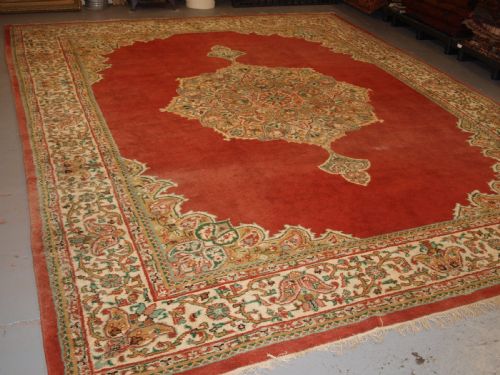
Old Turkish Rug
An old turkish rug brings genuine Anatolian warmth into a room through hand-knotted wool and time-softened natural dyes.
Old Turkish Rug
An old turkish rug represents centuries of weaving tradition originating from various regions across Anatolia, utilising wool and cotton foundations. These textiles range from smaller village rugs to large carpets bearing traditional geometric or medallion patterns.
Buyers will encounter distinct regional variations on this page, including pieces attributed to villages like Yahyali, Melas, Bergama, and Yagcebedir, alongside flat-woven kilims from Sharkoy. Most pieces date from the early decades of the twentieth century, specifically around the 1920s and 1930s.
The decorative styles span from Anatolian tribal motifs to classical Ottoman designs, often incorporating star medallions or prayer formats. These rugs serve both functional floor coverings and historical textile art for domestic spaces.
What varies in quality
The fineness of the knot count and the precision of the tribal or medallion design dictate the technical merit of an individual carpet. Tighter knots allow for sharper pattern definition and greater structural longevity underfoot.
The harmony and preservation of the colour palette also separate standard examples from superior ones, particularly where soft reds, ivory grounds, and pastel tones retain their original balance without harsh fading.
Old Turkish Rug Retail Price Guide 2026
Typical asking prices for old turkish rug among the pieces listed under this phrase on Sellingantiques today, from the lower quarter to the upper quarter. They describe what is for sale here now, not the wider market.
Certain village weavers embedded subtle tribal symbols into their borders, ensuring no two geometric carpets tell the exact same domestic story.
Maples
The Old Turkish Rug Glossary
- Kilim
- A flat-woven textile produced without a pile by tightly interweaving warp and weft strands. These rugs lack the plush surface of knotted carpets, offering crisp geometric designs instead.
- Medallion
- A central decorative motif placed in the field of a rug, often featuring star or classical Anatolian patterns. This focal element anchors the overall composition.
- Prayer Rug
- A specialised format featuring a niche or mihrab design at one end, historically oriented toward Mecca during daily devotions. Bergama examples frequently utilise this layout.
- Warp
- The stationary vertical threads stretched across the loom that form the structural skeleton of the rug. Fringe ends typically consist of these exposed foundational cords.
- Weft
- The horizontal threads passed through the warps to secure the knots and bind the rows together. Cotton is commonly employed for this structural role.
Old Turkish Rug: Frequently Asked Questions
Where were old turkish rugs made?
These textiles originate from specific weaving towns and villages across Anatolia, such as Yahyali, Melas, Bergama, and Ushak. Each region developed distinct local patterns and colour palettes.
Production also extended to areas like Sharkoy, yielding flat-woven kilims with characteristic banded or all-over designs.
Are these rugs suitable for high traffic?
Wool and cotton construction provides natural durability, making many of these vintage pieces robust enough for everyday domestic use. Dense pile carpets handle moderate foot traffic well.
Lighter flat-woven kilims require more mindful placement, often performing best in low-traffic areas or as wall hangings.
How do I identify a prayer rug?
Prayer rugs feature a distinct architectural arch or niche motif, known as a mihrab, at one end of the field. This design element directs the eye toward the focal point of the composition.
Historical examples, such as those from Bergama, utilise this specific format for devotional purposes.
What is the difference between a rug and a kilim?
A standard rug is hand-knotted, creating a raised pile surface that feels soft and substantial underfoot. These pieces showcase intricate medallion or tribal patterns built stitch by stitch.
A kilim is a flat-weave textile made without a pile, resulting in a lighter, reversible fabric defined by sharp geometric colour blocks.