



Old Storage Trunk
An old storage trunk brings centuries of practical domestic history into a modern room, offering robust utility wrapped in regional character and honest timber construction.
Old Storage Trunk
When searching for an old storage trunk, buyers encounter substantial wooden containers originally built for holding textiles, blankets, or household goods. The selections span compact boxes, mule chests fitted with drawers, and dome-top trunks fashioned for travel or domestic storage.
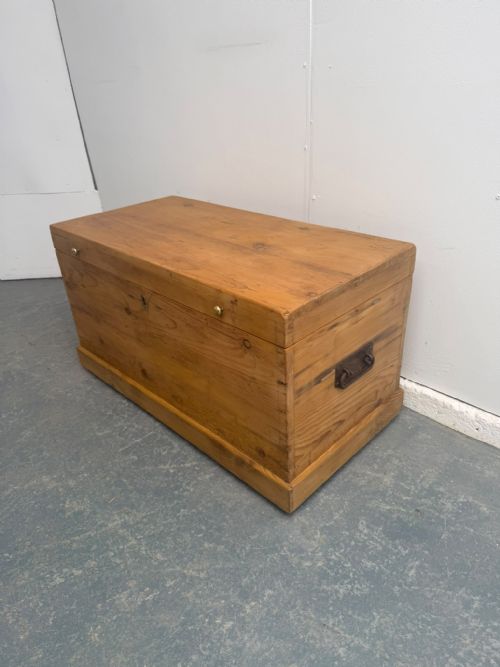
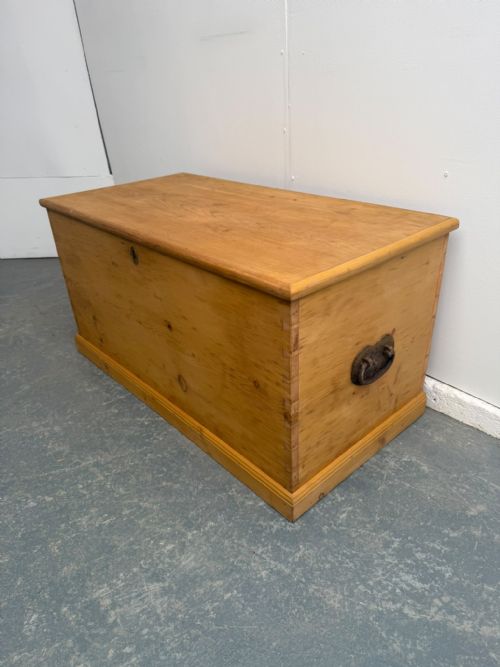
Pine dominates the available inventory, frequently found in waxed or originally painted finishes originating from British workshops and Hungarian folk traditions. Examples also appear in oak, complemented by iron and brass hardware that secured heavy lids against daily wear.
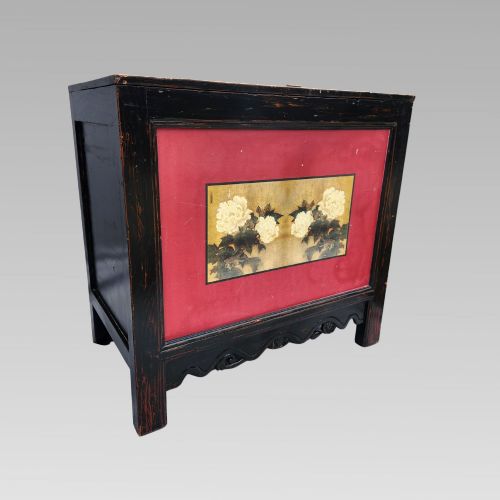
Period styles range from early Georgian and Regency pieces through to Victorian country examples and later twentieth-century items, including black lacquer Chinese chests decorated with floral chinoiserie. Many serve double duty in contemporary spaces as low coffee tables or television stands while retaining their historical compartments.
Construction and materials
Makers constructed these pieces primarily from solid pine and oak planks, joining corners with dovetailed or pegged joints designed to withstand heavy loads. Surfaces were either left natural and finished with wax or coated in layers of pigment and paint, sometimes featuring regional folk art decorations.
Metalwork played a structural and decorative role, with iron and brass hinges, lock plates, and side carrying handles fitted securely to the wood. Interior fitments often included smaller lidded compartments, known as tills, alongside lower drawer configurations seen in mule chests.
Old Storage Trunk Retail Price Guide 2026
Typical asking prices for old storage trunk among the pieces listed under this phrase on Sellingantiques today, from the lower quarter to the upper quarter. They describe what is for sale here now, not the wider market.
Listings feature periods spanning from the Georgian era and Regency through Victorian times up to nineteen-thirty, utilising pine, oak, iron, brass, paint, and lacquer.
Assessing quality and character
Quality rests upon the integrity of the timber construction, the survival of original painted or waxed surfaces, and the retention of period hardware such as locks and handles. Pieces retaining their internal candle boxes or original drawer configurations command greater interest from collectors.
The sophistication of the joinery and the presence of regional decorative elements, such as Hungarian folk painting or detailed chinoiserie lacquer, distinguish standard utility containers from finer vernacular pieces.
The Old Storage Trunk Glossary
- Mule chest
- A chest featuring one or more drawers beneath the main storage compartment, bridging the evolution from simple box to chest of drawers.
- Blanket box
- A large rectangular container traditionally used for storing woolen blankets and linens near the warmth of a hearth.
- Dome top
- A rounded lid profile designed to shed water during travel and provide additional vertical clearance inside the trunk.
- Chinoiserie
- European decorative style reflecting Chinese artistic motifs, often applied in gold and coloured lacquer over a dark ground.
- Till
- A small internal compartment built into the upper corner of a chest for holding small valuables and documents.
Old Storage Trunk: Frequently Asked Questions
How were these trunks used originally?
These trunks served as secure storage for valuable textiles, clothing, and blankets within domestic homes and during travel. Their robust construction also allowed them to double as seating benches or tables inside modest dwellings.
Over time, many adapted to changing household needs, transitioning from bedchambers to living spaces where they kept household items out of sight.
Can I use an old trunk as a coffee table?
Many low and wide examples function effectively as coffee tables, providing a stable surface for everyday items alongside hidden interior storage. Their flat lids and sturdy timber frames easily support books, trays, and decorative objects.
When selecting a trunk for this purpose, consider the height and width relative to your seating to ensure comfortable access.
How do I care for a waxed pine surface?
Maintain waxed pine surfaces by applying a traditional beeswax polish sparingly and buffing with a soft cloth to preserve the sheen. Avoid placing timber pieces near direct heat sources or in damp environments, which can cause the wood to warp or dry out.
Regular dusting with a dry cloth prevents dirt accumulation without harming the historic patina of the finish.
What is the difference between a chest and a trunk?
The terms are often used interchangeably, though trunks historically featured reinforced construction, handles, and rounded or flat lids suited for transit. Chests typically remained stationary items built into the architecture of a room or kept permanently against a wall.
Both forms prioritized deep interior storage accessed via a hinged top lid.