
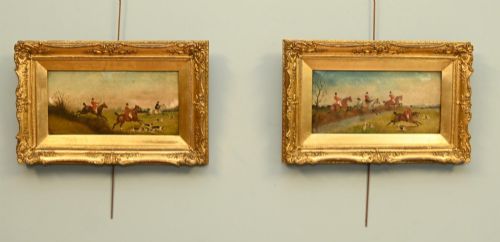
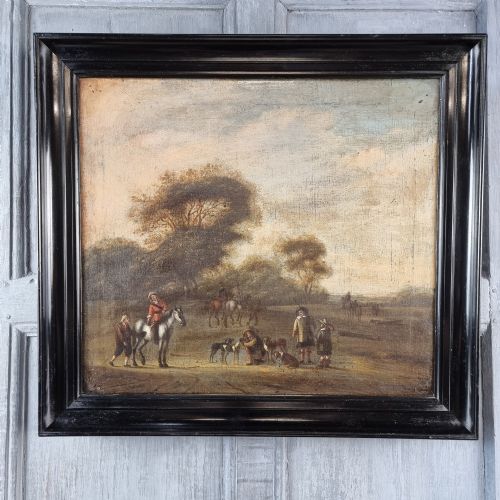


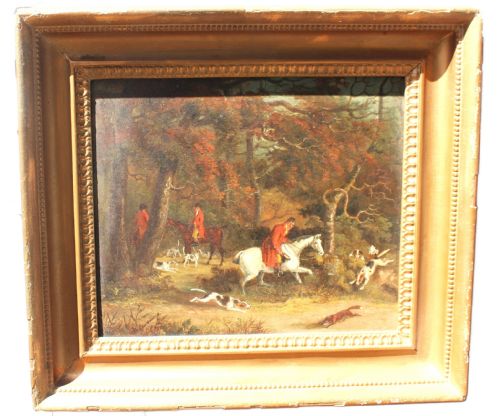


Oil Painting Horse Hounds
These oil painting horse hounds capture the movement and spirit of historic hunts, bringing traditional sporting life directly to your wall.
Oil Painting Horse Hounds
An oil painting horse hounds depicts the traditional English fox hunt, featuring huntsmen, mounted riders, and packs of hounds across rural landscapes. Most examples you will encounter on this page date from the nineteenth century, reflecting the peak of British sporting art.
The compositions range from sweeping landscape views with the hunt in full pursuit to detailed studies of horses and hounds gathered in farmyards or covert sides. Alongside works by named Victorian painters, you find pieces by the wider British School and continental artists working in similar realist traditions.
Earlier canvases stretch back to the seventeenth century with rustic landscapes, while mid-twentieth century works continue the traditional sporting genre. These paintings record specific hunts, notable packs like the Berkeley, and quiet pastoral moments before the chase begins.
Assessing quality
Quality rests upon the artist's command of anatomy and movement, separating stiff, formulaic renderings of horses and hounds from works that capture real physical tension and energy. The most successful paintings integrate the animals seamlessly into the surrounding landscape rather than treating them as isolated figures.
The handling of paint and light distinguishes standard archival records from superior works of art. Finer canvases show subtle brushwork in the coats of the hounds and the expressions of the huntsmen, whilst lesser examples rely on repetitive formulas.
George Wright·John Sanderson-Wells·Heywood Hardy·Guillaume Urban Régamey·George Goodwin Kilburne·Edward B Herberte·Wilfred Bailey·Henry Bernard Chalon·Philip Henry Rideout
The Oil Painting Horse Hounds Glossary
- Sporting art
- A genre of painting dedicated to depicting rural sports, including hunting, racing, and shooting. These works focus heavily on the accurate depiction of horses, hounds, and countryside.
- Giltwood
- Wood that has been covered with a thin layer of gold leaf or gold paint. This material is standard for traditional picture frames enclosing nineteenth-century canvases.
- Covert
- A thicket or woodland where foxes hide and hounds pick up the scent. Paintings often depict the gathering of horses and hounds at the edge of these woods.
- View halloo
- The shout given when the fox is sighted escaping the covert. Several nineteenth-century compositions capture this exact moment of sudden activity.
- British School
- A term used in art history to designate works by British artists whose specific individual identities remain unrecorded. These paintings share the stylistic traits of their period.
Oil Painting Horse Hounds: Frequently Asked Questions
What periods do these paintings date from?
The works span several centuries, with the majority originating in the nineteenth century during the height of British sporting art. You also find seventeenth-century Dutch landscapes and mid-twentieth century sporting scenes.
Most pieces carry dates or stylistic markers pointing to the Victorian era, though earlier Georgian examples and later twentieth-century interpretations appear regularly.
How were these paintings originally displayed?
Landowners and enthusiasts typically hung these canvases in country houses, libraries, and estate smoking rooms. They served as celebrations of rural pursuits and local hunts.
Many retain their heavy gilt wood frames, chosen to suit the formal domestic interiors of the period.
How do I care for an oil painting on canvas?
Keep the canvas away from direct sunlight and steady temperature fluctuations to prevent the oil paint from cracking. Dust the surface and the frame gently with a soft, dry brush.
Avoid using water or chemical cleaners on the paint surface. Professional conservators should handle any deeper cleaning.
How do I tell a named artist from the British School?
Named artists usually signed their canvases, often in the lower corners, and their works reflect distinct personal brushwork and compositional habits. Works attributed to the British School lack signatures but display the technical conventions of their era.
Archival records and exhibition histories help connect unsigned paintings to known artistic circles.