

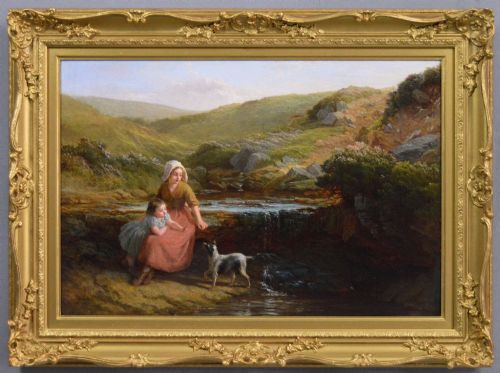
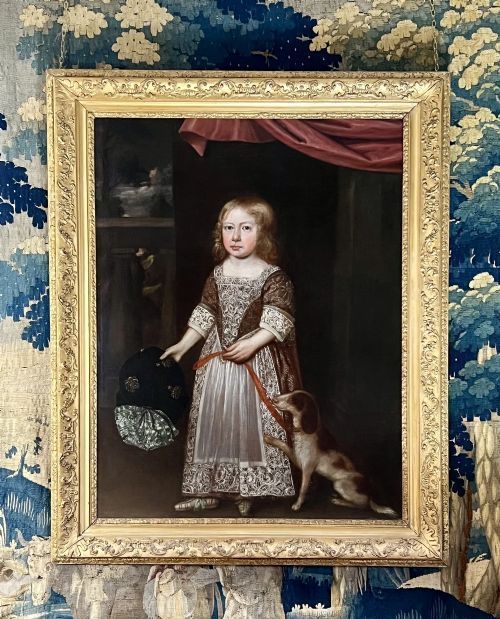


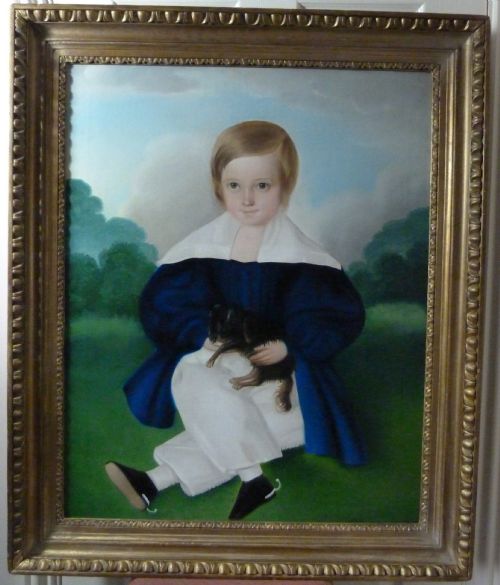


Oil Painting Child Dog
An oil painting child dog captures a quiet companionship across centuries, bringing warmth and character into a room through traditional portraiture.
Oil Painting Child Dog
An oil painting child dog depicts young subjects alongside their canine companions, spanning periods from the seventeenth century through to the mid twentieth century. These works range from formal British portraits to provincial folk art and naive representations.
The most common examples on this page are nineteenth century pieces, including Victorian and Regency works executed in oil on canvas or panel. They record domestic bonds, aristocratic children with spaniels, and simpler provincial renderings of youths and pets.
Materials and construction
These works are executed using oil paint applied to canvas or wood panels, often set within gilt wood or giltwood frames. The ground preparation and pigment layering reflect the working methods of British and European schools from the seventeen hundreds onward.
Support materials include stretched canvas and wooden panels, with occasional structural interventions such as historical repairs to the reverse. Gilt frames provide the traditional surround for these oil paintings.
Oil Painting Child Dog Retail Price Guide 2026
Typical asking prices for oil painting child dog among the pieces listed under this phrase on Sellingantiques today, from the lower quarter to the upper quarter. They describe what is for sale here now, not the wider market.
Assessing quality
The standard of execution separates academic portraiture by named artists from provincial folk art and naive school pieces. Finer works display sophisticated handling of textile, expression, and canine anatomy, whereas naive examples rely on charm and directness.
Compositional complexity and the depth of the oil medium dictate the visual impact. Works from established circles or academic painters demonstrate superior draughtsmanship compared to anonymous provincial school outputs.
Edward Holmes RBA·John Alfred Wheeler·Mary Beale·Frank Owen Salisbury·Richard Buckner
The Oil Painting Child Dog Glossary
- Oil on canvas
- A painting medium where pigment suspended in drying oils is applied to a stretched fabric support. This combination forms the primary medium for the majority of works on this page.
- Giltwood
- Wood carved and covered with a thin layer of gold leaf or gilt. It provides the decorative framing typical of nineteenth century and earlier portraiture.
- Naive art
- Artwork produced by an artist lacking formal training, characterised by a childlike perspective and direct application. These pieces often appear in nineteenth century folk art contexts.
- Panel
- A rigid wooden support used as a base for oil painting instead of canvas. Panel paintings frequently date to earlier centuries or specific regional traditions.
Oil Painting Child Dog: Frequently Asked Questions
What periods do these paintings cover?
The works span from the seventeenth century up to the twentieth century, including seventeenth century portraits, Regency and Victorian pieces, and mid twentieth century examples.
This broad timeline demonstrates how the pairing of a child and dog remained a enduring subject across changing artistic movements and provincial schools.
How were these artworks created?
Artists utilised oil paint applied to canvas or wood panels, building up layers of pigment to capture both the subject and the animal companion.
Many of these paintings retain their original or period gilt wood frames, completing the traditional presentation of the work.
What is naive folk art?
Naive folk art refers to paintings created outside the formal academic tradition, often by provincial or self taught artists who prioritised direct expression.
These pieces offer a distinct aesthetic character compared to formal portraits from established European schools.
How do I care for an oil painting?
Keep the canvas away from direct sunlight and dramatic fluctuations in temperature and humidity to protect the oil paint and wooden stretcher.
Dust the surface gently with a soft, dry brush and avoid using liquid cleaners on either the canvas or the gilt frame.