


Oil Painting Cattle Art
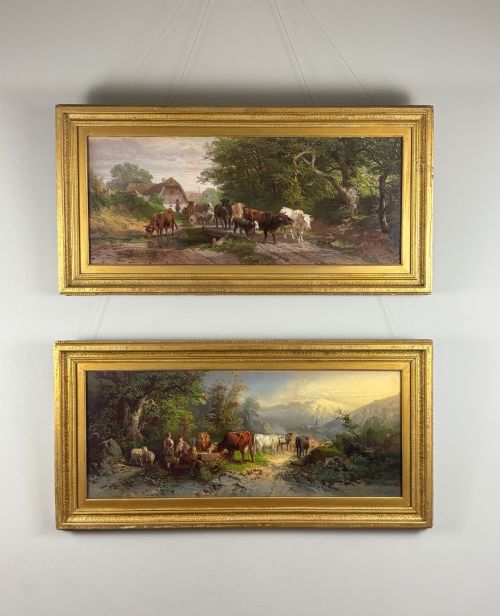
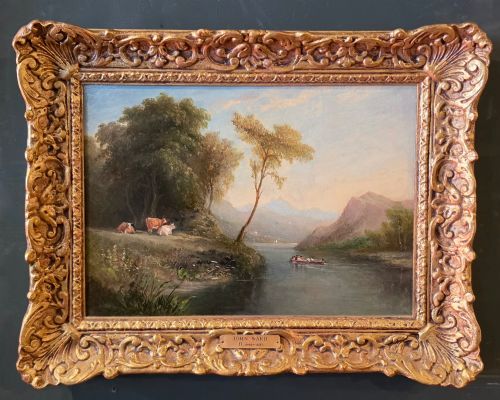
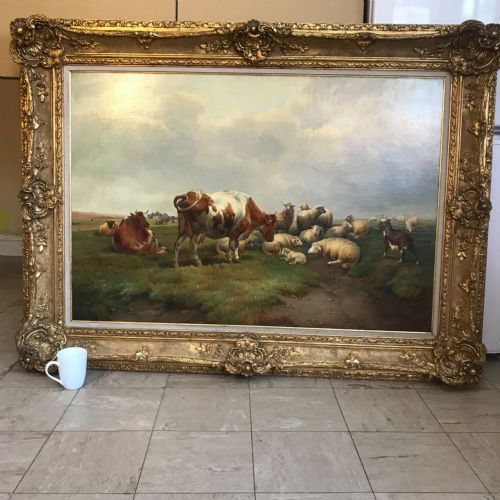
Oil painting cattle art captures the rustic pastoral charm of nineteenth and early twentieth century rural life through skilled brushwork on canvas.
Oil Painting Cattle Art
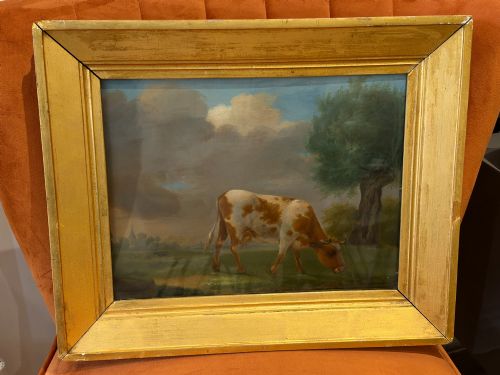
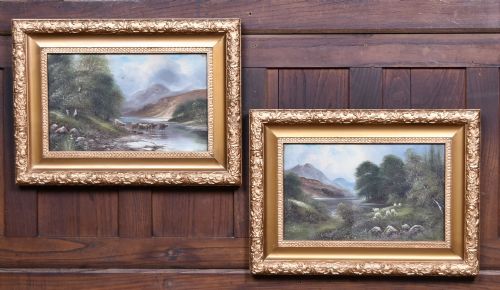
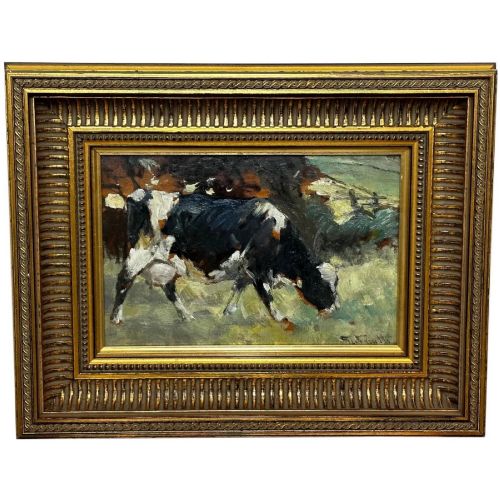
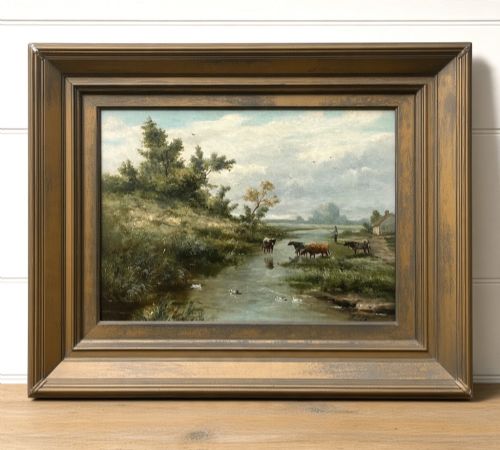
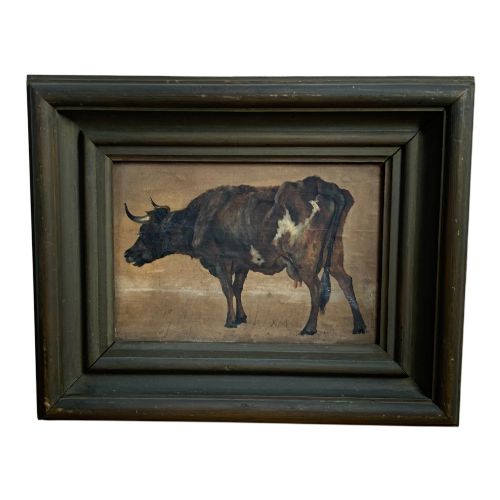
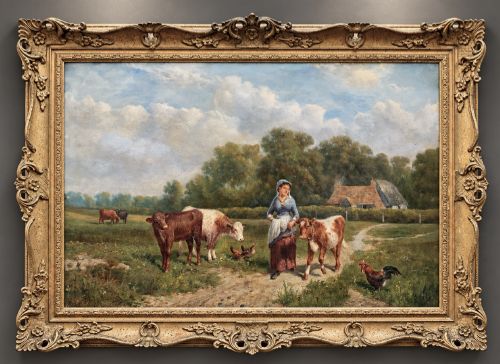
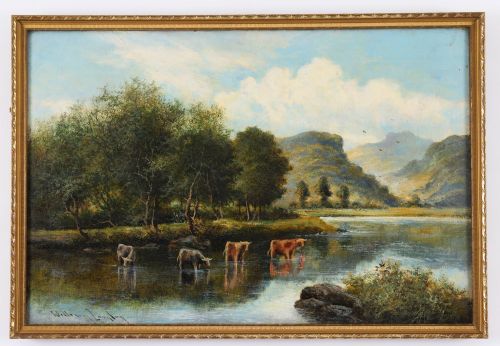
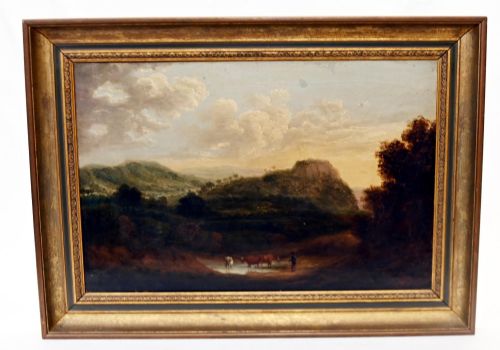
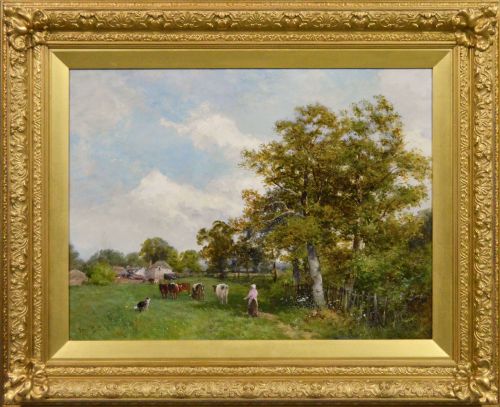
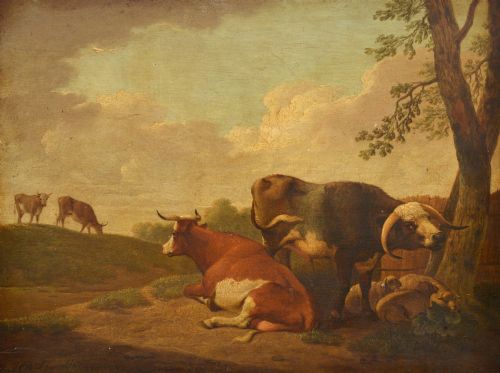
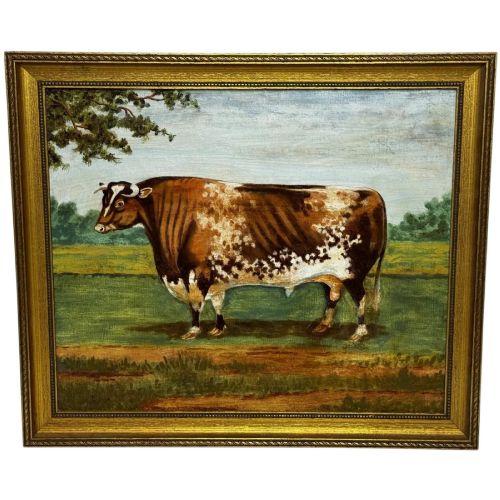
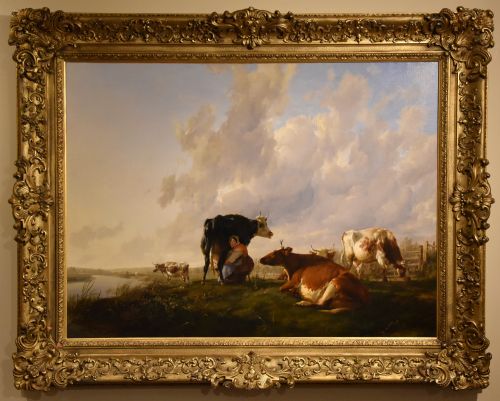
Oil painting cattle art centres on pastoral landscapes, farmyard scenes and detailed animal portraits created during the nineteenth and early twentieth centuries. A buyer is most likely to encounter Victorian and Edwardian works depicting cows, bulls and Highland cattle grazing by streams, lochs or rural pastureland.
These works range from intimate rural studies to large framed canvases featuring cattle alongside figures, milkmaids or castle ruins. British and European schools dominate the selection, showing animals in varied settings from Scottish highlands to pastoral river valleys.
Distinctions in Quality
Quality in oil painting cattle art rests upon the anatomical precision of the animals, the atmospheric depth of the surrounding landscape, and the expressiveness of the brushwork. Master painters capture the weight and posture of cattle with acute realism, whereas lesser works rely on formulaic repetition without individual character in the animals.
The handling of natural light and tonal harmony across the canvas further separates standard decorative pictures from works by recorded nineteenth century artists. Original period frames finished in giltwood or gesso that match the era of the painting add considerable integrity to the piece.
Oil Painting Cattle Art Retail Price Guide 2026
Typical asking prices for oil painting cattle art among the pieces listed under this phrase on Sellingantiques today, from the lower quarter to the upper quarter. They describe what is for sale here now, not the wider market.
The site listings feature works spanning the nineteenth and early twentieth centuries, rendered in oil paint on canvas and wood with giltwood frames.
William Langley·Samuel Joseph Clark·William H Myers·Thomas Sidney Cooper·Henry H Parker·Robert Watson·Robert Cleminson·Johannes de Haas·Henry Robinson Hall·George Vicat Cole·Sidney Richard Percy·Heinrich Harder·James de Rijk·Eugene Verboeckhoven
The Oil Painting Cattle Art Glossary
- Oil on Canvas
- A painting medium where oil-based pigments are applied to a woven fabric surface stretched across a wooden frame. This combination allows for lasting durability and rich colour blending.
- Giltwood
- Wood carved and coated with a thin layer of gold leaf or gold-coloured metallic finish. It appears frequently on nineteenth-century picture frames.
- Gesso
- A traditional paint mixture consisting of a binder mixed with chalk, gypsum, or pigment, used to prepare wood surfaces for gilding or painting. It forms the base of ornate decorative mouldings on frames.
- Pastoral Landscape
- An artistic genre depicting idealized rural life, countryside views, and grazing livestock. These scenes emphasise peace and harmony in nature.
- British School
- A term used to classify artists trained or working within Britain during a specific historical period. It groups works sharing regional stylistic traits.
Oil Painting Cattle Art: Frequently Asked Questions
What periods do these paintings come from?
The available selection spans the nineteenth century, the Victorian era, and the early twentieth century up to the Edwardian period. Artists of these decades frequently captured rural and pastoral subjects with detailed realism.
Most pieces date from between eighteen-eighty and nineteen-twenty, reflecting the height of British and European landscape painting traditions.
How were these cattle paintings displayed originally?
These works were created to be prominently displayed in domestic reception rooms, parlours, and country houses within substantial decorative frames. The ornate giltwood and gesso settings were designed to catch ambient light and complement interior furnishings.
Today, they suit similar traditional living spaces or create a deliberate contrast in modern minimalist interiors.
How can I tell different artists apart?
Distinguishing between hands involves examining brushstroke techniques, the specific treatment of light on cattle flanks, and background scenery details. Signature styles often reveal whether a work originates from the Scottish school, the British countryside tradition, or continental European studios.
Signatures, monograms, and exhibition labels on the canvas reverse or frame provide definitive attribution when present.
Are these paintings on canvas or board?
The listings comprise works executed primarily in oil paint on stretched canvas or occasionally prepared wooden boards. Canvas supports allowed artists to work in large formats suitable for expansive highland and pastoral vistas.
Both canvas and board formats were standard practice for professional painters throughout the nineteenth and early twentieth centuries.