

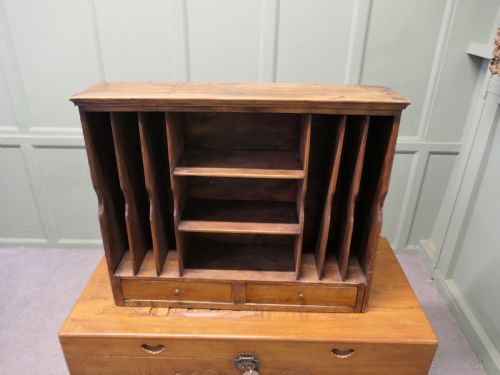


Office Pigeonholes
Office pigeonholes are practical sorting furniture offering deep compartments for paperwork and correspondence, prized for bringing authentic workspace organisation into modern rooms.
Office Pigeonholes
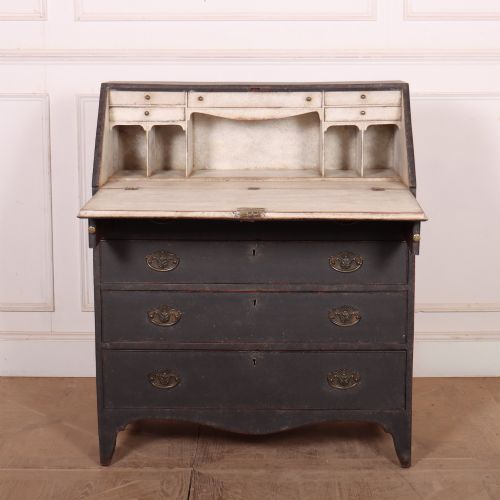
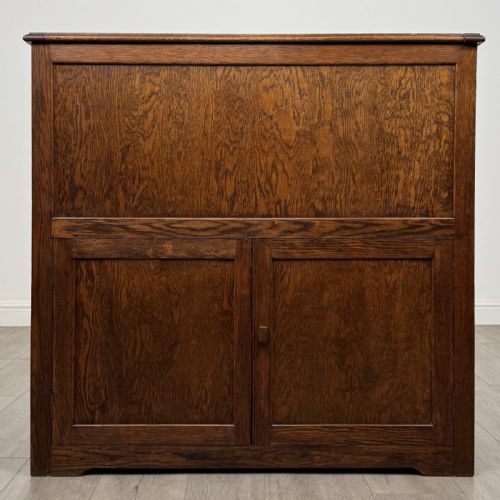
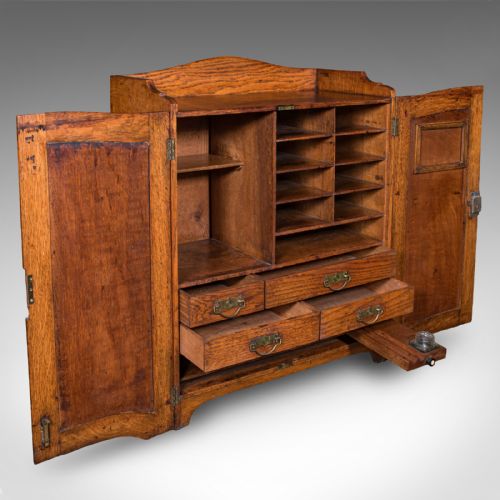
Office pigeonholes comprise utilitarian sorting furniture designed to organise documents, letters and correspondence within professional and domestic settings. They appear in forms such as fitted cupboards, clerk cabinets, desk organisers and filing shelves.
The versions most commonly met span the nineteenth and early twentieth centuries, drawing on Victorian, Edwardian and industrial rustic styles. These pieces frequently integrate into larger desks, bureaus or standalone storage shelving units.
Origins range across British, Scottish and French traditions, reflecting both stately estate management and postal administration. Their primary function remains the compartmentalised division of paper goods.
How They Were Made
These items rely principally on sturdy hardwoods and softwoods such as oak, mahogany, walnut and pine. Timber construction provides the structural integrity needed to support numerous open compartments and heavy shelving.
Details such as brass fittings and bone elements appear on select doors, handles and labelling inserts. Leather surfaces occasionally line writing slopes or desk components associated with these organizational pieces.
Office Pigeonholes Retail Price Guide 2026
Typical asking prices for office pigeonholes among the pieces listed under this phrase on Sellingantiques today, from the lower quarter to the upper quarter. They describe what is for sale here now, not the wider market.
Some gamekeepers required specialised estate cabinets to keep track of estate records alongside the day's bag.
What Varies in Quality
Quality separates ordinary utility pieces from finer cabinetwork through the selection of timber and the precision of the compartment joinery. Superior examples utilise dense oak or figured mahogany with cleanly dovetailed pigeonhole dividers.
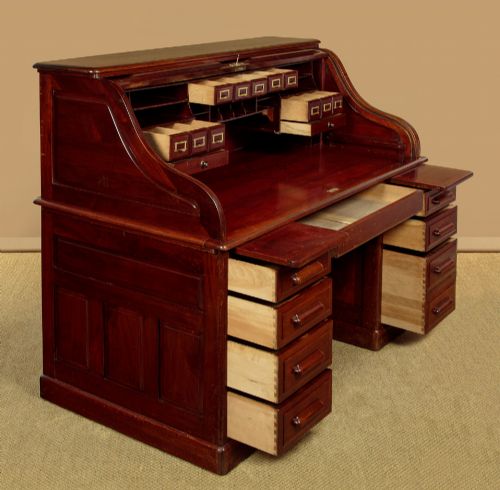
The degree of integration within larger furniture forms, such as roll top desks or bureau cabinets, influences the sophistication of the piece. Simpler utilitarian filing shelves contrast with elaborate estate gamekeeper cabinets and fitted secretaries.
The Office Pigeonholes Glossary
- Pigeonholes
- Compartments arranged in rows and tiers for storing letters, documents or papers. They take their name from the resemblance to nesting boxes for pigeons.
- Bureau cabinet
- A writing cabinet featuring a sloping flap that conceals drawers and pigeonholes above enclosed shelving. It combines workspace functionality with secure storage.
- Roll top desk
- A writing desk with a flexible slatted wooden tambour top that pulls down to cover the pigeonholes and writing surface. This mechanism conceals the work area when not in use.
- Clerk cabinet
- A compact storage piece utilised by administrators and estate managers for record-keeping. These units often incorporate numerous small sorting slots.
- Filing shelf
- An open or semi-enclosed rack designed to hold sorted papers in an accessible vertical arrangement. French variations often reflect postal sorting traditions.
Office Pigeonholes: Frequently Asked Questions
What are office pigeonholes?
Office pigeonholes are partitioned storage units featuring multiple small compartments designed for sorting letters, documents and stationery. They range from standalone wooden cabinets to fitted interiors within larger desks and cupboards.
Historically utilised in administrative settings, post offices and estate offices, these pieces keep papers organised in accessible stacks. Today they serve practical storage functions in studies and home offices.
How were office pigeonholes used?
These compartments were used to sort incoming and outgoing correspondence, administrative records and daily paperwork. Clerks and officials placed documents into specific slots to keep paperwork sorted by category or recipient.
In modern interiors, they function similarly for sorting mail, holding stationery or displaying small collections. Their compartmentalised design keeps flat items visible and separated.
How do I date an antique pigeonhole unit?
Dating relies on observing timber choices, construction techniques, hardware and stylistic cues. Pieces from the Regency and Victorian eras often feature mahogany or oak with hand-cut joinery, while early twentieth-century examples shift towards industrial rustic or Edwardian office designs.
Associated furniture forms, such as roll top desks or bureau cabinets, also help establish the manufacturing period. Examining the backs and interior linings reveals period-specific manufacturing methods.
How do I live with office pigeonholes?
Living with these pieces involves placing them on desks, tabletops or mounting them where their open compartments remain easily reachable. They suit home offices, kitchens or living areas as functional shelving for everyday sorting.
Care requires basic dusting of the individual compartments and conditioning the wood surfaces periodically. Their structured design brings an orderly, traditional aesthetic to modern spaces.