

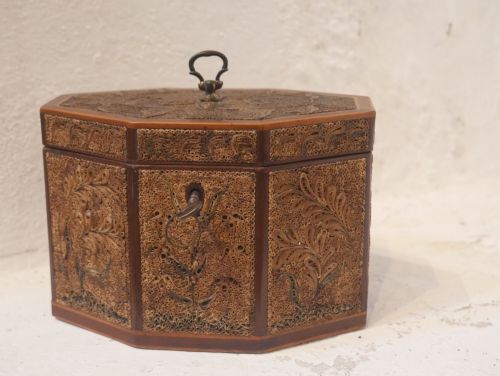


Octagonal Tea Box
An octagonal tea box is a Georgian or Regency container built to store precious dry leaf safely away from damp and air.
Octagonal Tea Box
When you search for an octagonal tea box, you encounter eight-sided receptacles spanning the eighteenth and nineteenth centuries. The pieces on this page include George III satinwood examples, Regency tortoiseshell containers, and mahogany versions.
Most entries belong to the Georgian and Regency periods, utilising timber or shell construction to house tea leaves securely. You also meet Chinese export pieces and occasional teapoys on stands within the selection.
How they were made
Cabinetmakers constructed these boxes using hardwoods such as mahogany, satinwood, and partridge wood, often shaping them with eight distinct facets. Workshops also applied delicate boxwood and shell inlays to enrich the geometric surfaces.
Tortoiseshell variants demonstrate specialised veneering techniques over a structural core, while lacquer examples display layered oriental finishes. Metal fittings such as brass hinges and escutcheons complete the assembly.
Octagonal Tea Box Retail Price Guide 2026
Typical asking prices for octagonal tea box among the pieces listed under this phrase on Sellingantiques today, from the lower quarter to the upper quarter. They describe what is for sale here now, not the wider market.
Periods represented span from the 18th century and George III through the Regency and William IV eras into the 1920s.
What varies in quality
The sophistication of the timber figure and the precision of the inlay set the finer examples apart from simpler containers. Grain selection across the eight panels demonstrates the maker's intent to create a unified visual rhythm.
Interior arrangements, including original mixing bowls and lidded compartments, distinguish complete boxes from altered pieces. The integrity of the tortoiseshell veneer or the sharpness of the brass mounts also indicates higher standards of construction.
Gillows
The Octagonal Tea Box Glossary
- Tea caddy
- A container designed for storing tea leaves. The term evolved from catty, the Chinese unit of weight.
- Teapoy
- A freestanding piece of furniture featuring a tea box mounted on a pillar and feet, or a small side table designed for serving tea. They frequently date from the Regency period.
- Satinwood
- A durable hardwood with a lustrous golden yellow sheen utilised extensively by Georgian cabinetmakers for decorative veneers and stringing.
- Escutcheon
- A small protective brass plate surrounding the keyhole of a tea box. It prevents the wood from splitting around the lock.
Octagonal Tea Box: Frequently Asked Questions
What is an octagonal tea box?
An octagonal tea box is an eight-sided lidded container built to keep loose tea leaves fresh and secure under lock. These pieces date predominantly from the Georgian and Regency eras.
Cabinetmakers shaped them from dense hardwoods and exotic veneers to sit on reception room tables. Their multi-faceted geometry catches the light differently than standard rectangular chests.
How were tea boxes used?
Households used these boxes to store expensive black and green teas safely under lock and key. Servants or hosts brought the container to the table when preparing tea for guests.
Inside, lidded canisters kept different varieties separated, while some boxes included a central glass bowl for blending. The key remained with the master of the house to control consumption.
How do I date an octagonal tea box?
Dating relies on observing the timber species, inlay styles, and hardware construction methods. Eighteenth-century examples often feature satinwood, harewood, or delicate shell marquetry.
Regency pieces lean towards tortoiseshell, bold mahogany grains, or heavier brass paw feet. Looking inside reveals whether interior canisters and lining papers remain contemporary with the exterior shell.
What is the difference between a tea caddy and a teapoy?
A tea caddy is a portable box designed to sit upon a table, sideboard, or tea chest. A teapoy is a larger piece of furniture that incorporates a tea box on a central pillar or legs.
While caddies were lifted about the room as needed, teapoys stood permanently in the parlour. Both served the same fundamental purpose of housing dry tea leaves.