




Octagonal Glass Mirror
An octagonal glass mirror brings geometric clarity to a room, framing reflections with sharp angles and period charm.
Octagonal Glass Mirror
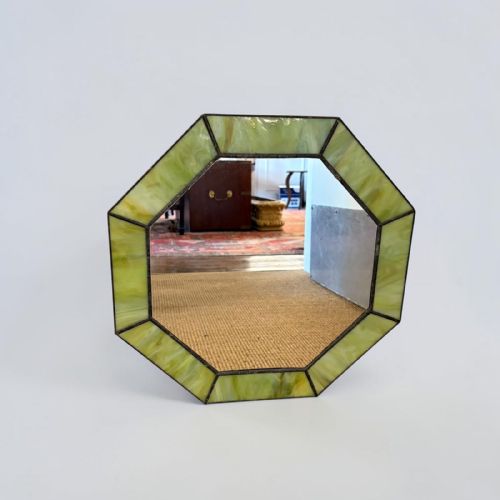
An octagonal glass mirror provides a distinct geometric silhouette that stands apart from standard oval or rectangular wall hangings. These pieces appear across several periods, most notably in Art Deco designs from the early decades of the twentieth century.
The selection here includes frameless wall mirrors alongside framed examples in woods such as oak and walnut, plus metal elements like copper and brass. Venetian and Italian origins appear frequently, bringing decorative cut glass and cushion profiles to the form.
Buyers seeking an octagonal glass mirror will encounter both compact display stands and larger wall-hung versions. The variety spans Victorian workshops through to the clean lines of nineteen-thirtyism.
How they were made
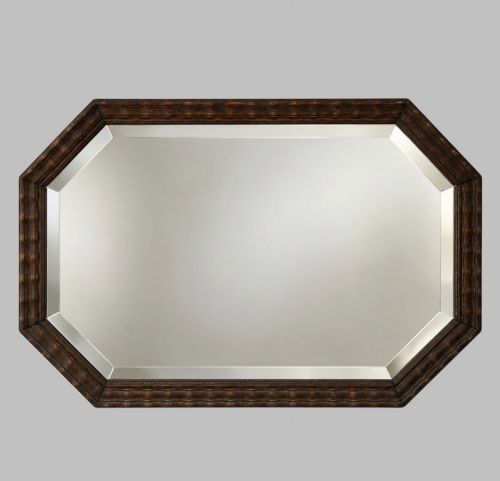
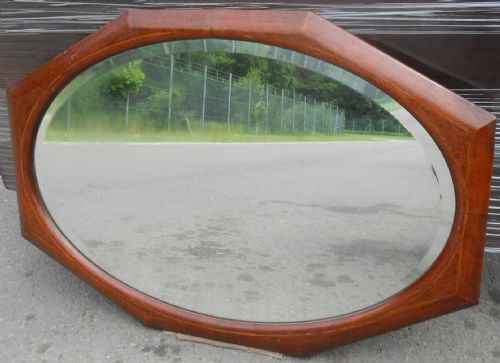
Makers utilised traditional glazing and framing techniques, setting bevelled glass plates into wooden structures of oak, mahogany, walnut, and ebonised timber. Metal frames in copper and brass also give structural definition to the glass.
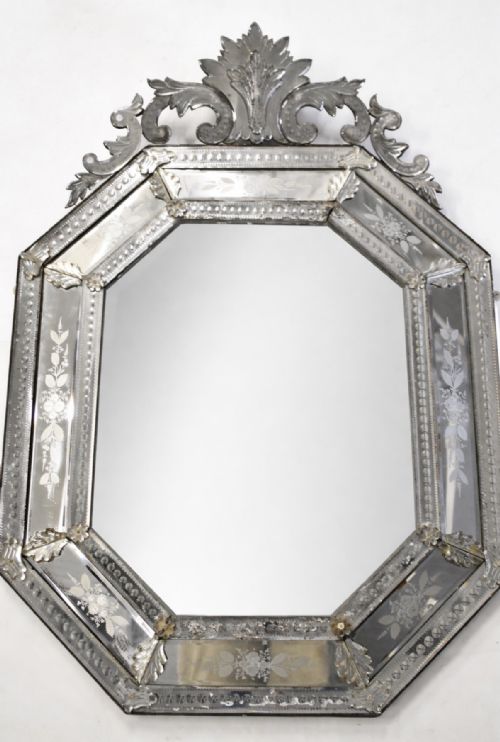
Venetian examples employ specialised glass-cutting methods to create cushion borders and decorative pediments around the central mirror plate. Framing woods are joined and polished by hand to support the weight of the glass.
What varies in quality
The standard of an octagonal glass mirror rests on the depth of the bevel and the clarity of the plate glass itself. Superior examples show crisp edge-work and stable framing without distortion in the reflection.
Finer pieces display intricate hand-cut glass details or well-figured timber frames, whereas simpler variants rely on plain wooden surrounds or minimalist frameless construction.
Waring and Gillow
The Octagonal Glass Mirror Glossary
- Bevel
- An angled edge ground along the perimeter of the glass plate. This technique catches the light and adds depth to the reflection.
- Cushion mirror
- A mirror style featuring a convex, outward-curving central section or border. It creates multidirectional reflections.
- Pediment
- The decorative structure surmounting the top of a mirror frame. It often incorporates cut glass or carved woodwork.
- Ebonised
- Timber treated to resemble ebony through staining and polishing. This dark finish provides a high-contrast border for the glass plate.
Octagonal Glass Mirror: Frequently Asked Questions
Where should I hang an octagonal glass mirror?
These mirrors suit hallways, living rooms, and bedrooms where geometric framing can anchor a wall arrangement. Hang them at eye level to maximise light reflection and spatial depth.
Ensure the wall fixings match the weight of the specific frame, particularly with denser timber or glass-heavy Venetian designs.
How do I identify Art Deco mirrors?
Art Deco mirrors often feature frameless construction, clean lines, and geometric symmetry typical of the nineteen-thirties. They rely on simple mounting clips or discreet supports.
Earlier Victorian and Edwardian alternatives tend to use prominent wooden frames with carved details or dark ebonised finishes.
What is a Venetian mirror?
A Venetian mirror incorporates extensive glass ornamentation, including cut-glass elements and etched borders fixed to a wooden backing. They originated in Italy and offer high decorative presence.
These pieces frequently feature cushion profiles that project forward from the wall.
How do I care for antique mirror glass?
Clean the glass gently using a soft cloth and a minimal amount of mild cleaning solution. Avoid harsh chemicals that could damage the silvering behind the plate.
Check the framing joints periodically to ensure the mirror plate remains secure within its wooden or metal housing.