




Octagonal Cellarette
An octagonal cellarette is a heavy, eight-sided vessel designed to keep wine cold and secure near the dining table.
Octagonal Cellarette
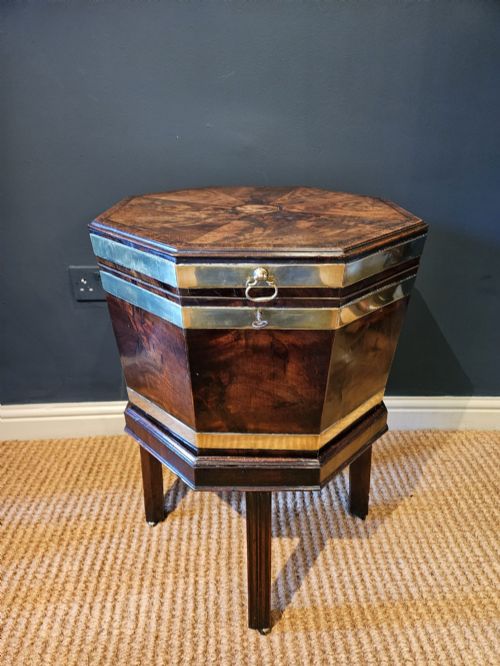
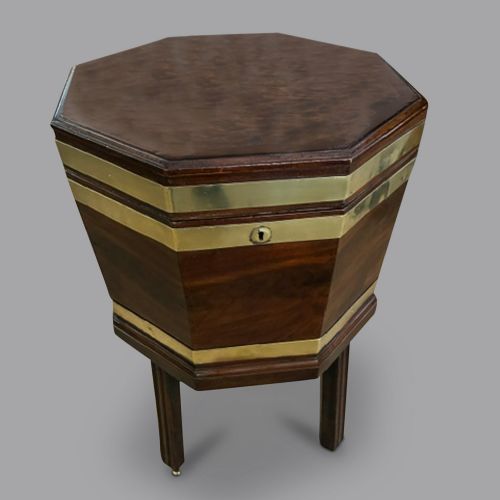
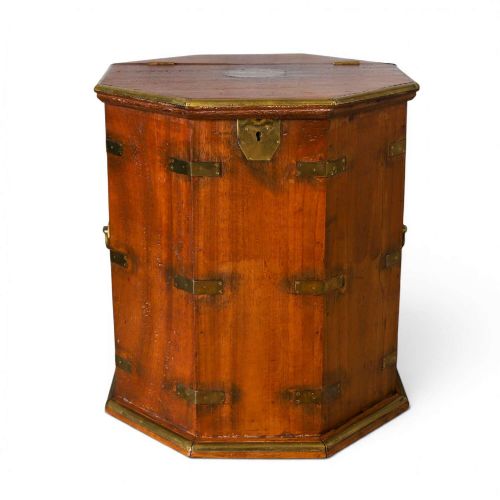
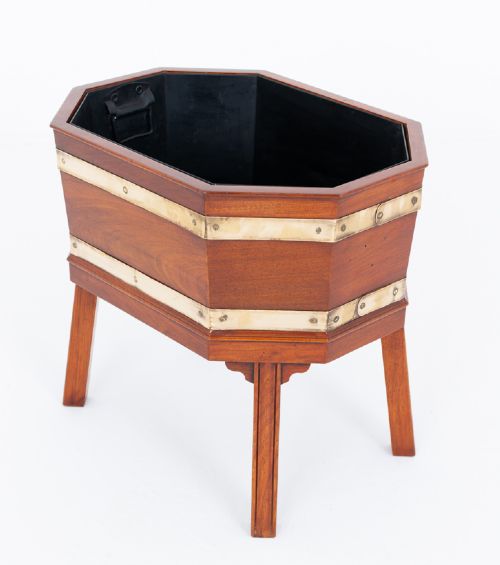
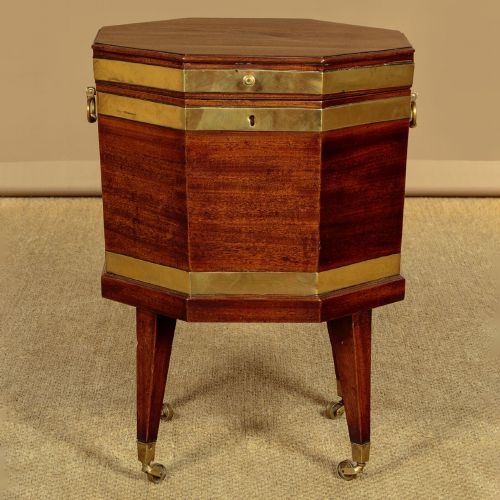
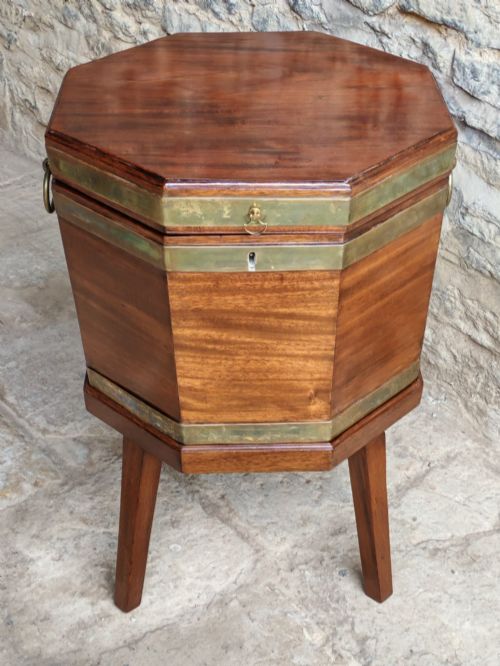
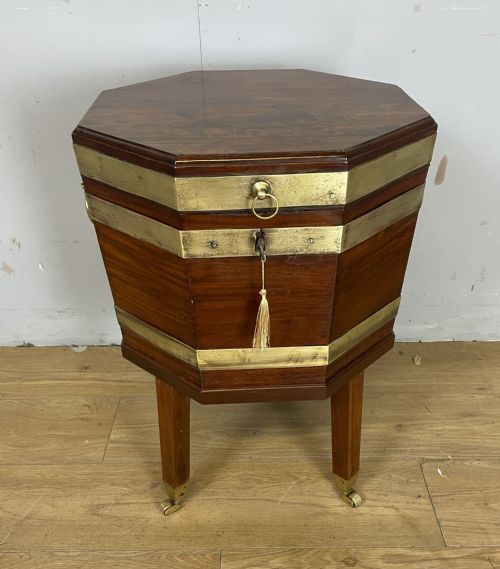
An octagonal cellarette is the definitive form for storing and cooling wine bottles in Georgian and Regency dining rooms. These eight-sided timber bins appear frequently in mahogany, often banded in brass and dating from the eighteenth century into the early nineteenth century. You will also encounter later revivals from the nineteen-twenties alongside Anglo-Indian colonial examples in padouk.
The primary domestic role involves holding multiple bottles of wine in ice or lining the interior with lead or metal for chilling. Eighteenth-century makers also produced these vessels to stand beneath sideboards or on their own bracket feet and castors. Later twentieth-century versions adapt the classic eight-sided silhouette for alternative duties such as jardinières.
How They Were Made
Cabinetmakers constructed these eight-sided bodies using solid mahogany and dense wood veneers over sturdy timber frames. Sections were joined tightly to contain ice and water without leaking onto the dining room floor.
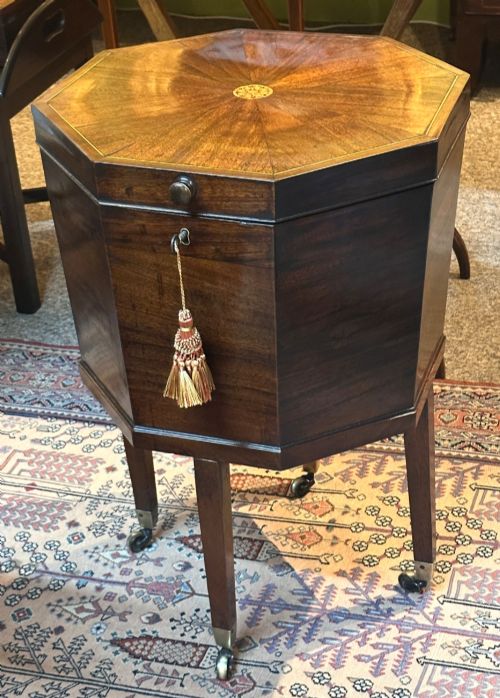
Metalwork played a structural and decorative role, with heavy brass bands encircling the staves and secure hinges supporting the lift-up tops. Finer examples integrated intricate satinwood inlay or contrasting wood veneers across the lid and panels.
Current listings demonstrate a strong concentration of George III mahogany pieces alongside nineteen-twenties Regency style revivals and Anglo-Indian padouk examples.
What Varies in Quality
The distinction between ordinary and exceptional pieces rests upon the selection of timber and the crispness of the joinery. Figured mahogany with deep grain patterns and precise brass banding separates standard production from top-tier Georgian craftsmanship.
Internal arrangement and hardware integrity define the upper bracket of surviving examples. Original metal liners, functional brass carrying handles, and well-preserved internal dividers elevate a piece above those missing their original interior fittings.
The Octagonal Cellarette Glossary
- Cellarette
- A lockable container used for storing wine bottles near the dining table. They originated in the seventeenth century and reached their aesthetic peak during the Georgian period.
- Wine Cooler
- A vessel designed specifically to hold bottles in ice during meals. Many octagonal cellarettes functioned primarily in this capacity.
- Brass Bound
- A construction method utilising heavy brass bands to reinforce the wooden staves of a vessel. This technique provided both structural strength and decorative contrast against dark mahogany.
- Padouk
- A dense tropical hardwood imported from Asia and utilised in Anglo-Indian colonial furniture. It offers a rich red-brown tone that deepens with age.
- Satinwood
- A light-colored, lustrous timber utilised for decorative stringing and inlay work on eighteenth-century furniture. It provides striking contrast against dark woods like mahogany.
Octagonal Cellarette: Frequently Asked Questions
What is an octagonal cellarette?
An octagonal cellarette is an eight-sided wooden chest built to hold and cool wine bottles during meals. Eighteenth-century dining rooms relied on these heavy vessels to keep bottles secure and chilled near the table.
Most surviving examples date from the Georgian and Regency periods, constructed in mahogany with brass banding and hinged lids.
How were cellarettes used?
Servants filled the interior with ice to cool wine before it was served to guests in the dining room. The lockable lids ensured that expensive vintages remained secure from household staff.
Later in the evening, the vessel sat beneath the sideboard or on its own castors ready to replenish empty decanters.
Can I use one as a planter?
Many people repurpose these vessels as indoor plant containers or jardinières, particularly those with fitted metal linings. The waterproof interior makes them suitable for holding potted plants.
It is important to protect vulnerable wood veneers from standing water if the original metal liner is absent or compromised.
How do I date an antique cellarette?
Dating relies on timber selection, construction methods, and prevailing decorative styles such as Georgian brass banding or Regency proportions. Eighteenth-century pieces typically exhibit hand-cut dovetails and heavy solid mahogany construction.
Nineteen-twenties revival pieces often feature machine-cut elements and standardised hardware that distinguish them from earlier Georgian originals.