

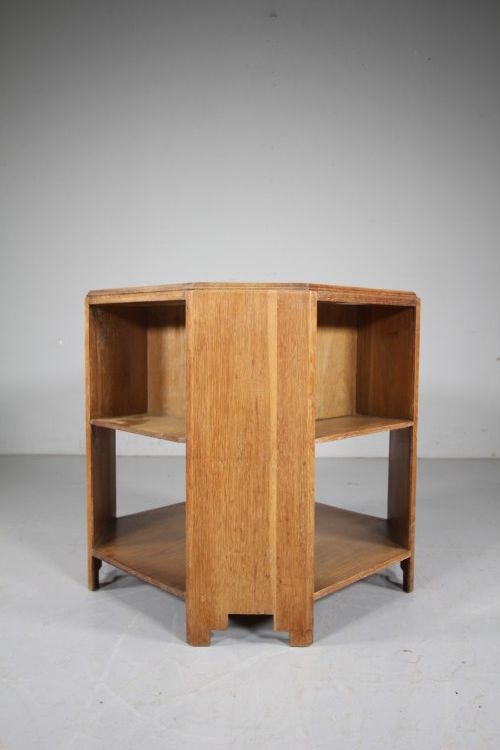


Octagonal Art Deco Table
An octagonal art deco table brings geometric form and rich timber into a room, offering a distinct surface that breaks the monotony of right angles.
Octagonal Art Deco Table
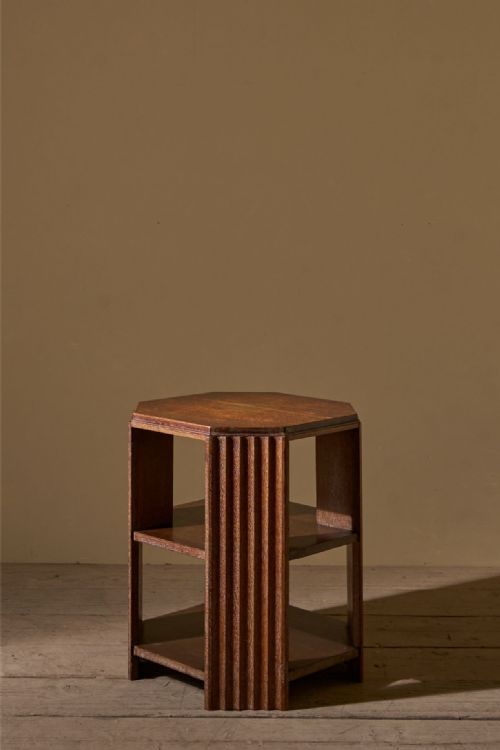
An octagonal art deco table is a striking geometric form designed for occasional use as a side, coffee, or centre table. These pieces emerge predominantly from the nineteen-twenties and nineteen-thirties, reflecting the modernist appetite for sharp angles and clean lines.
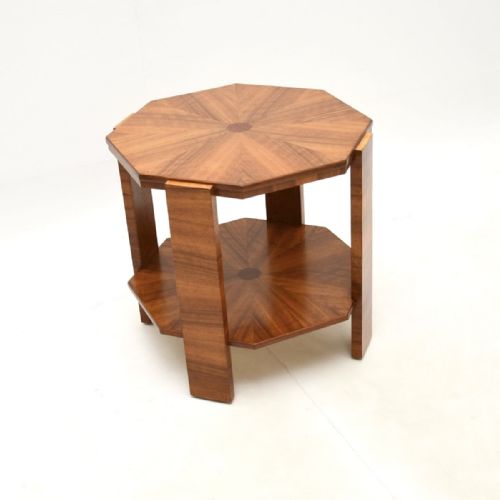
The version most commonly met on this page is the occasional or coffee table configured with eight sides. Walnut and oak dominate the selection, often taking the shape of low tables, tiered book tables, or pedestal designs suited to a sitting room.
What varies in quality
The selection of veneer sets the upper tier apart from standard production, particularly when makers matched burr walnut figures symmetrically across an octagonal top. Richness in timber selection and the complexity of multi-tiered structures or integrated storage elevate certain examples above simpler single-surface tables.
Subtlety in proportion and the crispness of the eight-sided edge define finer manufacture. Pieces showing deliberate contrast between woods, such as walnut paired with ebony, display a higher level of design ambition than plain variants.
One enthusiastic previous buyer acquired a small oak table specifically because its eight sides matched the geometry of their favourite hat box.
Heals
The Octagonal Art Deco Table Glossary
- Burr walnut
- A veneer sliced from walnut tree growths, producing swirling, intricate grain patterns prized by period cabinet makers. This material defines the most decorative surfaces of the era.
- Limed oak
- Timber treated with a white-wash finish to lighten the natural grain, popular in nineteen-thirties furniture design. It offers a pale, matte texture distinct from polished hardwoods.
- Ebonised wood
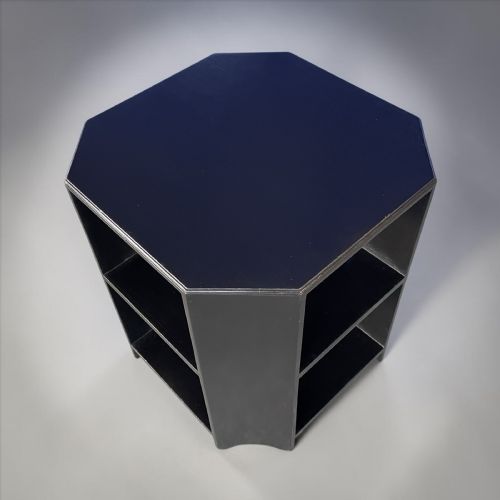
- Timber stained or treated to resemble solid ebony, creating a dense black finish. Makers utilised this technique to provide stark contrast against lighter veneers.
- Skyscraper style
- An architectural influence within art deco furniture, featuring stepped tiers and vertical emphasis. Book tables often adopt this ascending profile.
- Occasional table
- A movable, multi-purpose small table designed for flexible placement around a reception room. These serve as the primary vehicle for octagonal designs.
Octagonal Art Deco Table: Frequently Asked Questions
Where should I place an octagonal art deco table?
These tables work best beside low seating or as a freestanding centre piece in a room. Their eight-sided geometry helps soften corners and interrupts the linear flow of standard upholstery.
Position one where natural light can strike the burr walnut or oak grain across the flat planes. Avoid damp environments that might compromise historical wood veneers.
How do I care for walnut veneer surfaces?
Maintain the timber by dusting with a dry, soft cloth and avoiding silicone-based polishes. Occasional application of quality beeswax feeds the historic wood without building up a heavy film.
Keep tables away from direct heat sources and strong sunlight to prevent the veneer from drying out or fading over decades of use.
What is the difference between an occasional table and a centre table?
Occasional tables are generally smaller and designed to be moved easily beside chairs or sofas for immediate utility. They include tiered book tables and compact side pieces.
Centre tables are built to stand independently in the middle of a space, offering a finished surface visible from all directions. Both share the characteristic octagonal footprint.
How do I date these tables accurately?
Dating relies on stylistic markers such as stepped skyscraper tiers, limed oak finishes, and the specific use of burr walnut veneer. Most pieces in this group date from the interwar period between nineteen-twenty and nineteen-fourty.
Construction methods, including the type of secondary woods used beneath veneers, offer further clues to the manufacturing decade.