


Oak Wood Box
An oak wood box holds generations of domestic life, from 17th century coffers to Edwardian blanket chests.
Oak Wood Box
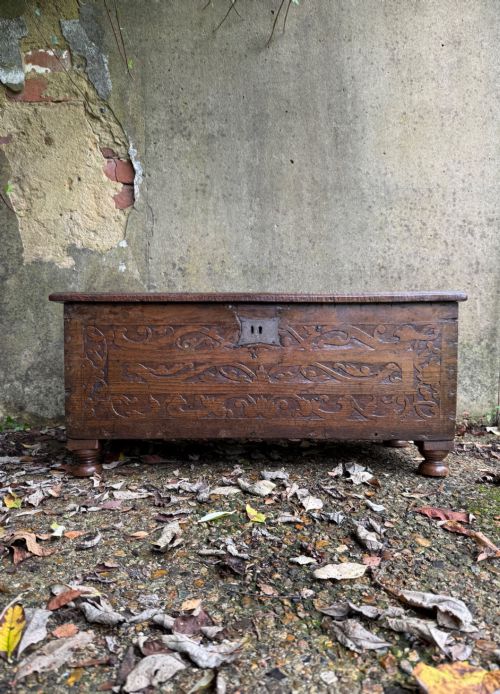
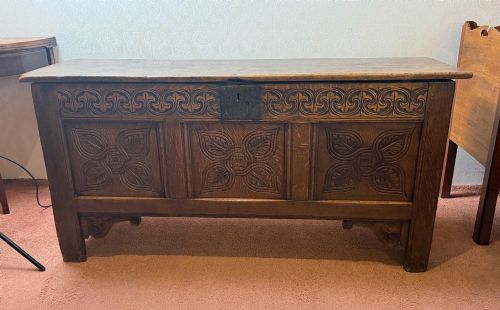
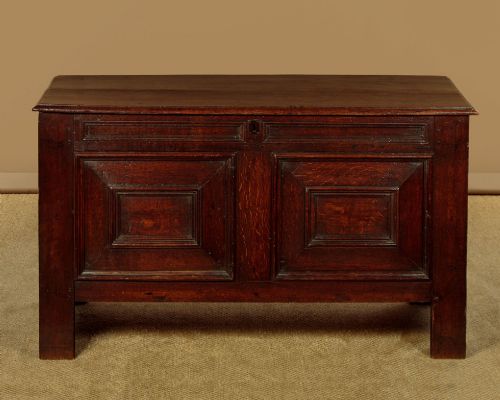
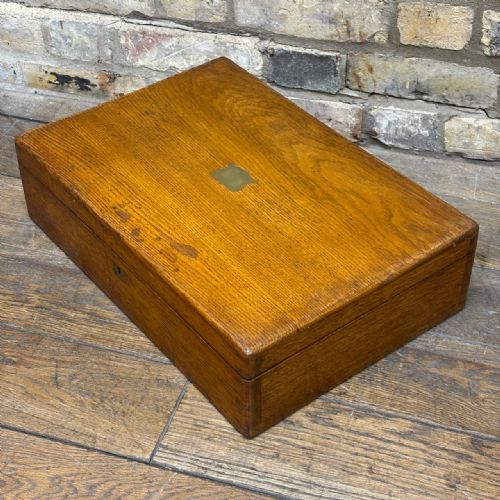
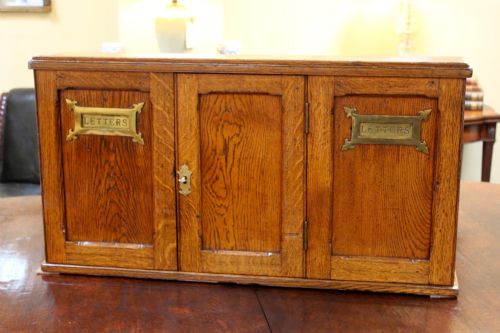
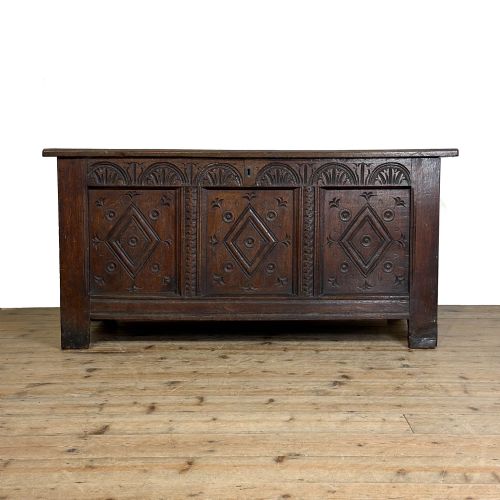
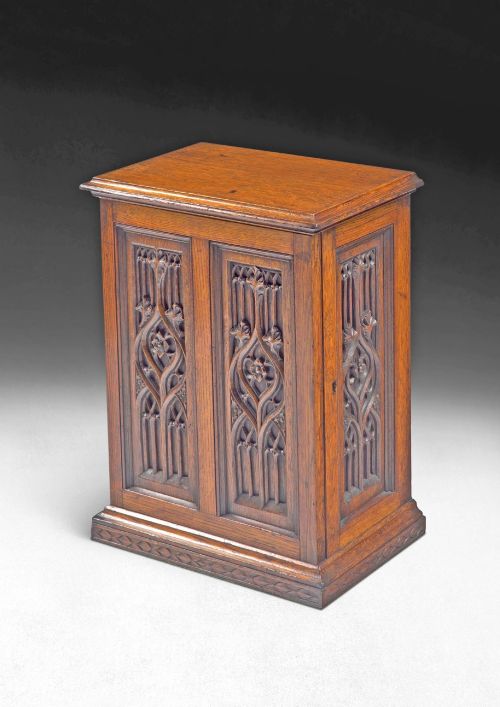
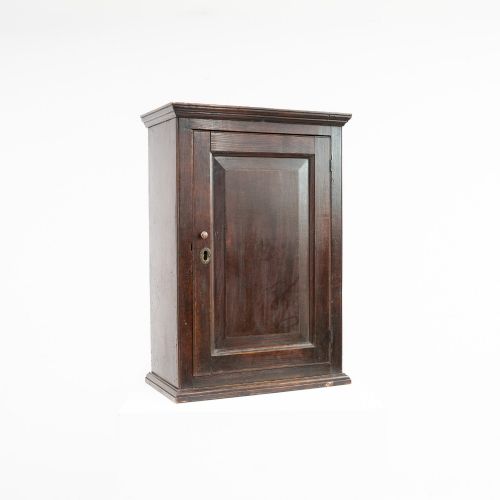
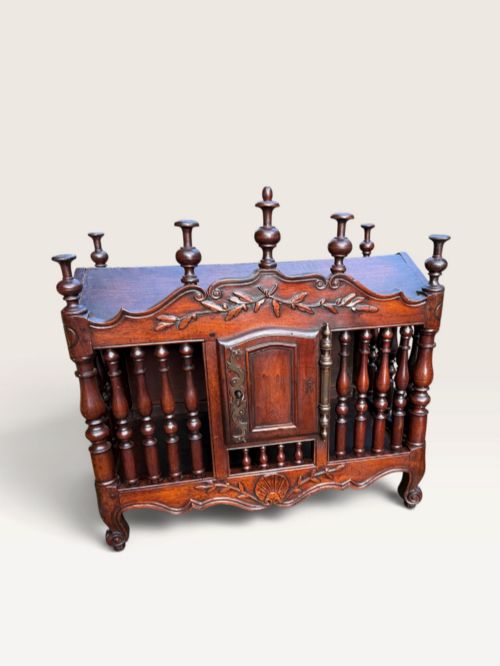
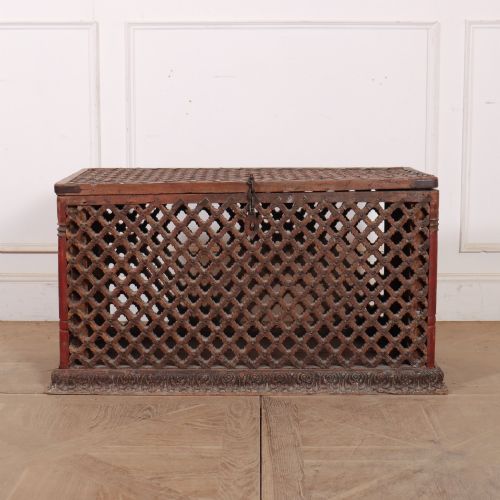
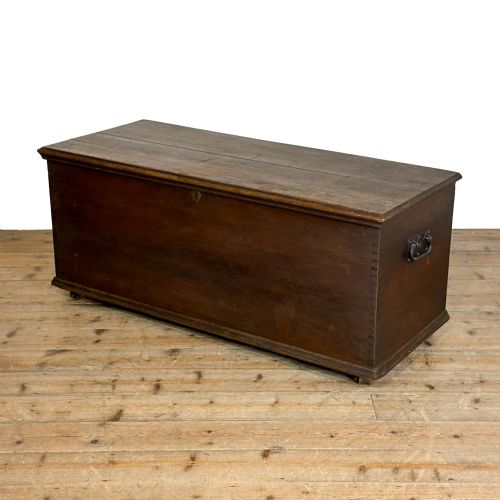
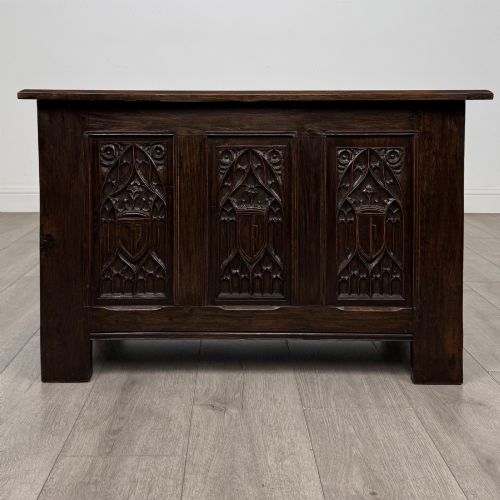
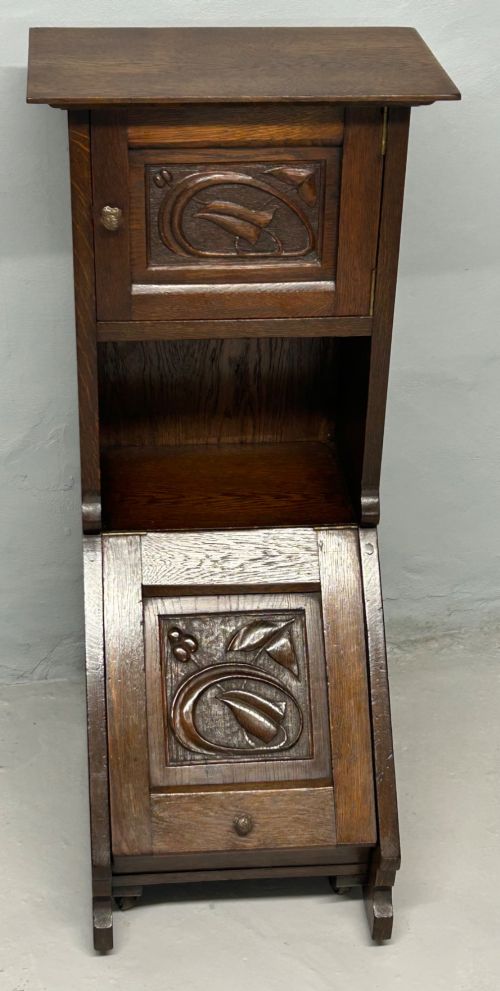
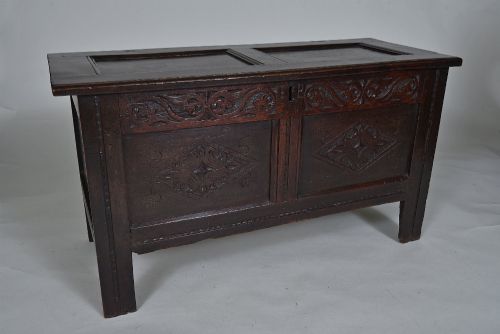
When you search for an oak wood box, you encounter a range of sturdy containers designed for storage and daily utility across British domestic history. The selection spans utilitarian six-plank coffers and mule chests from the 17th and 18th centuries to later Victorian desk boxes, Edwardian blanket chests, and small collector cabinets.
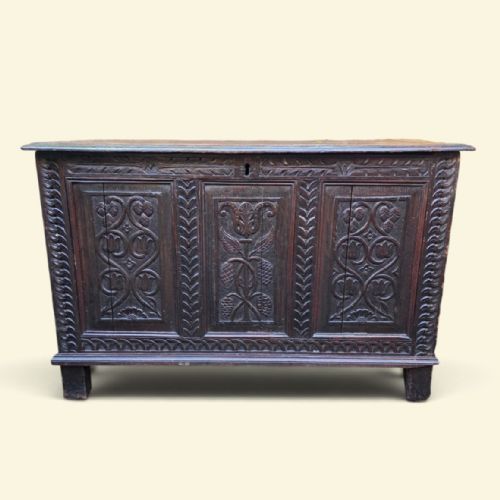
The material palette centres firmly on oak, occasionally paired with secondary woods like elm, walnut, and fruitwood, alongside functional iron and brass hardware. Pieces range from plainly constructed vernacular items to richly carved examples bearing chip carving, geometric panels, and specific dated inscriptions.
How they were made
Early oak wood box forms rely on heavy frame-and-panel construction or simple joined planks, utilising pegged mortise and tenon joints designed to accommodate the natural movement of timber. Carpenters selected quarter-sawn oak for its stability and pronounced medullary rays, shaping boards with hand saws and adzes before smoothing surfaces with drawknives and planes.
Decorative detailing on these pieces involves chip carving, incised line work, and applied mouldings executed with gouges and chisels, often reflecting local vernacular traditions or period revivals like the Jacobean and Gothic styles. Hardware such as hinges, lock plates, and carrying handles are forged from iron or cast in brass, secured by hand-beaten nails or screws.
Oak Wood Box Retail Price Guide 2026
Typical asking prices for oak wood box among the pieces listed under this phrase on Sellingantiques today, from the lower quarter to the upper quarter. They describe what is for sale here now, not the wider market.
Blind man's table snuff boxes let Georgian card players identify their stakes by touch alone in the dim candlelight.
What varies in quality
The standard of an oak wood box depends heavily on the integrity of its timber selection, the crispness of its hand-carved ornamentation, and the survival of its original structural elements. Superior examples display carefully matched quarter-sawn boards with tight joints and minimal replacement hardware, whereas lesser pieces show extensive board shrinkage, clumsy timber patches, or later re-carving.
Proportion and surface patination further distinguish finer items, with untouched historical wax finishes offering a deeper visual warmth than stripped or heavily over-polished surfaces. The complexity of the joinery and the presence of contemporary iron or brass work signal higher workshop competence.
The Oak Wood Box Glossary
- Coffer
- A heavy wooden chest with a hinged lid, traditionally used for storing valuables, documents, or household textiles.
- Mule chest
- A storage chest featuring one or more drawers beneath the main compartment, combining the function of a coffer and a small chest of drawers.
- Six-plank coffer
- A primitive chest constructed from six plain boards joined at the edges, typical of early vernacular furnituremaking.
- Quarter-sawn
- Timber cut radially from the growth rings, producing boards with greater dimensional stability and a distinctive decorative grain figure.
- Purdonium
- A specialised coal box or container designed to hold solid fuel for a hearth, popular in late Victorian and Edwardian interiors.
Oak Wood Box: Frequently Asked Questions
What is the difference between a coffer and a blanket box?
A coffer is a traditional heavy storage chest, often jointed with framed panels and dating from the 17th or 18th centuries. Blanket boxes generally refer to lighter domestic chests from the Victorian and Edwardian eras.
While both served to store textiles, coffers typically display heavier timber construction and vernacular joinery methods.
How do I date an antique oak box?
Dating relies on examining construction techniques, tool marks, hardware styles, and the character of the wood. Hand- sawn boards, pegged joints, and forged iron hinges point to early periods like the 17th or 18th century.
Later Victorian and Edwardian examples often feature machine-sawn timber, applied decorative mouldings, and brass fixtures associated with mass production.
Where were these boxes used in the home?
Larger coffers and mule chests sat in hallways, bedchambers, or living spaces to store household linens, woollens, and legal documents. Smaller desk boxes and games containers sat on tables or writing surfaces for everyday utility.
Specialist forms like purdoniums and foot stoves stood by the hearth to manage coal and provide warmth.
Are oak boxes made of solid wood?
Most antique examples utilise solid native timbers, primarily oak supplemented by secondary woods like elm and fruitwood in regional pieces. Solid construction was standard for structural strength before the widespread use of manufactured sheet boards.
Thicknesses vary across panels and lids, reflecting the demands of the specific form.