





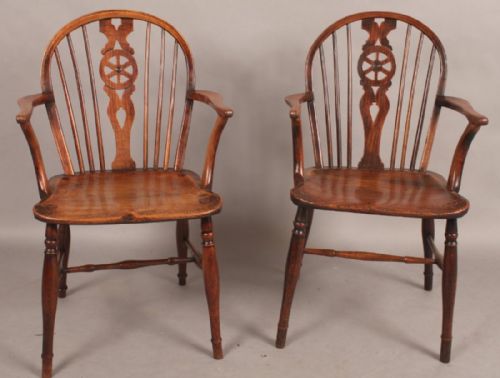
Oak Wheelback Chairs
Oak wheelback chairs bring sturdy English country character to a room, offering robust seating built from honest local timber.
Oak Wheelback Chairs
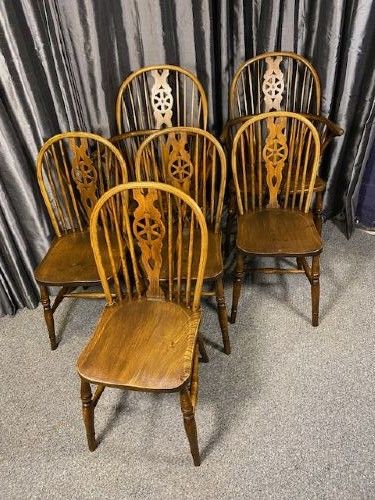
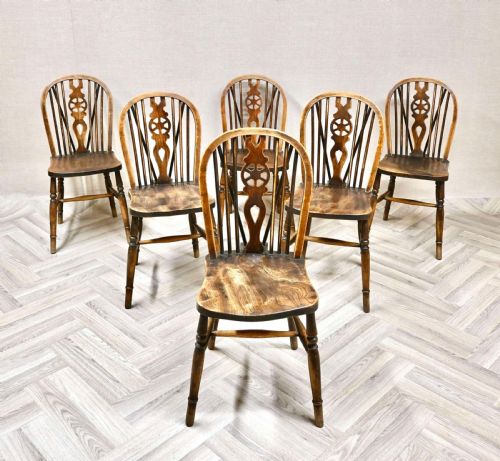
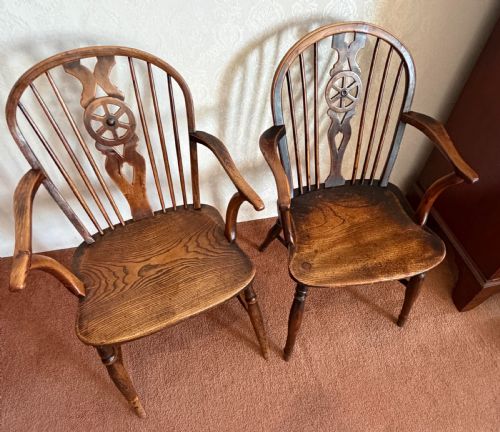
Oak wheelback chairs are traditional country seating forms defined by a pierced central splat shaped like a cartwheel. These pieces appear across several eras, including the Georgian period, the nineteenth century, and early twentieth-century decades up to nineteen thirty.
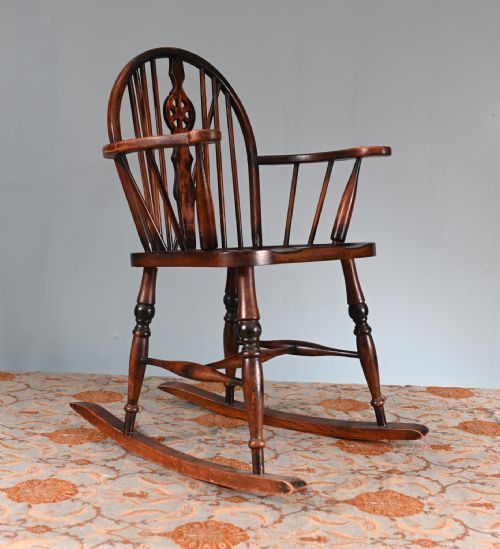
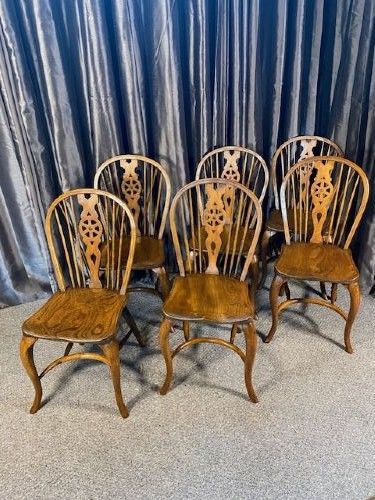
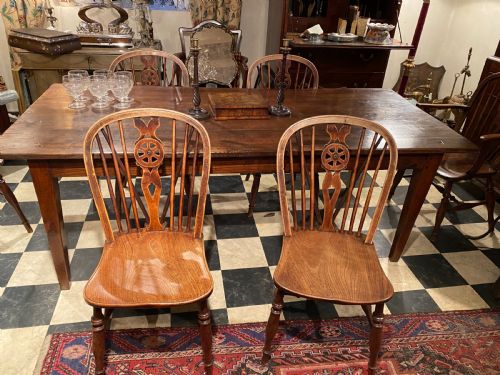
Buyers frequently encounter these designs in sets for dining tables, alongside individual armchairs and rocking chairs. The regional variations span English country workshops, with specific regional types such as Thames Valley examples appearing among the selection.
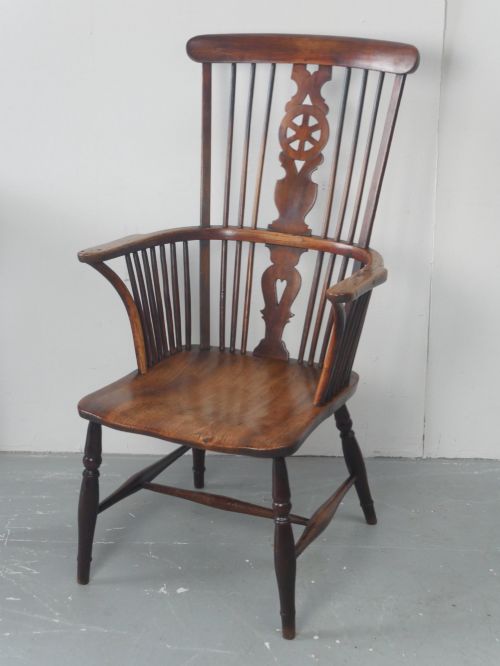
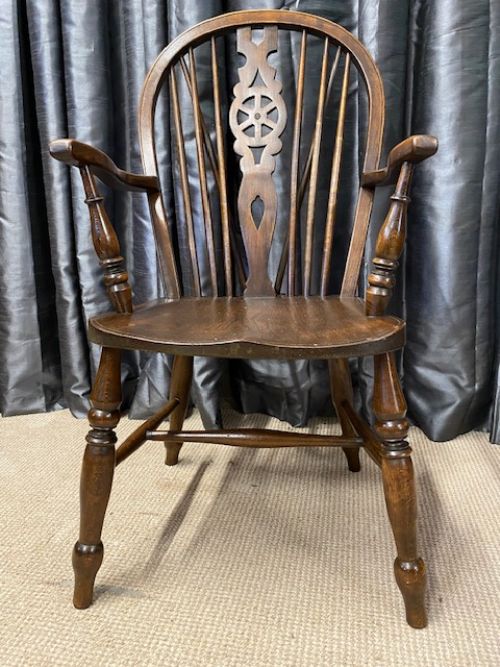
The primary forms include kitchen table chairs, sets of six or eight dining chairs, and larger Windsor armchairs. Each option displays the classic spindle-back construction integrated with the distinctive wheel motif.
How they were made
Maker construction methods rely upon a combination of timbers, frequently pairing oak with elm, beech, ash, and yew within a single piece. Seat saddles are often carved from solid elm, while spindles and legs utilise resilient hardwoods like ash and beech.
The traditional Windsor framework involves steam-bending and turning techniques to shape the components before assembly. Individual parts are secured through wedge-tenon joinery and turned spindles locked firmly into the thick wooden seat.
Oak Wheelback Chairs Retail Price Guide 2026
Typical asking prices for oak wheelback chairs among the pieces listed under this phrase on Sellingantiques today, from the lower quarter to the upper quarter. They describe what is for sale here now, not the wider market.
Some rocking chairs retain the original worn foot rails where generations of sitters rested their boots while the wheel turned behind them.
What varies in quality
Quality differences stem from the crispness of the wheel carving in the central splat and the harmonious selection of timber grains across the seat and spindles. Superior examples display balanced proportions and well-matched sets where individual chairs share identical turning details.
The choice of secondary woods also influences the piece, with richer figuring in elm seats and careful selection of contrasting timbers for the arms and crest rails separating standard utility furniture from finer country workshop production.
The Oak Wheelback Chairs Glossary
- Wheelback
- A chair back featuring a pierced circular wooden splat resembling the wheel of a cart. This design gained popularity during the nineteenth century in English country seating.
- Windsor chair
- A wooden chair constructed with stick-built components where legs and back spindles are wedged directly into a solid sculpted seat. This form forms the structural basis for wheelback variations.
- Splater
- The vertical wooden element centred in the middle of the chair back. In these pieces, it takes the pierced form of a spoked wheel.
- Thames Valley
- A regional style descriptor denoting seating produced in workshops along the River Thames. These pieces often exhibit refined timber selection and distinctive arm scrollwork.
Oak Wheelback Chairs: Frequently Asked Questions
What periods do these chairs come from?
The available pieces span from the Georgian era and the early nineteenth century through to nineteen thirty. Different decades bring subtle shifts in turning styles and proportions.
Earlier examples from the nineteenth century often display deeper patination and hand-turned variations compared to later twentieth-century sets.
Are these chairs suitable for daily dining?
These sturdy country chairs were originally built for practical daily use in farmhouse kitchens and dining rooms. Their solid construction handles regular seating.
Pouches of cushion pads can add comfort for long meals without altering the appearance of the wooden seat.
How do I care for mixed timber furniture?
Maintain the finish by applying natural beeswax periodically to nourish the dry oak, elm, and beech surfaces. Avoid placing them near direct heat sources.
Stable indoor humidity prevents the shrinkage that can loosen traditional wedged joints over time.
What is the difference between armchairs and dining chairs?
Armchairs feature extended bow arms supported by vertical spindles above the seat, providing a wider and more supportive frame. Dining chairs omit the arms to tuck neatly beneath tables.
Both variants share the signature wheelback splat and turned leg construction.