



Oak Tambour File Cabinet
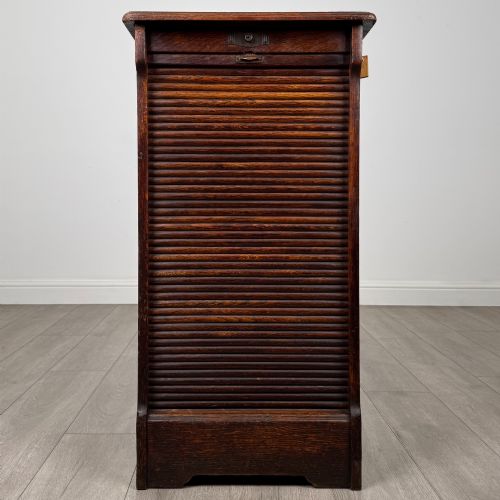
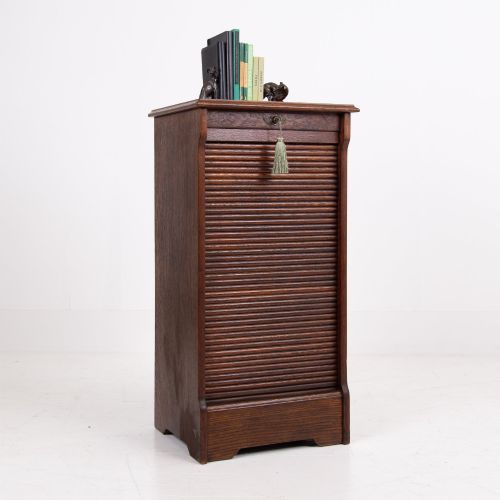
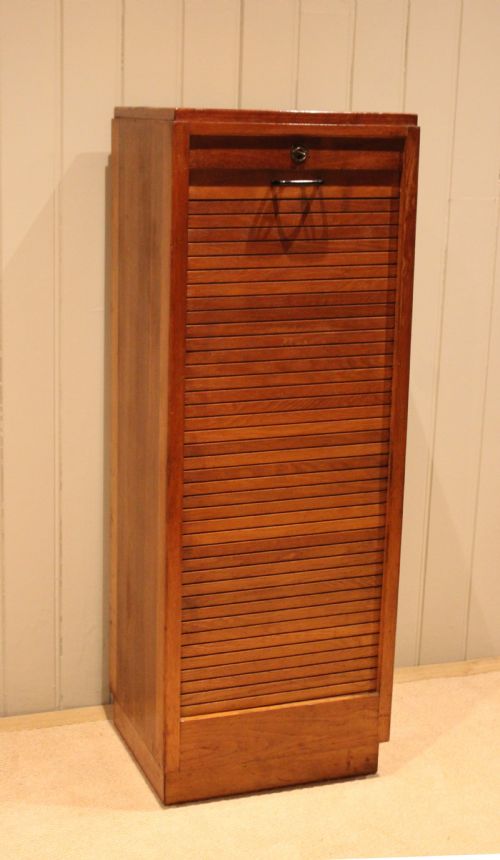
These oak tambour file cabinets are robust office storage pieces designed with slatted roll-front doors, offering a neat and practical workspace solution.
Oak Tambour File Cabinet
An oak tambour file cabinet provides secure and organised storage for papers using flexible wooden shutters that slide smoothly around the sides of the carcase. These items emerge primarily from the Edwardian period and the early twentieth century, alongside examples from the 1920s, 1930s, and 1940s.
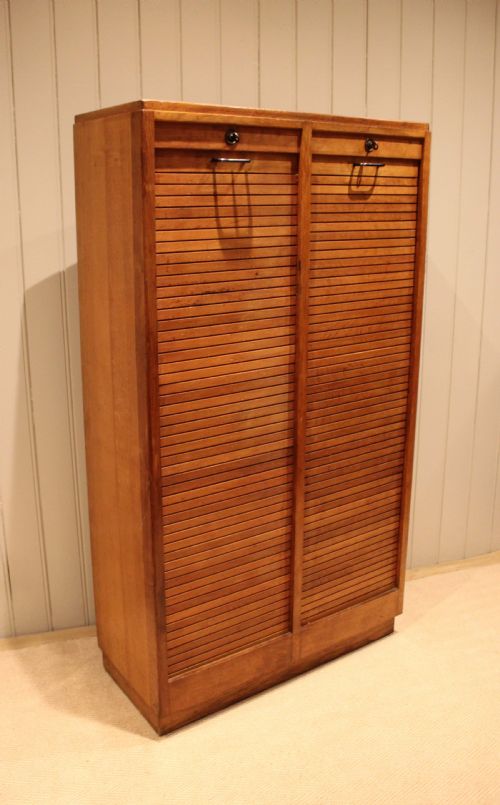
Buyers encounter single and double door configurations across this selection, ranging from small proportioned items to larger office filing cabinets. English and French origins appear frequently, spanning styles such as Edwardian, Art Deco, and French Utility.
How they were made
The construction relies heavily on solid oak timber and light or dark oak veneers, paired with brass and metal hardware for handles, label holders, and internal mechanisms. Many slats are backed with canvas to hold the flexible tambour curtain together as it glides along interior tracks.
Makers built the main carcase with traditional joinery to withstand heavy daily office use, housing internal pull-out trays or filing dividers behind the slatted door.
Oak Tambour File Cabinet Retail Price Guide 2026
Typical asking prices for oak tambour file cabinet among the pieces listed under this phrase on Sellingantiques today, from the lower quarter to the upper quarter. They describe what is for sale here now, not the wider market.
Listings span several decades, featuring Edwardian pieces alongside examples dated 1910, 1920, 1930, and 1940.
What varies in quality
Quality shows in the weight and selection of the timber, distinguishing solid oak carcases from lighter or veneered alternatives. The smoothness of the tambour action remains a key indicator of original craftsmanship.
Better examples maintain crisp moulding details, intact internal fittings, and robust backing canvas that allows the slatted door to operate without sticking.
The Oak Tambour File Cabinet Glossary
- Tambour
- A flexible door constructed from narrow strips of wood glued to a fabric backing, allowing it to slide around a curved track. This mechanism conceals the interior contents while saving space.
- Carcase
- The main body or structural framework of a cabinet, excluding the doors and drawers. It forms the solid foundation of the piece.
- Edwardian
- A stylistic period spanning the reign of King Edward VII until the First World War. Furniture from this era often retains traditional proportions with clean lines.
- French Utility
- A functional style originating in France characterised by straightforward construction and practical design. These pieces prioritise utility without excessive ornamentation.
Oak Tambour File Cabinet: Frequently Asked Questions
How do tambour doors work?
Tambour doors consist of numerous small wooden slats attached side by side onto a strong canvas backing. This flexible assembly runs within recessed grooves cut into the sides of the cabinet.
When pushed, the curtain follows the curve of the track and slides neatly out of sight along the interior wall of the carcase. This design allows access to the contents without requiring clearance space for hinged doors.
Where were these cabinets used?
These storage units served primarily in professional offices, legal practices, and counting houses during the early twentieth century. Their compartments kept important paperwork organised and secure.
Today, buyers utilise them in home studies and modern workspaces to store documents while adding period character to the room.
How do I date an oak cabinet?
Dating relies on examining the timber selection, construction methods, and hardware styles. Edwardian and early twentieth-century examples often feature solid oak frames and distinct brass label holders.
Later pieces from the 1930s and 1940s introduce different interior configurations and styling cues such as Art Deco influences or French Utility designs.
Are single and double versions available?
The selection includes both single tambour front cabinets and larger double tambour versions. Single models suit compact spaces while offering vertical filing storage.
Double configurations provide greater internal capacity with two side-by-side sliding curtains or wider shelving compartments.