
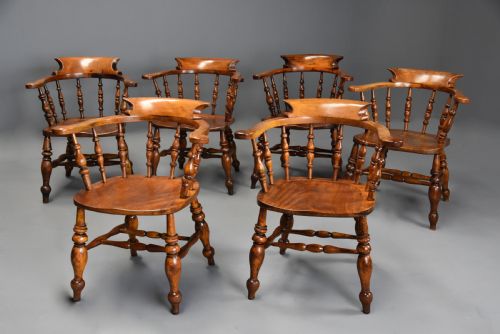
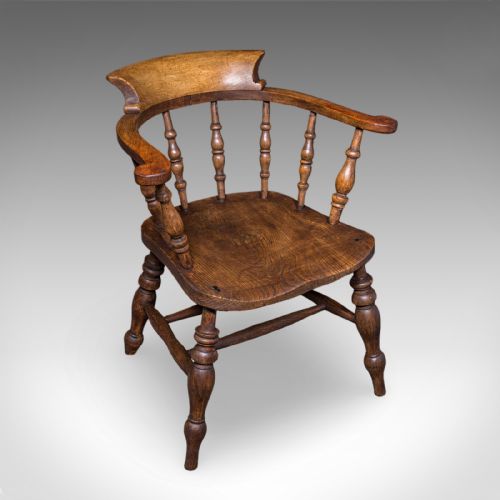
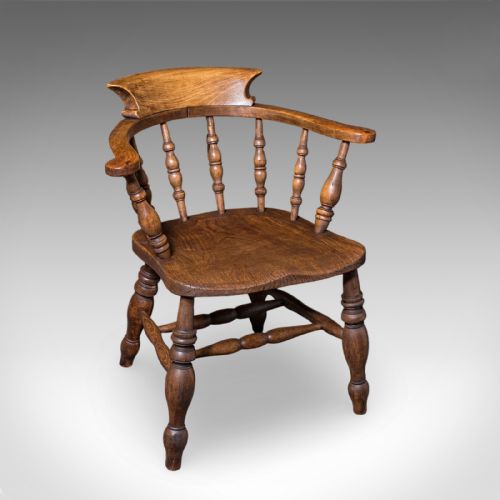
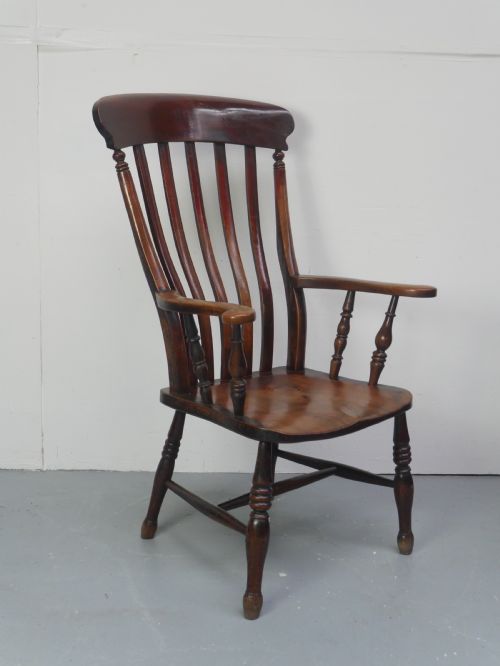
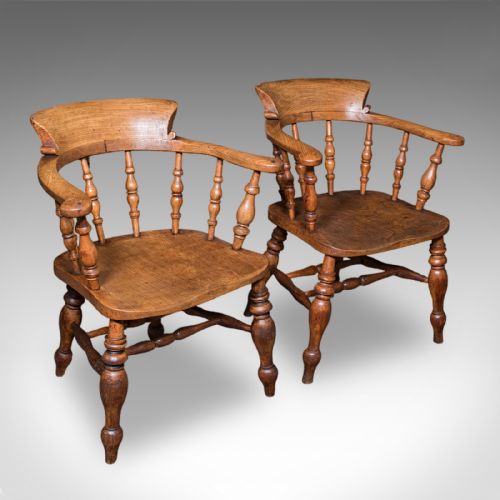
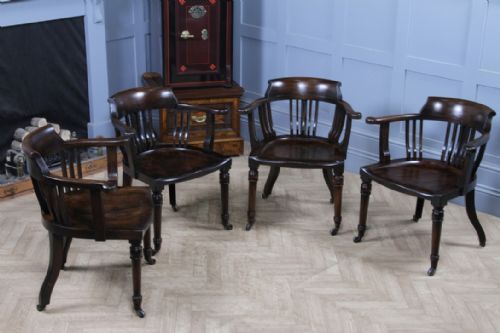


Oak Smokers Bow Armchair
An oak smokers bow armchair offers sturdy elbow support and a welcoming low back, making it a timeless choice for a desk or country kitchen.
Oak Smokers Bow Armchair
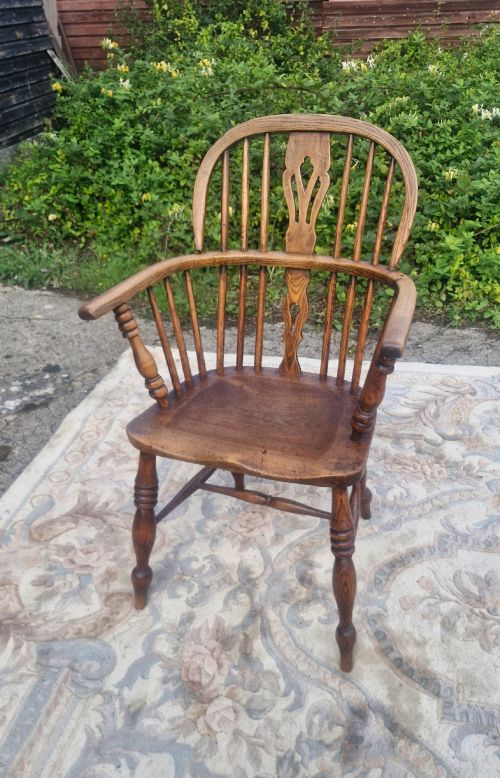
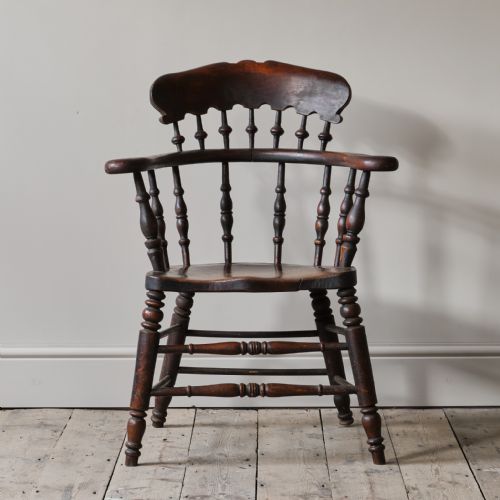
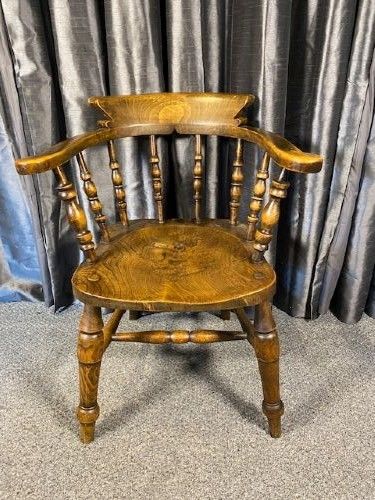
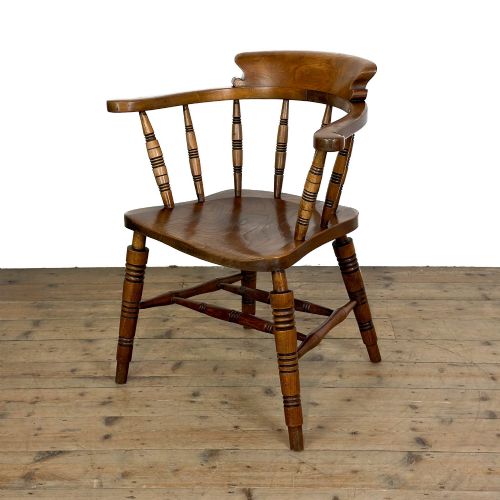
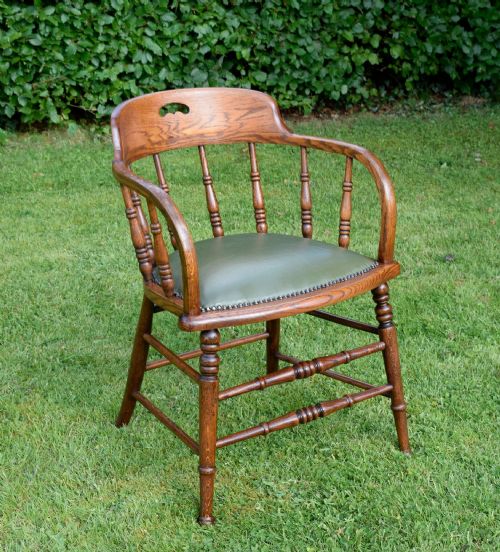
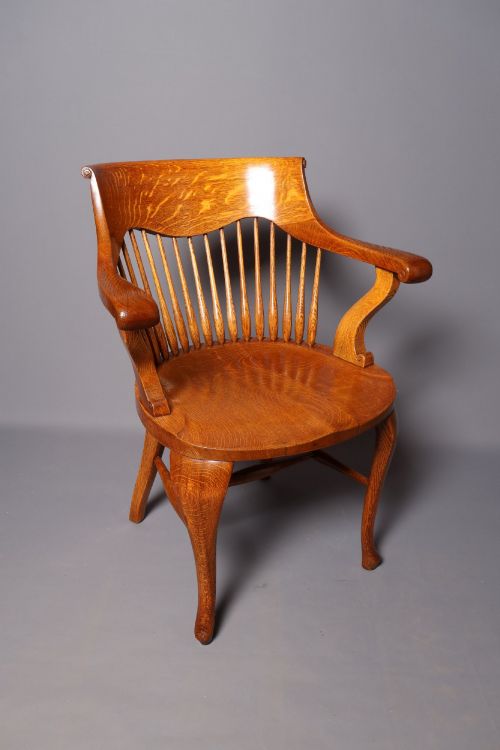
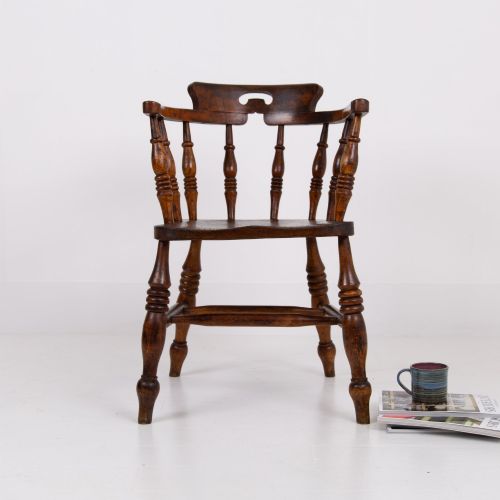
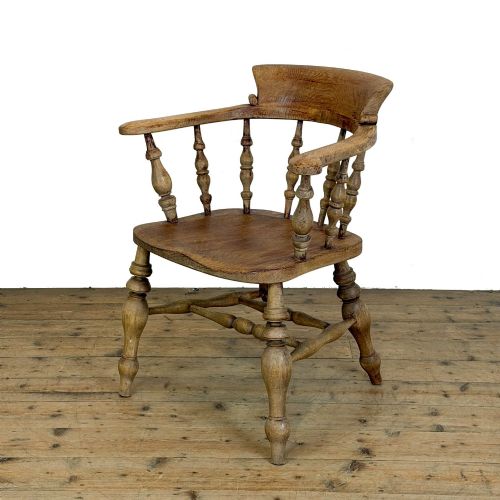
An oak smokers bow armchair is a robust, low-backed elbow seat designed for comfort and utility in Victorian and Edwardian domestic and office spaces. These chairs frequently appear as captain chairs or country house armchairs, sharing lineage with traditional Windsor seating.
Buyers seeking an oak smokers bow armchair will find pieces originating primarily from the nineteenth and early twentieth centuries. The selection encompasses office desk chairs, kitchen armchairs, and occasional rocking chairs built with sturdy elbow rests.
The form bridges the gap between formal library seating and vernacular farmhouse furniture. Examples range from simple low back Windsor variations to leather-upholstered club elbow chairs suited for a study.
Materials and Construction
Maker construction relies heavily on native timbers, pairing sturdy oak frames with elm, beech, and ash for spindles and seats. Hardwood components are frequently steam-bent to form the continuous curved bow back characteristic of the type.
Joinery methods utilise traditional pegged and turned construction to handle the daily strain placed upon desk and kitchen armchairs. Selected models incorporate brass hardware or leather upholstery pads secured to the wooden seat.
Some nineteenth-century sitters clearly enjoyed their pipes enough to demand a dedicated curved armrest for the purpose.
Assessing Quality and Character
Quality separates through the selection of timber and the grace of the steam-bent bow. Superior examples display rich figuring in the oak and elm, coupled with well-proportioned spindles and balanced arm terminals.
The integrity of the construction dictates the lasting value of the seat. Chairs retaining their original turned legs, solid block joints, and honest surface patination outshine heavily restored or structurally compromised alternatives.
The Oak Smokers Bow Armchair Glossary
- Smokers Bow
- A low-backed Windsor-style armchair with a continuous curved rail forming the arms and back. This vernacular form proved popular in nineteenth-century country houses and offices.
- Captain Chair
- A sturdy wooden armchair, often featuring a low spindle back and a saddle seat, traditionally used at a desk or table.
- Windsor Chair
- A chair built with a solid wooden seat into which the legs and back spindles are bored directly. This technique creates a light yet exceptionally rigid frame.
- Stick Back
- A chair design where turned wooden spindles form the backrest. These members are tenoned straight into the seat and top rail.
- Elbow Chair
- An armchair designed with low arms intended to support the elbows rather than provide full-length side enclosure. The format suits domestic desks and writing tables.
Oak Smokers Bow Armchair: Frequently Asked Questions
What is an oak smokers bow armchair?
An oak smokers bow armchair is a sturdy nineteenth or early twentieth-century seat featuring a low, curved wooden backrest and supportive elbow rests. These chairs combine vernacular Windsor framing with the utility of a desk or kitchen chair.
They were built to endure heavy daily use, resulting in durable timber construction that remains functional in modern study and living spaces.
Where were these chairs used originally?
These armchairs served multiple roles across Victorian and Edwardian interiors, functioning as office desk chairs, smoking room seats, and farmhouse kitchen chairs. Their sturdy build made them ideal for places requiring regular sitting and movement.
Today, they transition easily into studies, home offices, and dining rooms as practical everyday seating.
How do I date an oak smokers bow?
Dating relies on observing construction methods, timber selection, and overall stylistic markers from the Victorian and Edwardian periods. Earlier nineteenth-century examples often display deeper patination and heavy elm or oak seats, while twentieth-century versions may show cleaner turned components.
Examining the wear patterns on the seat and legs also helps establish the age and authenticity of the piece.
How do I care for an antique wooden armchair?
Maintain the timber by keeping the chair away from direct heat sources and sudden temperature fluctuations that can dry out the oak and elm. Occasional treatment with suitable wax feeds the wood and preserves the surface finish.
Avoid harsh modern cleaning products to ensure the natural patination develops character over time.