



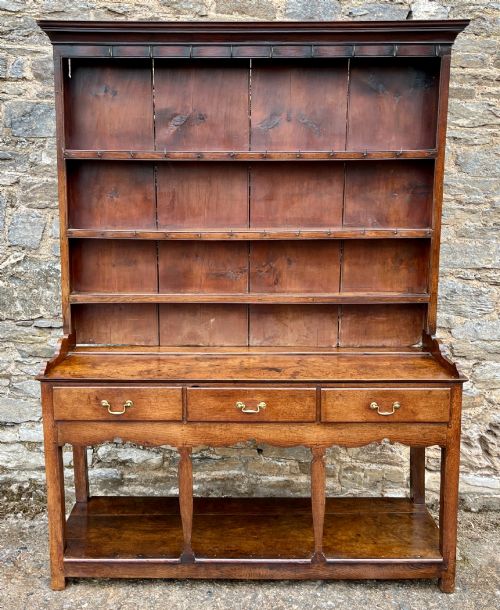

Oak Sideboard with Potboard
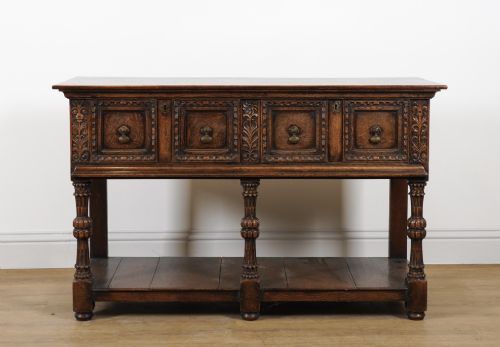
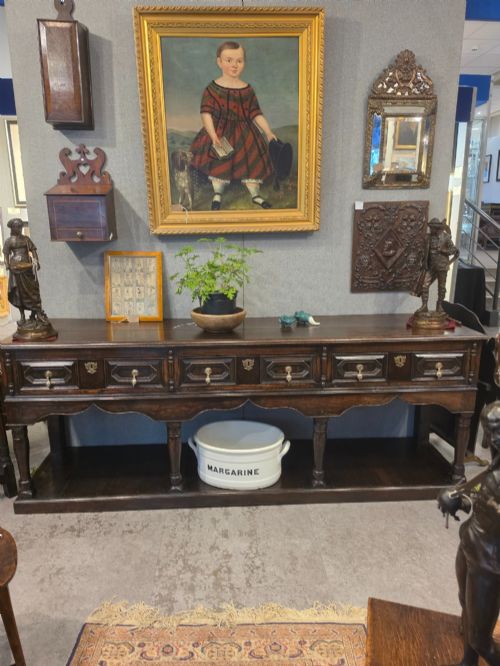
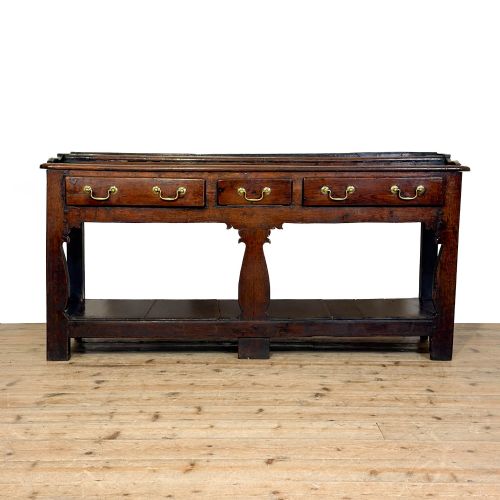
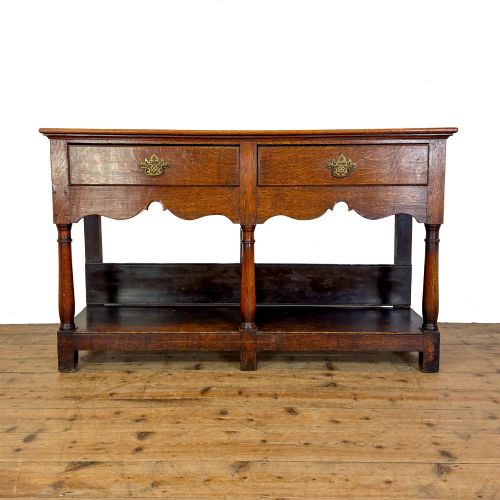
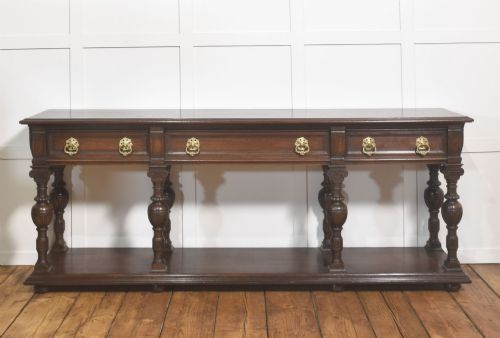
An oak sideboard with potboard is a heavy timber base providing open lower shelving for display, built for rural and provincial kitchens.
Oak Sideboard with Potboard
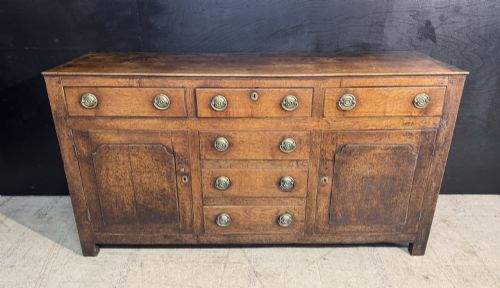
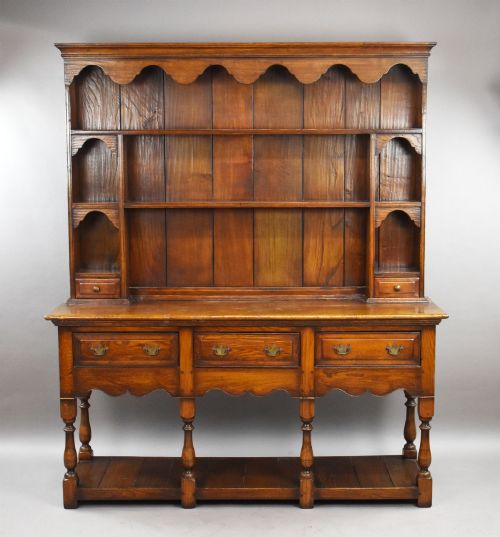
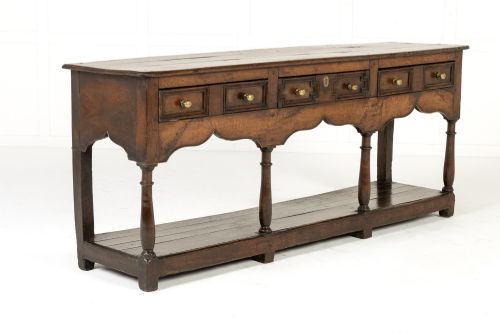
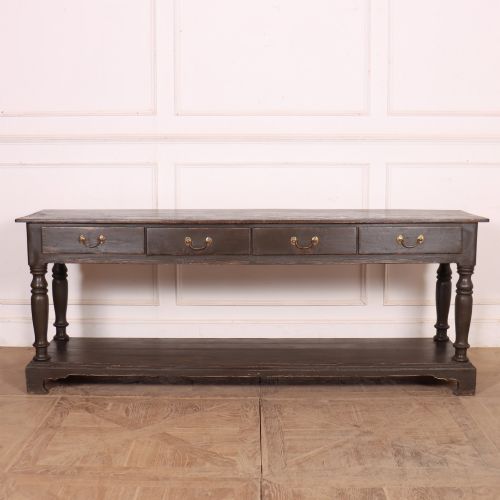
An oak sideboard with potboard is a sturdy serving and storage piece uniting a set of upper drawers with a low open shelf near the floor. Most examples on this page hail from the eighteenth and nineteenth centuries, often carrying strong regional roots in Wales and English country districts. These sturdy items served working domestic spaces long before formal dining rooms demanded dedicated furniture.
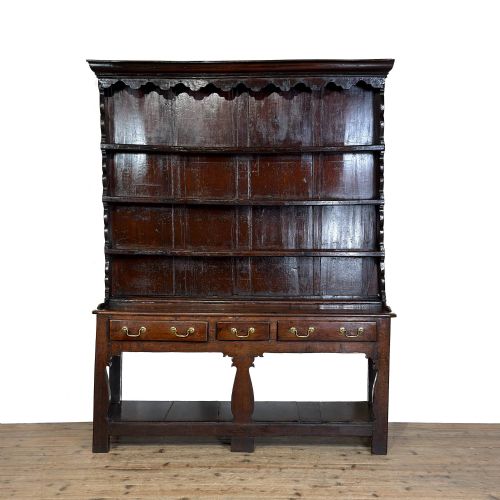
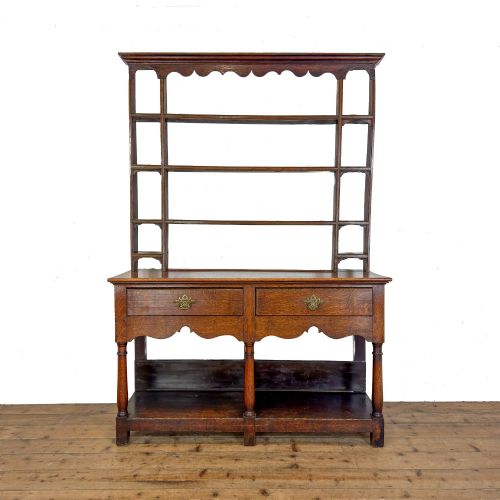
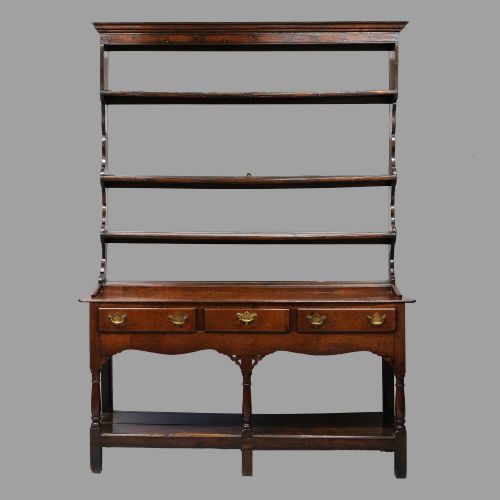
The format usually combines a planked top above several drawers with the signature lower platform known as the potboard. Regional variations range from simple vernacular tables with potboards to grander George III dresser bases and full dressers fitted with upper plate racks. Buyers encounter both utilitarian painted finishes and warm native oak patinated by generations of use.
How they were made
Makers constructed these sturdy items primarily from solid oak, sometimes combining elm or pine for secondary framing and drawer linings. Joinery relied on mortise and tenon joints secured by wooden pegs, providing the robust rigidity required for heavy daily kitchen tasks.
Hardware typically involved wrought iron or brass for drop handles and drawer pulls, while decorative elements like geometric carvings or paneling appeared on select regional pieces. Surfaces were left to age naturally or finished with simple oils and waxes, though later revivals introduced more elaborate decorative carving.
Oak Sideboard with Potboard Retail Price Guide 2026
Typical asking prices for oak sideboard with potboard among the pieces listed under this phrase on Sellingantiques today, from the lower quarter to the upper quarter. They describe what is for sale here now, not the wider market.
Current listings span from mid-eighteenth-century George III examples to later nineteenth-century Welsh vernacular pieces, constructed primarily in solid oak with occasional elm and burr walnut.
What varies in quality
Superior examples display dense timber with deep, authentic patination accumulated over centuries, whereas lesser pieces may show unsympathetic repairs or replacement boards. The handling of the joinery and the integrity of the original potboard structure distinguish workshop-made regional furniture from later revival adaptations.
Proportion and timber selection drive the character of the piece, with native oak showing superior grain and colour compared to mixed or heavily restored timbers. The survival of original brass or iron hardware and untouched drawer linings also elevates the standing of a piece within its period.
The Oak Sideboard with Potboard Glossary
- Potboard
- The low open shelf situated near the floor between the legs of a dresser base. Originally designed for storing heavy pots and pans out of the way.
- Dresser Base
- The lower section of a potboard dresser comprising drawers and cupboards beneath a flat top. Many survive independently without their original upper plate racks.
- Vernacular
- Furniture built by local country joiners using regional traditions rather than following metropolitan academic designs. These pieces often employ native timbers like oak and elm.
- George III
- The stylistic period spanning the mid to late eighteenth century. Furniture from this era often exhibits refined proportions and balanced drawer arrangements.
Oak Sideboard with Potboard: Frequently Asked Questions
What is a potboard base?
A potboard base is the lower portion of a dresser featuring a flat serving surface above drawers and an open bottom shelf. This lower platform provided practical storage for heavy kitchen utensils.
In daily use, these sturdy bases functioned as central work tables and storage units in traditional farmhouse kitchens.
Where were these dressers made?
Many examples originate from rural workshops across Wales and English provincial districts. Local joiners utilised native timbers suited to regional tastes.
These pieces reflect the distinct domestic traditions of their specific localities rather than standardised city manufacture.
How do I care for antique oak?
Maintain antique oak by applying occasional light coats of natural beeswax to nourish the dry timber. Avoid placing the furniture near direct heat sources or strong sunlight.
Gentle dusting with a soft dry cloth preserves the historic patination accumulated over centuries of use.
Are these pieces suitable for modern kitchens?
The sturdy proportions and deep drawers make these timber bases ideal for contemporary dining spaces or kitchen islands. The open lower shelf offers practical storage for baskets or large ceramics.
Their robust construction ensures they handle modern domestic demands just as they did centuries ago.