





Oak Serving Dresser
An oak serving dresser combines utilitarian storage with period character, providing a sturdy surface for dining rooms and kitchens.
Oak Serving Dresser
An oak serving dresser is a practical furniture form designed for food preparation, storage, and serving in domestic interiors. The pieces encountered here span several centuries, with particular emphasis on 18th century, Georgian, and 17th century examples alongside later revivals.
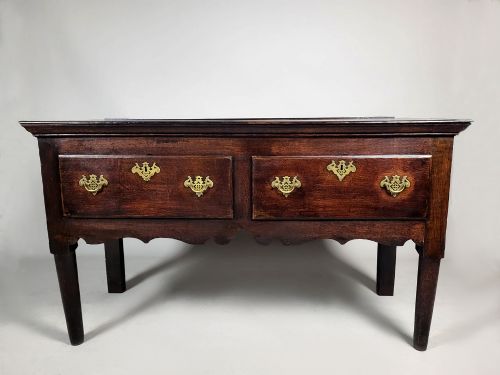
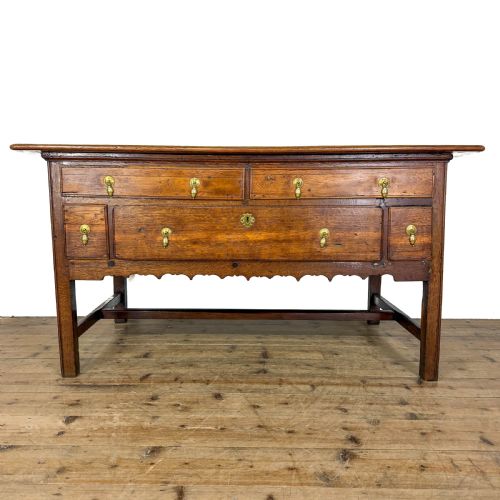
The primary forms take shape as dresser bases, low dressers, and serving tables fitted with drawers and occasionally cupboards. Regional variations appear across English country styles and French provincial designs, reflecting local domestic habits of the period.
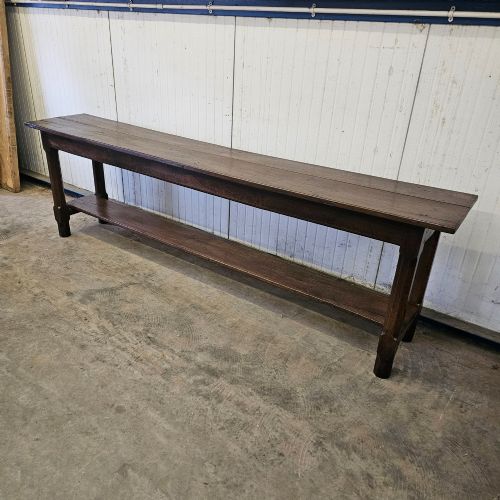
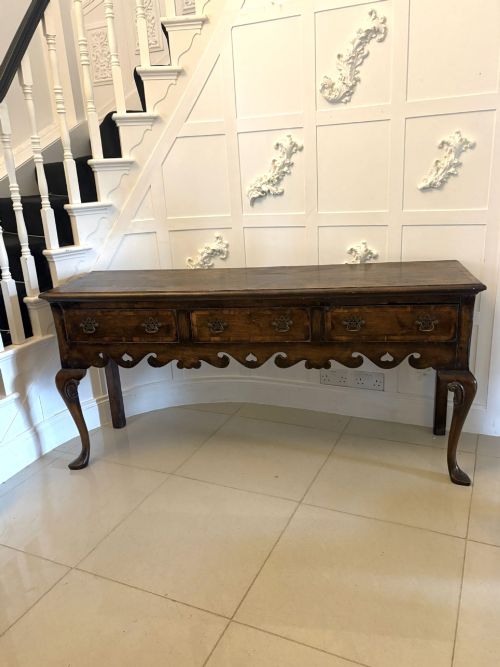
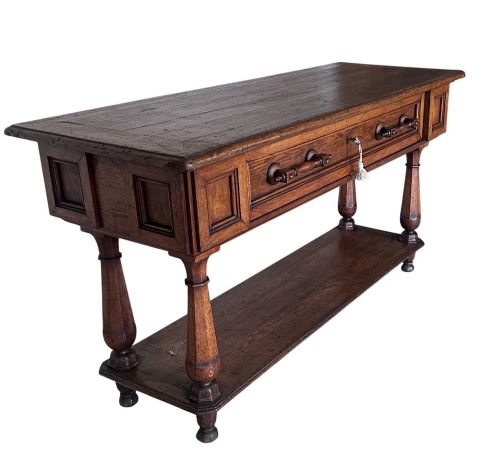
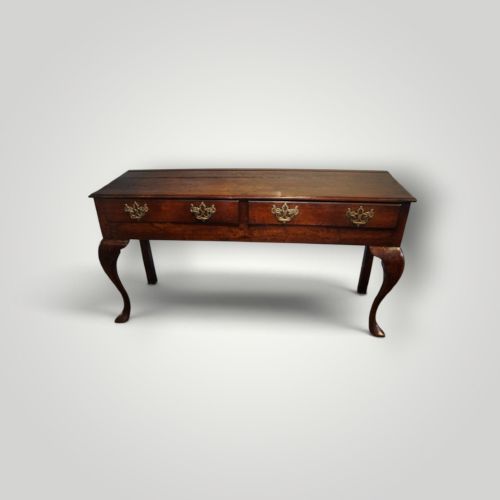
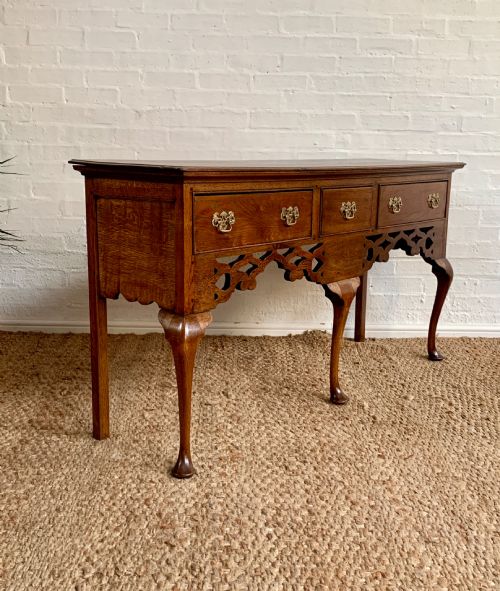
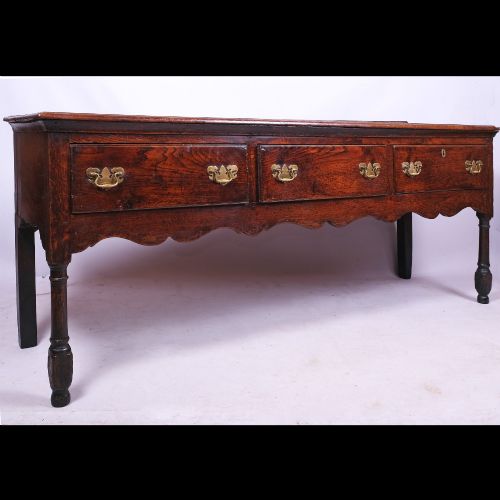
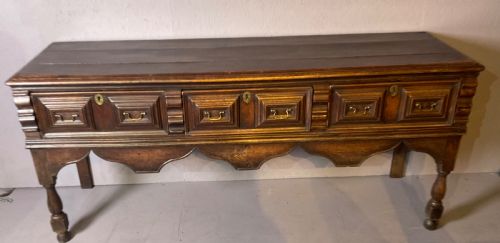
Buyers frequently encounter examples featuring turned legs, cabriole legs, or straightforward linear bases. These items served dining spaces and kitchens alike, functioning as central workspaces before moving into reception rooms as display and storage pieces.
Materials and construction methods
Solid oak forms the primary structural material across these pieces, frequently supplemented by secondary woods such as ash and fruitwood in drawer linings and internal framing. Joinery relied on traditional pegged mortise and tenon construction to withstand heavy daily use.
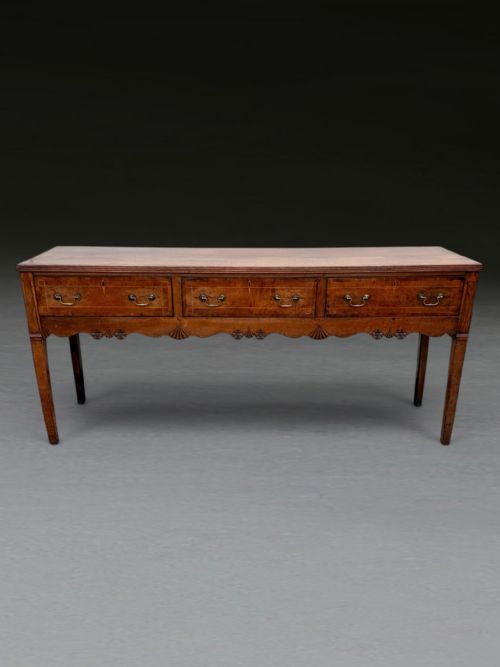
Surface ornamentation involved hand carving, panel moulding, and occasional inlay work. Metal hardware such as brass drop handles and iron hinges were fitted to drawers and doors, often showing hand-beaten characteristics appropriate to their period.
Oak Serving Dresser Retail Price Guide 2026
Typical asking prices for oak serving dresser among the pieces listed under this phrase on Sellingantiques today, from the lower quarter to the upper quarter. They describe what is for sale here now, not the wider market.
Early kitchen dressers doubled as indoor herb drying stations, utilising the warm air trapped near farmhouse ceilings.
Factors determining quality
Quality rests upon the proportion, timber selection, and integrity of construction. Pieces retaining their original brass hardware, unblemished surface patination, and unaltered timber framing stand apart from heavily restored or altered examples.
The crispness of hand carving and the depth of the timber grain reveal the skill of the original maker. Subtleties in proportion, such as the taper of a cabriole leg or the balance of drawer arrangements, separate ordinary utility furniture from finer country house examples.
The Oak Serving Dresser Glossary
- Dresser base
- The lower section of a traditional dresser, comprising a flat top surface above drawers or cupboards without the upper plate rack. This configuration makes it suitable for use as a serving sideboard.
- Cabriole leg
- A furniture leg that curves outward at the knee and tapers inward toward the foot, drawing inspiration from animal limbs. This form appears frequently on Georgian period examples.
- Turned leg
- A wooden leg shaped on a lathe into cylindrical, bulbous, or spiral profiles. Early pieces often display heavy baluster or spool turnings.
- Inlay
- The technique of inserting contrasting pieces of wood or other materials into recessed areas of a timber surface to create decorative patterns. It adds visual complexity to drawer fronts and tabletops.
- Fruitwood
- Dense timber derived from fruit-bearing trees such as pear, apple, or cherry, utilised by makers for contrasting mouldings, inlay work, or secondary structural elements.
Oak Serving Dresser: Frequently Asked Questions
How do I use an oak serving dresser today?
An oak serving dresser functions effectively as a sideboard in a dining room, holding tableware, linens, and serving dishes within its drawers and cupboards. The top surface provides ample space for setting out food during meals or displaying decorative objects.
In a kitchen, these pieces serve as preparation tables or auxiliary storage units. Their robust timber construction allows them to endure daily domestic use while anchoring a room's decorative scheme.
How do I distinguish 17th century from Georgian dressers?
Seventeenth century pieces typically display heavier proportions, geometric moulded drawer fronts, and robust turned legs connected by low stretchers. The timber often shows darker patination and more utilitarian construction methods.
Georgian examples generally exhibit cleaner lines, lighter scantlings, and refined leg forms such as the cabriole or straightforward square taper. Drawer arrangements become more symmetrical, and hardware styling shifts toward lighter brass drop handles.
What is the difference between a dresser base and a sideboard?
A dresser base specifically refers to the lower portion of what was traditionally a two-part kitchen or dining dresser, featuring deep drawers and often pot boards beneath. Sideboards evolved specifically as dining room furniture designed primarily for serving food and storing silver.
In practice, surviving early pieces often blur these distinctions. Both terms describe low rectangular storage furniture equipped with surface tops suited for serving.
How should I care for antique oak furniture?
Antique oak benefits from stable environmental conditions away from direct heat sources and strong sunlight, which can dry and split the timber. Maintaining moderate indoor humidity preserves the structural integrity of the old joints and panels.
Routine maintenance involves dusting with a dry, soft cloth and occasionally applying a traditional beeswax polish to nourish the grain. Avoid modern silicone-based sprays, as they build up and dull the historic patination.